


Log in
How to Evaluate Land Value Using Comparable Sales
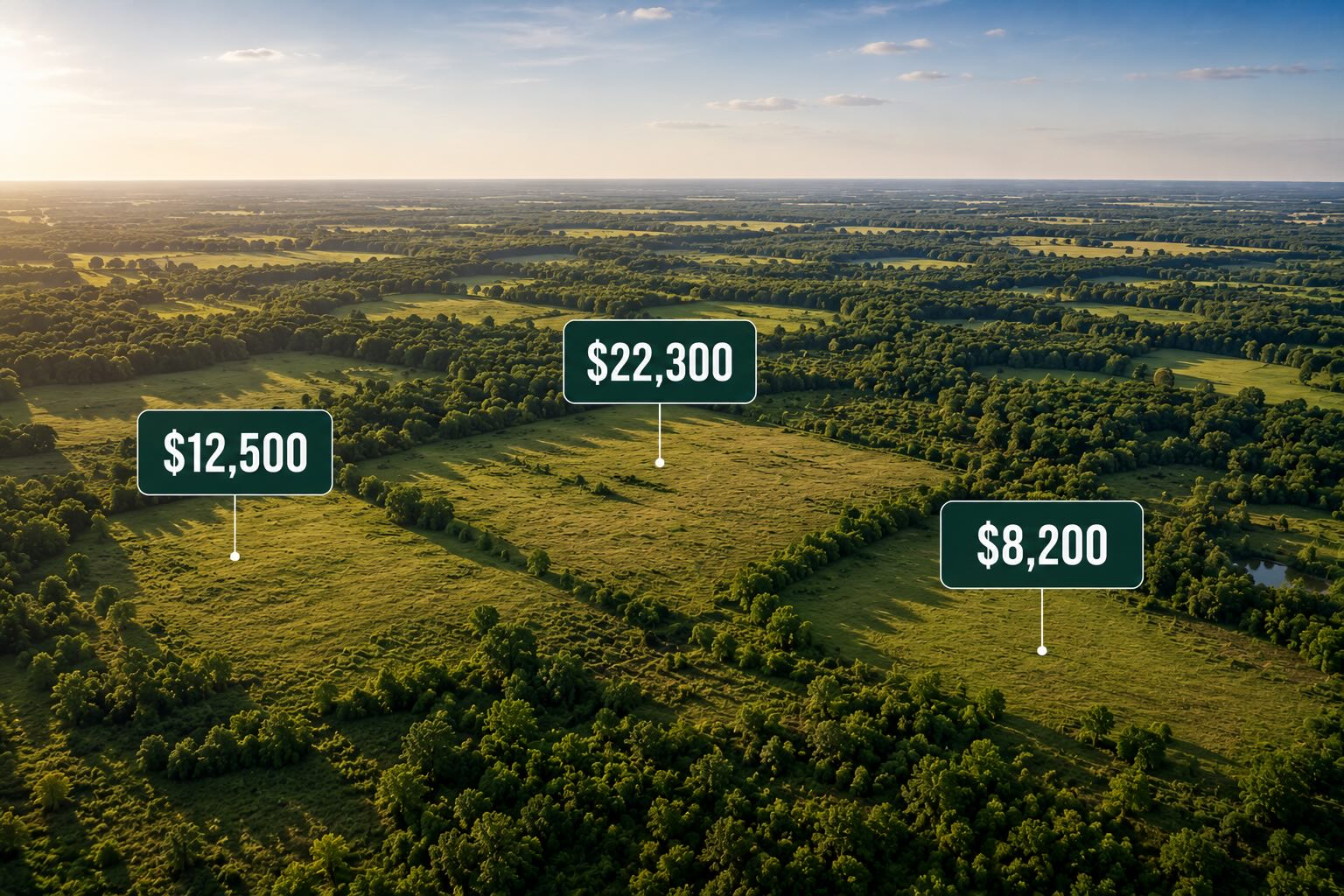
Comparable sales are one of the most useful ways to estimate what a piece of vacant land is worth, but comping land is very different from comping a house.
With residential properties, you can usually compare homes using familiar characteristics like square footage, bedrooms, bathrooms, condition, and neighborhood. Vacant land has fewer obvious similarities.
Two parcels with the same acreage in the same area can have very different values because of road access, terrain, wetlands, flood zones, utilities, buildability, zoning, or simply where each parcel sits within the market.
That means good land comps aren’t just about finding recent sales nearby. You have to understand what actually made those properties comparable in the first place.
Use Closed Sales, Not Just Asking Prices
Asking prices can help you understand the competition in a market, but they don’t tell you what buyers are actually willing to pay. When you’re valuing land, closed sales should carry more weight.
Start with recent sold properties whenever possible. Depending on the market and the data available, that may include MLS sales, recorded deeds, county transfer records, and other verified transaction data.
This gets more difficult in non-disclosure states, where sales prices may not be available through county records. That’s one reason access to nationwide MLS land sales and other reliable transaction data can make such a difference when you’re comping property.
Active listings still have a place in the analysis. They show what your competition looks like and what sellers are currently asking. But a property listed at $80,000 isn’t evidence that it’s worth $80,000. A comparable property that actually sold provides a much stronger indication of what buyers have been willing to pay.
Price Per Acre Is Not a Constant
Price per acre usually changes as parcel size changes.
Smaller parcels often sell for more per acre than larger tracts in the same market. A five-acre property, for example, may appeal to a much larger group of buyers than a 100-acre tract simply because the total purchase price is more affordable.
That means you can’t take the price per acre from a five-acre sale and automatically apply it to a 40-acre property.
If a five-acre parcel sells for $9,000 per acre while a nearby 40-acre tract sells for $4,200 per acre, that doesn’t necessarily mean one of the sales is an outlier. They may simply serve different buyers at different price points.
When selecting comps, start with properties reasonably close to the subject property’s acreage. If you have to use significantly larger or smaller parcels, account for the way price per acre changes across different parcel sizes in that specific market.
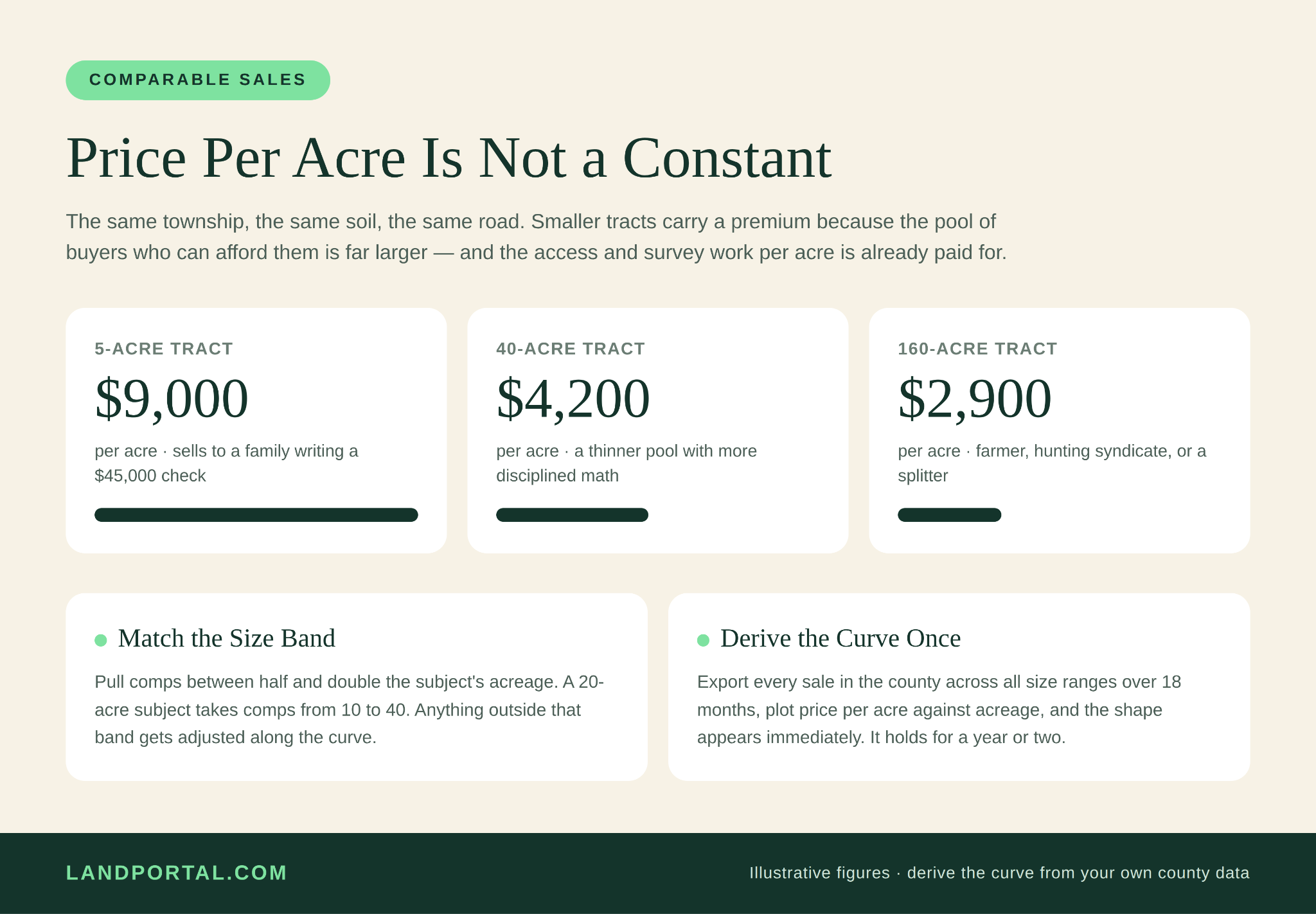
A useful starting point is to keep your comps within a similar acreage range to the subject property. The exact range will depend on how many sales are available and how land is typically bought and sold in that market.
When the available comps fall outside that range, look at how price per acre changes as parcel size increases or decreases.
One way to do that is to export recent land sales from the market and compare acreage against sold price per acre. That can help you identify whether smaller parcels consistently command a premium and how quickly that premium changes as acreage increases.
The important part is to base those adjustments on the market you’re actually working in rather than applying the same rule everywhere. A five-acre parcel in one county may behave very differently from a five-acre parcel in another.
Filtering to Comps That Are Actually Comparable
Once you’ve found recent sales in the right general area and acreage range, the next step is figuring out which properties are actually comparable.
For vacant land, that means looking beyond acreage and location. Depending on the property, important differences may include:
• Parcel shape and usable acreage
• Road frontage
• Wetland & Floodplain percentages
• Slope & terrain
• Zoning and use code
• Buildability
• Whether the tract has been split before
• Whether the owner is in-state or out-of-state
These characteristics can have a significant effect on value even when two properties appear similar on paper.
Land-specific property data and filters make it easier to narrow the initial comp set, but every serious comp should still be reviewed individually. Start with the closest matches you can find, then expand the search only when there aren’t enough relevant sales.
How Access Affects Land Value
Access is one of the most important differences to evaluate when comparing vacant land.
A parcel with direct public road frontage generally shouldn’t be treated the same as a property that relies on a private easement or has no legal access at all. Even when legal access exists, the condition of that access matters.
For example, a recorded easement may provide legal access while still requiring significant work to make the property easily reachable. A road may also appear on a map without being maintained year-round or suitable for normal vehicle access.
When reviewing comps, compare both legal access and practical access. Look at whether the property has paved or gravel road frontage, private easement access, seasonal access, or no documented access.
This is also why mapping matters during the comping process. Parcel boundaries, aerial imagery, road frontage, and surrounding ownership can reveal differences that aren’t obvious from a property record alone.
Use Mapping to Verify Your Comps
A map should be part of your comp review, not something you look at after you’ve already settled on a value.
Parcel boundaries and current aerial imagery can help you compare access, terrain, neighboring uses, water features, parcel shape, and other physical characteristics. Additional layers such as slope, wetlands, flood zones, and topography can reveal differences that materially affect how useful a comp really is.
A 40-acre sale may look nearly identical to your subject in a spreadsheet but become a poor comp once you discover that half of it sits in wetlands, it has significantly better road frontage, or its usable building area is completely different.
Bringing mapping and comparable sales together makes it easier to identify those differences before they affect your valuation.
Sales That May Not Belong in Your Comp Set
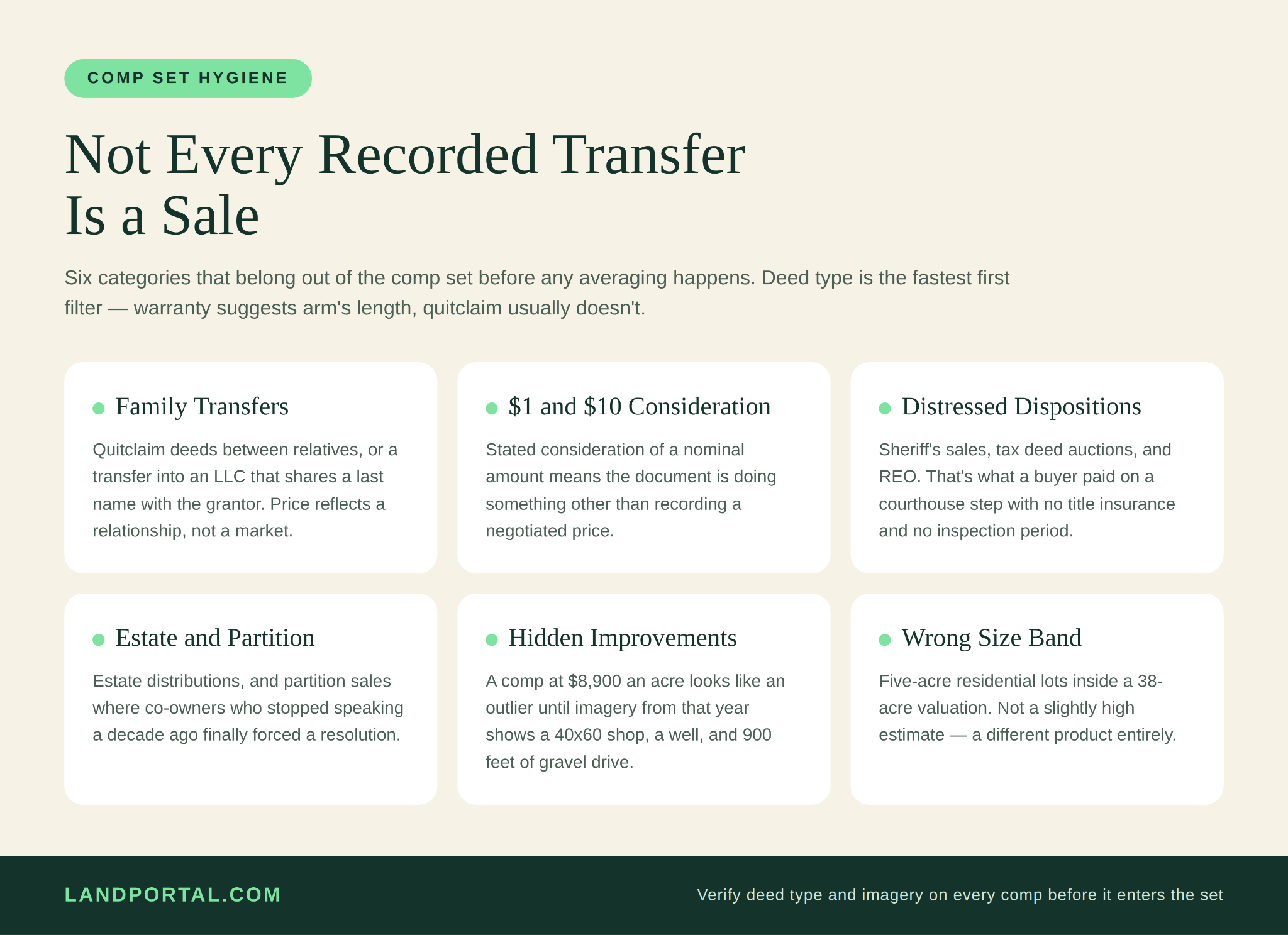
Not every recorded property transfer represents a normal market sale.
Before including a transaction in your comp set, look for transfers that may not reflect what a typical buyer would have paid on the open market.
Examples can include:
• Family or related-party transfers
• Transfers with nominal consideration
• Sheriff’s sales
• Tax deed auctions
• Some REO or distressed transactions
• Estate or partition transfers
Deed type and transaction history can provide clues, but they shouldn’t be the only things you review.
Also watch for improvements that aren’t obvious in the basic property data.
A land sale may appear unusually expensive until aerial imagery, listing history, or other records reveal a shop, well, driveway, utilities, fencing, or other improvements that contributed to the sale price.
Before treating an unusual sale as an outlier, or using it to justify a higher valuation, find out what was actually included in the transaction.
How Far Back and How Far Out Should You Look?
Start with recent sales close to the subject property, then expand your search only when you need more comps.
There isn’t one radius or time frame that works for every land market. A rural county with limited transaction volume may require looking farther away or further back than a more active market.
When you expand the search, change one variable at a time so you understand what you’re giving up.
You might widen the geographic area while keeping the sales recent, or extend the time frame while staying within the same market.
Pay attention to boundaries that can affect value as well. Crossing a county line can mean different taxes, zoning rules, permitting requirements, subdivision regulations, or school districts. In some markets, a property ten miles away in the same county may be more comparable than one four miles away across a meaningful market boundary.
Older sales may also need to be considered in the context of how that local market has changed. Use recent sales trends from the same market rather than assuming land appreciates at the same rate everywhere.
Adjusting Your Comps
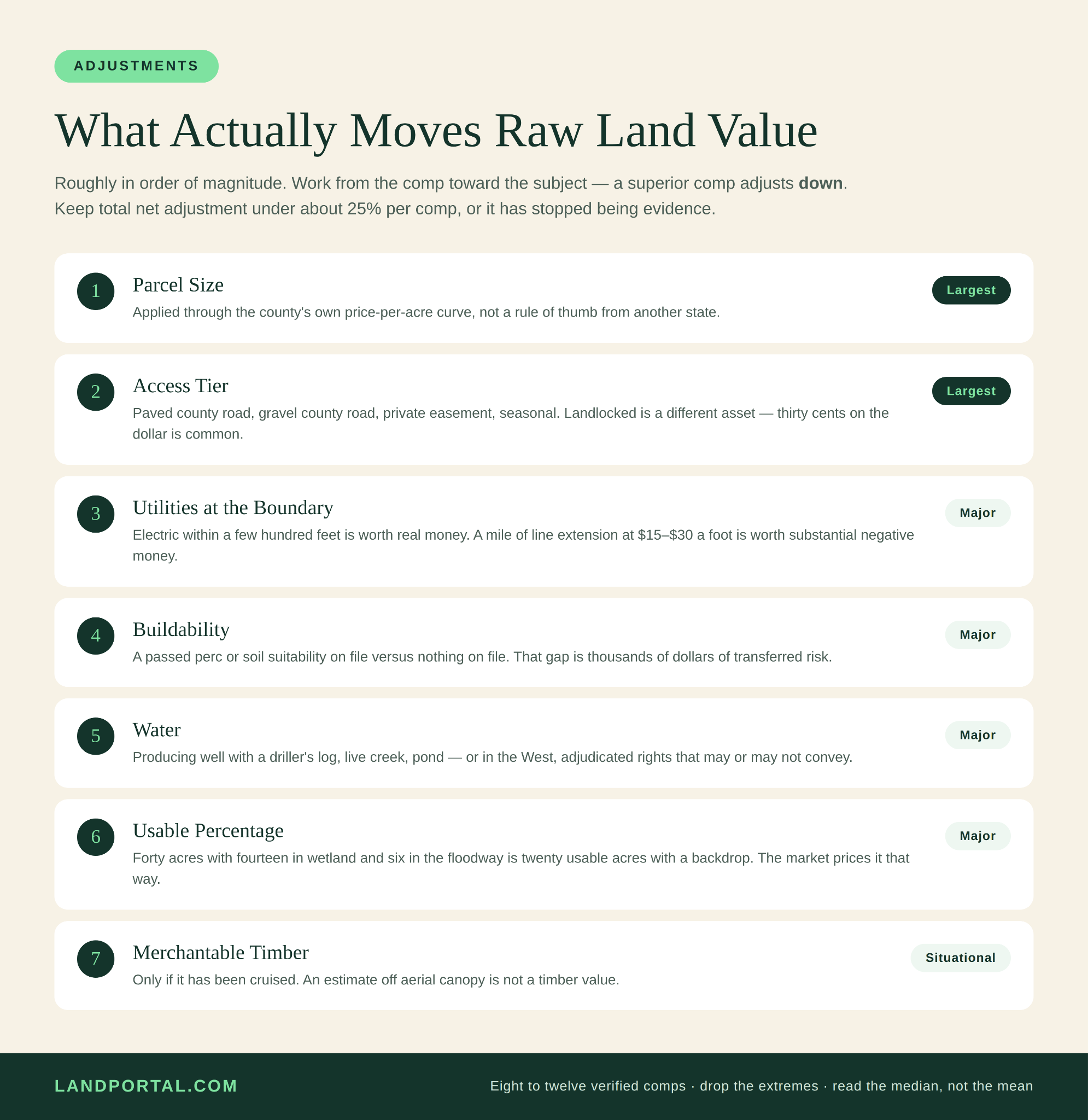
Once you’ve narrowed the list to the most relevant sales, compare each comp against the subject property and identify the differences that could affect value.
Common adjustments for vacant land may include:
• Parcel size
• Road access and frontage
• Utilities
• Buildability
• Slope & terrain
• Wetlands and flood exposure
• Water features
• Usable acreage
• Improvements
Work consistently from the comparable property toward the subject. If a comp has a meaningful advantage, for example, utilities at the road while the subject does not,the comp may need to be adjusted downward when estimating what it would have sold for with characteristics more like the subject.
The size of any adjustment should come from evidence in the local market whenever possible. Avoid relying on universal dollar amounts or percentages for features like road access, utilities, water, or buildability because their effect on value can vary significantly from one market to another.
If a comp requires several large adjustments to resemble the subject, that’s usually a sign that you should look for a better comp rather than continue adjusting a weak one.
Using LP Intelligence for Land Research
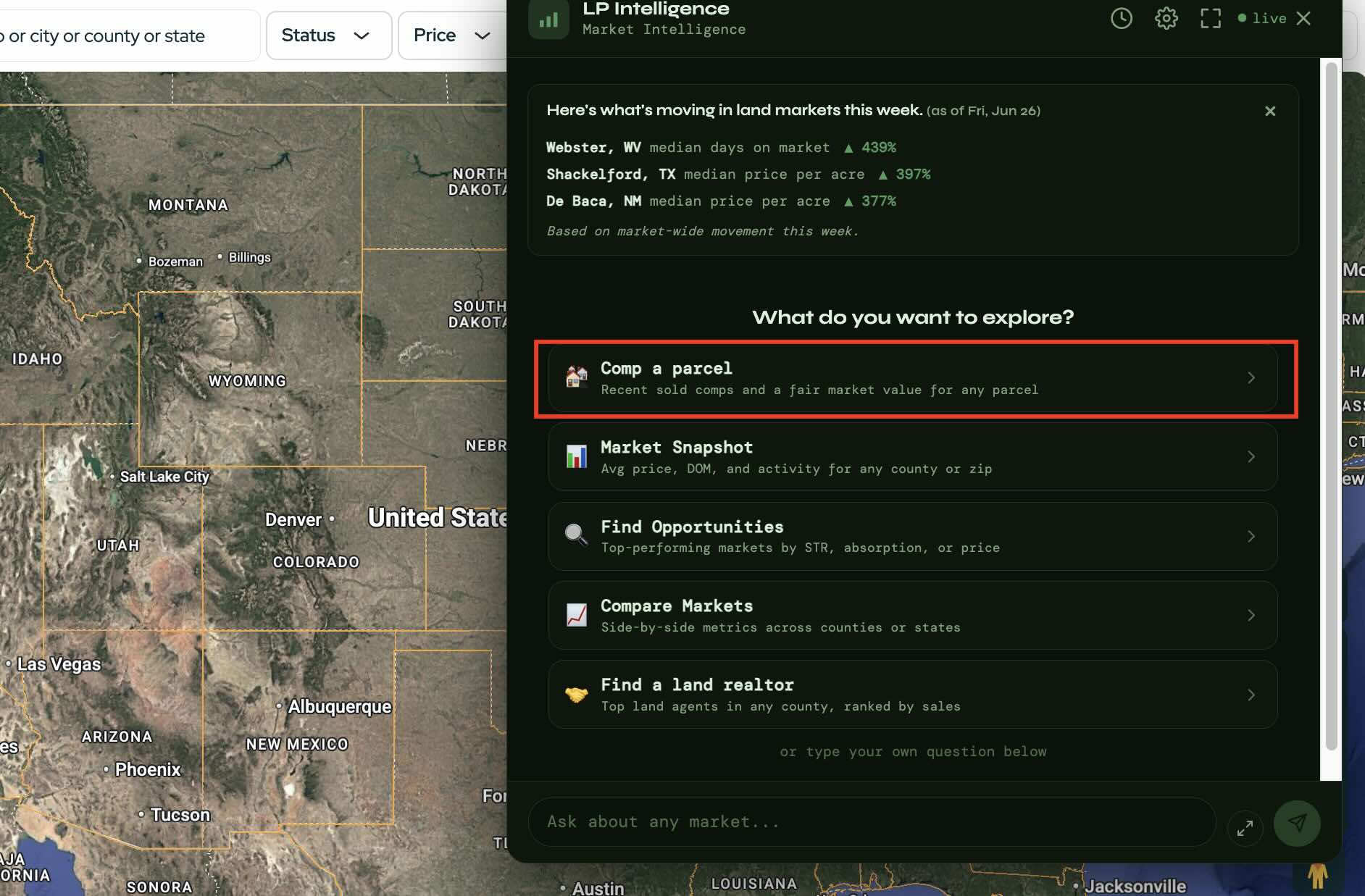
LP Intelligence gives investors another way to work with the market and property data available inside Land Portal.
Instead of manually working through every search and report, you can ask questions in plain language to help research a property or compare markets.
For example, you might use LP Intelligence to:
• Comp a parcel and estimate its potential market value
• Get a snapshot of a market, including recent sales and activity
• Compare counties or markets you’re considering
• Find land investment opportunities based on specific criteria
• Dig deeper into the data behind a property or market
The goal isn’t to replace your own due diligence or make the buying decision for you. It’s to make it faster to get from a question to the information you need to evaluate the deal.
That becomes especially useful when you’re comparing multiple markets or researching a property and want to dig deeper without rebuilding searches every time a new question comes up.
Good Comps Start With the Right Market
Comparable sales become much more useful when you’re working in a market with enough transaction activity to support them.
Before building a mailing list or pricing offers, look at whether the market has enough recent sales to establish a reasonable value range, enough buyer activity to support your exit strategy, and enough margin between acquisition and resale prices to make the opportunity worthwhile.
This is where market research and property valuation work together. Transaction volume, recent sold prices, active listings, days on market, and other market indicators can help you decide whether a county deserves a closer look before you spend money building and marketing a list.
Once you’ve selected the market, comparable sales help you evaluate individual properties within it.
Land Portal brings market research, nationwide MLS land comps, mapping, property data, land-specific filters, and LP Intelligence together so you can move from researching a market to evaluating individual parcels without switching between multiple systems.
If you’re still learning how to evaluate markets and price land deals, Land Portal University also includes training from experienced land investors covering the acquisition, evaluation, and marketing side of the business.
Don't Rely on Too Few Comps
When enough sales are available, don’t base your valuation on only one or two properties.
Land varies too much for a single sale to tell the whole story. A larger group of relevant comps can help you see the range buyers have actually been paying and identify sales that may be unusual.
Look at the overall range and median, but also pay attention to how tightly the comps cluster. If several genuinely comparable properties sold within a similar range, you can have more confidence in the pattern.
If the numbers are scattered, don’t simply average them together. Go back to the properties and look for the reason. Differences in access, zoning, utilities, terrain, improvements, location, or intended use may explain why one sale doesn’t behave like the others.
Know What the Data Can't Tell You
Property data, mapping, aerial imagery, and comparable sales can tell you a lot, but they can’t show you everything.
When a sale looks unusually high or low compared with everything around it, there may be something about the property or surrounding area that isn’t obvious in the records.
Road condition, neighboring uses, noise, odors, dumping, access problems, or other on-the-ground conditions can influence what buyers are willing to pay.
You won’t always be able to visit every property yourself, especially when you’re evaluating land at scale. But when a comp doesn’t make sense, treat that as a reason to investigate further rather than forcing it into the valuation.

Your Premium Source For Real Estate Data
© Copyright 2026 Land Portal – All Rights Reserved