


Log in
How AI and Better Data Are Changing Land Investing

Land investors have always had access to property records, sales data, and county information. The harder part has been turning all of that information into a clear decision.
Is this a market worth targeting? Are 5- to 10-acre parcels actually selling? What are similar properties selling for? Does this parcel have access issues, wetlands, flood risk, or terrain that could affect its value?
Answering those questions used to mean pulling information from multiple sources, working through spreadsheets, and spending hours researching a market or property.
Better land data and AI are changing that process. Investors can now analyze markets, compare sales, research properties, and identify potential issues much faster than before.
The value isn’t that AI makes the investment decision for you. It’s that it can help you get to the information you need to make that decision faster.
Using Data to Choose Better Land Markets
Choosing the right market is one of the most important decisions a land investor makes, but it’s easy to base that decision on incomplete information.
A county can look active overall while the specific types of properties you’re targeting barely sell. That’s why market research needs to go deeper than simply asking whether land is selling in a particular county.
The better question is whether properties in the acreage and price range you’re targeting are selling consistently enough to support your investment strategy.
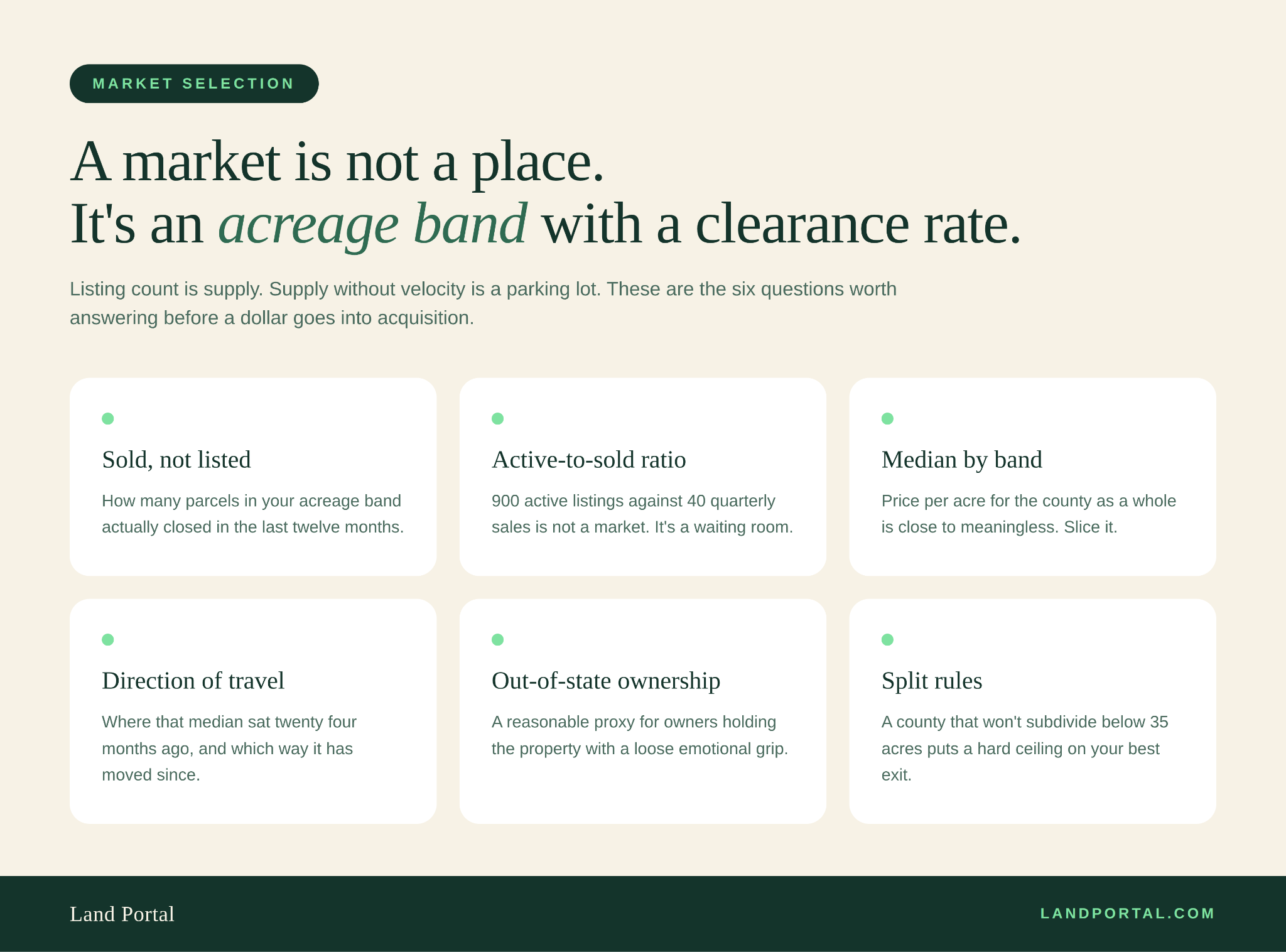
A 10-acre parcel and a 160-acre parcel in the same county can have completely different buyer pools, pricing, demand, and expected hold times. Looking only at county-wide numbers can hide those differences.
Active listings alone don’t tell you whether a market is strong, either. A large number of properties for sale may simply mean there’s a lot of inventory competing for a limited number of buyers.
That’s why it’s important to compare what’s currently listed with what has actually sold, especially within the acreage range you’re considering.
Before targeting a market, look at:
• Sold volume: How many properties in your target acreage range have actually sold?
• Sold volume: How many properties in your target acreage range have actually sold?
• Days on market: How long are similar properties typically taking to sell?
• Price per acre: What are comparable properties actually selling for within your acreage range?
• Pricing trends: Have sale prices been moving up, down, or staying relatively consistent?
• Ownership patterns: How many properties fit the owner criteria you typically target?
• Local restrictions: Are there zoning, subdivision, or minimum-lot-size requirements that could affect your exit strategy?
Land Portal’s market research tools are designed to help investors evaluate those numbers before committing to a market.
Instead of looking only at county-wide averages, you can narrow the research to the acreage range you’re actually interested in and compare markets using sold volume, days on market, price per acre, active inventory, and other relevant market data.
That gives you a much more useful question to answer: Is there enough demand for the type of land I plan to buy and resell in this market?
Using Better Data to Comp Vacant Land
Comping vacant land is different from comping houses because there are fewer standardized features to compare.
Two parcels with similar acreage can have very different values depending on location, access, road frontage, terrain, utilities, flood risk, wetlands, zoning, and other property characteristics.
Acreage matters too. Price per acre doesn’t necessarily stay the same as parcel size increases, which is why comparing properties within a similar acreage range is so important.
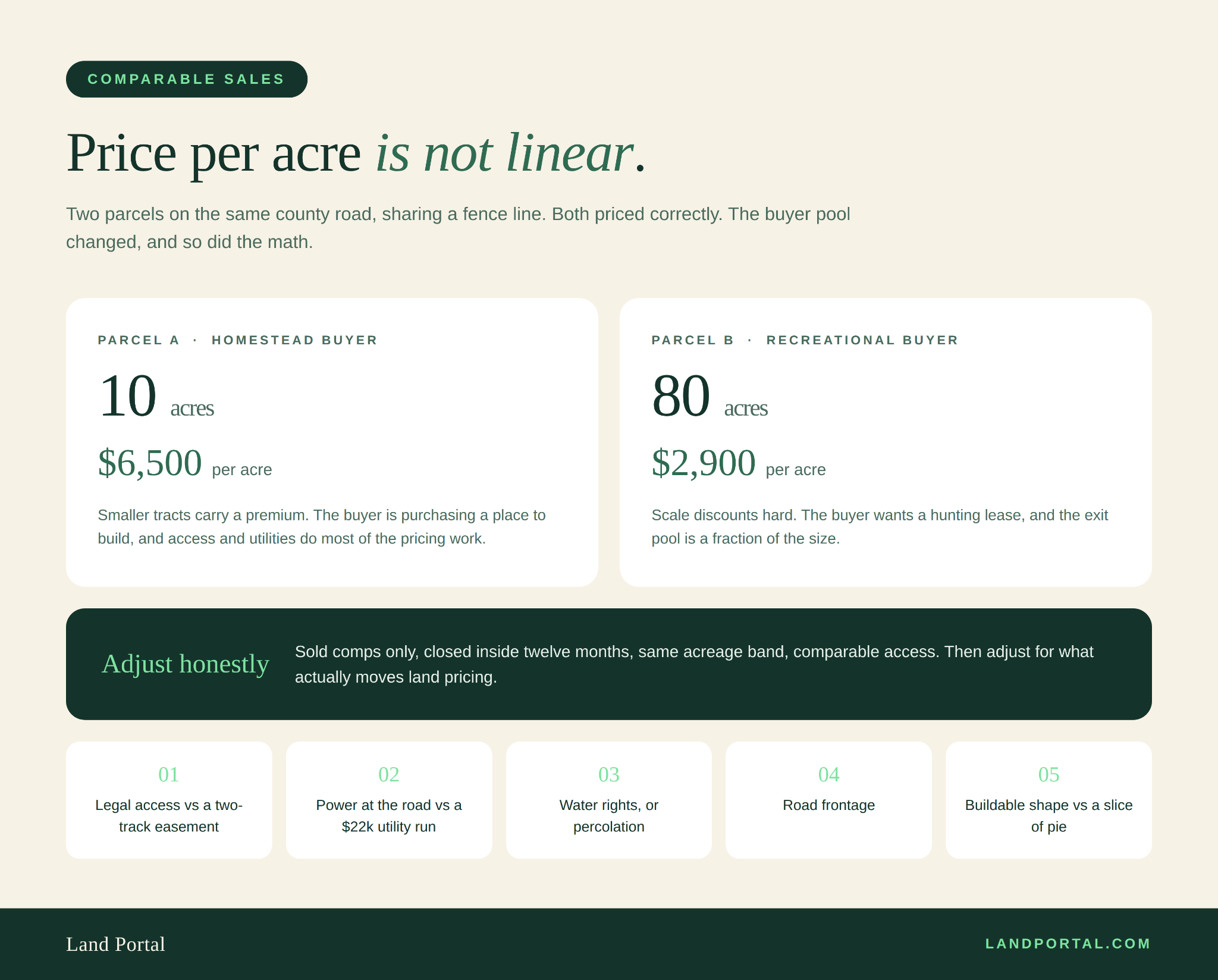
A smaller parcel and a much larger parcel on the same road may sell at very different prices per acre and still both be priced appropriately.
Smaller parcels often appeal to a different buyer than larger recreational, agricultural, or investment tracts. That’s why applying one county-wide price-per-acre number across every parcel size can lead to bad valuations.
Start with recent sold properties that are as comparable to the subject parcel as possible. Look for similar acreage, location, access, and overall property characteristics.
Then consider the features that can materially affect land value, including:
• Legal and physical access
• Utilities
• Water or septic considerations
• Flood zones and wetlands
• Terrain and slope
• Parcel shape and usable acreage
• Zoning and potential use
No comp is going to match perfectly. The goal is to understand the range that similar properties have actually sold for and determine where the subject parcel fits within it.
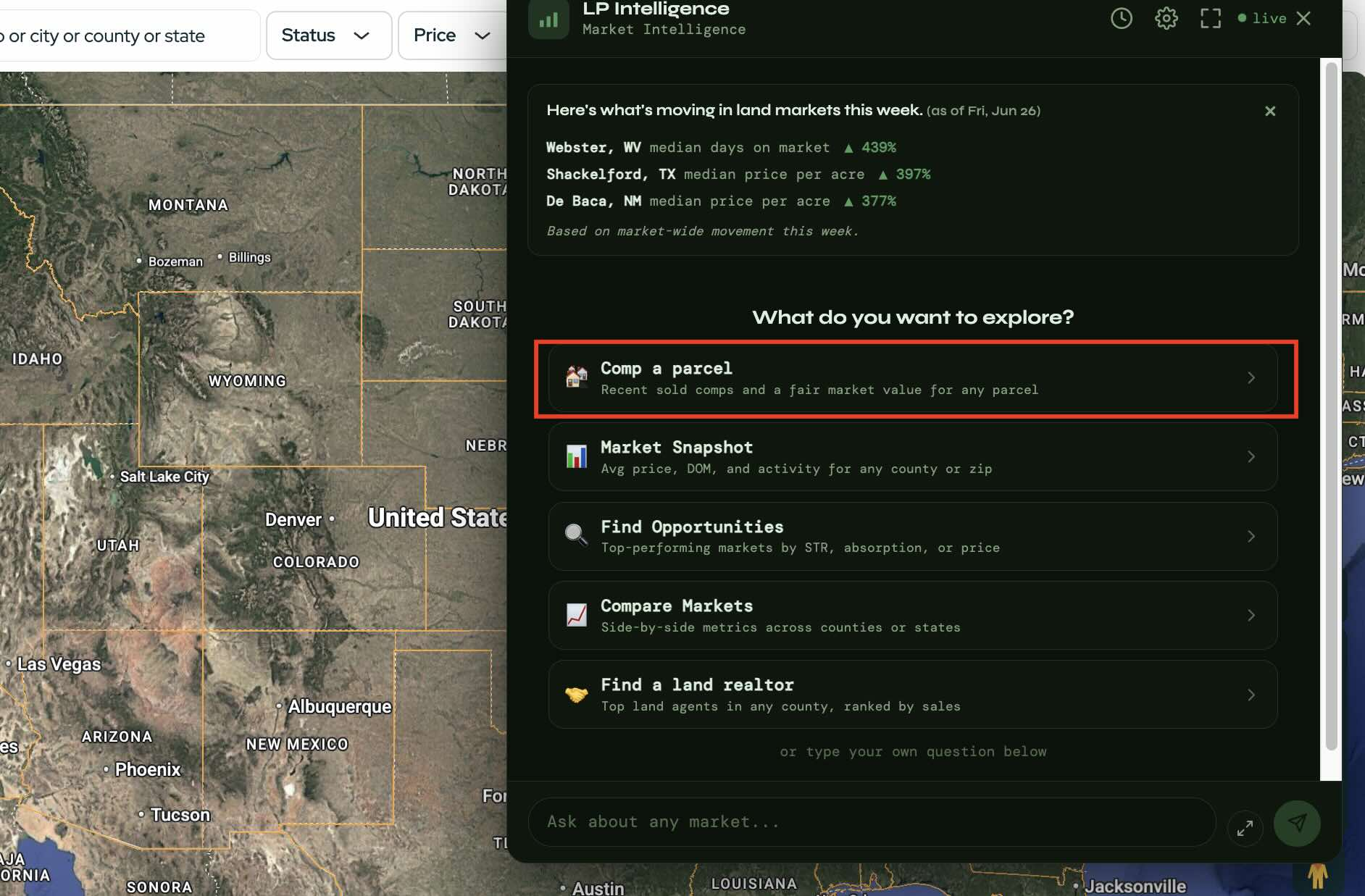
Land Portal’s comping tools let you pull sold comparables around a property and narrow the results by factors such as acreage and sale date.
Instead of relying on one automated value or a county-wide average, you can review the actual comparable sales and see the range of prices buyers have recently paid for similar land.
That makes it easier to evaluate an asking price, build an offer, and adjust when new information comes up during negotiations.
More importantly, faster access to comp data makes it practical to evaluate more properties consistently instead of relying on rough estimates just to save time.
LP Intelligence
AI becomes much more useful for land investors when it’s connected to the property and market data they’re already using to make decisions.
LP Intelligence is Land Portal’s AI-powered research assistant. It’s built into the platform and works with Land Portal’s market research, sales, and property data to help investors analyze information using plain-language questions.
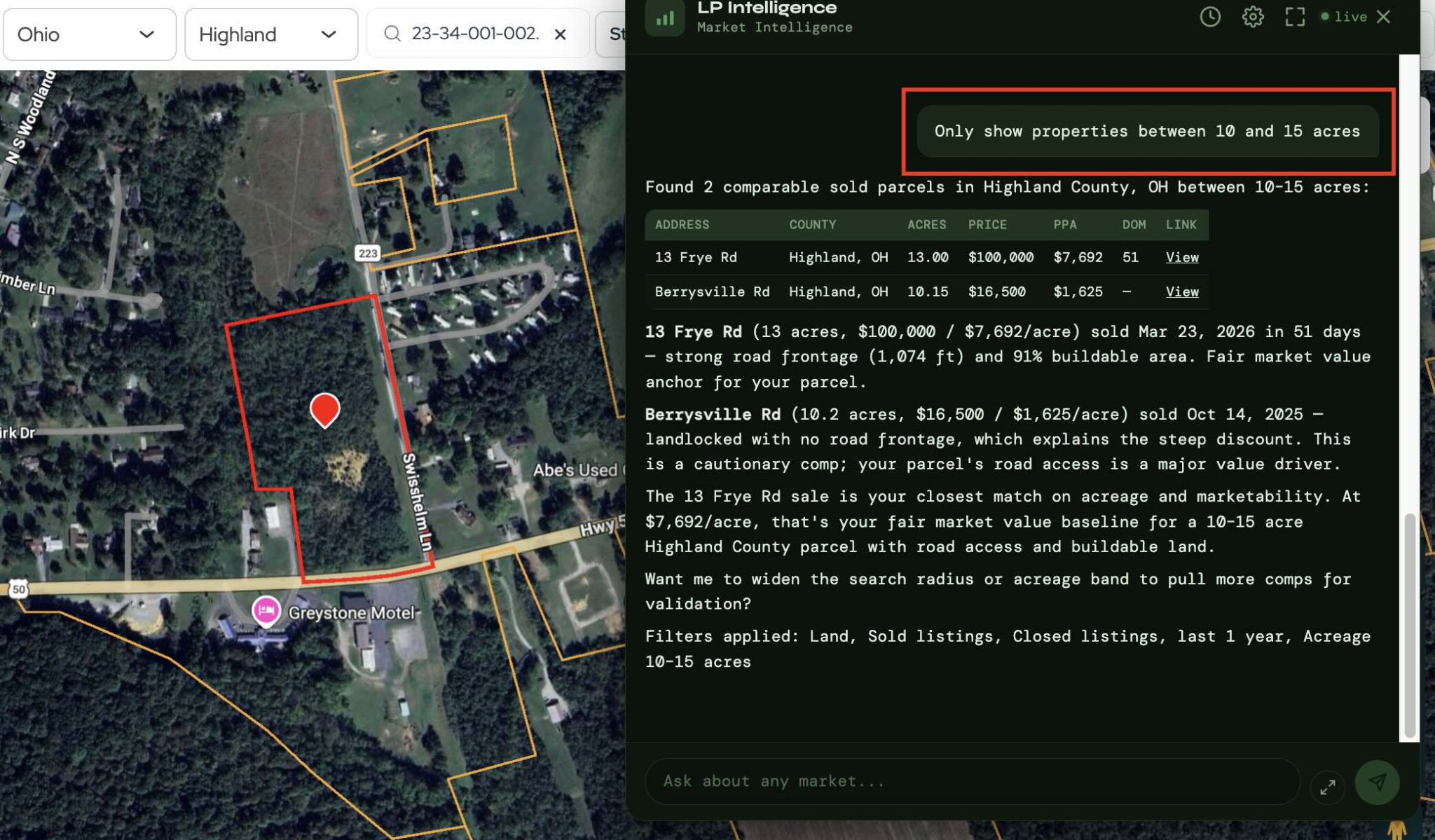
For example, you can use LP Intelligence to ask questions such as:
• Which counties have strong sales activity for 5- to 20-acre properties?
• Which counties have strong sales activity for 5- to 20-acre properties?
• What comparable sales should I look at for this parcel?
• How does the asking price compare with recent sold properties?
• Which markets are showing stronger demand within the acreage range I target?
You can then ask follow-up questions to narrow the analysis without starting the research process over again.
The biggest advantage is speed.
Traditional market research often requires investors to change filters, compare reports, export data, and work through the numbers manually every time they want to answer a new question.
With an AI research assistant connected to the underlying data, you can explore those questions conversationally and continue narrowing the analysis as you learn more.
AI doesn’t replace the investor’s judgment. It reduces the time spent getting from a question to the data needed to make a decision.
Land-Specific Filters Change the Quality of the List
Better acquisition decisions start with better targeting.
Generic real estate databases can usually filter by basics such as acreage, location, ownership, and property type. Land investors often need to go much further because the physical characteristics of the parcel can determine whether it’s worth pursuing at all.
Land Portal includes filters designed specifically around vacant land, including acreage, road frontage, landlocked status, wetlands, flood zones, slope, ownership criteria, and vacant land targeting.
The real value comes from combining those filters.
Instead of pulling every 10- to 20-acre parcel in a county and sorting through the problems afterward, you can narrow the list before you spend money on records, skip tracing, mail, or other outreach.
That means fewer properties that never fit your buying criteria in the first place.
Use Property Data to Catch Problems Earlier
Market data can tell you whether a county or acreage range looks promising. Property-level data helps determine whether a specific parcel deserves a closer look.
Before making an offer, land investors may need to evaluate things such as:
• Road access and frontage
• Topography and slope
• Flood zones & wetlands
• Aerial imagery
• Soil information
• Nearby roads and development
Land Portal brings mapping and property research into the same workflow as market research and comps, so you can review potential issues while you’re evaluating the deal.
That doesn’t replace professional due diligence or an on-site inspection when one is necessary. It helps you identify obvious concerns earlier, before spending additional time and money on a property that may not fit your criteria.
The same mapping information can also be useful when it’s time to sell. Clear parcel boundaries, aerial imagery, terrain, and access information can help potential buyers better understand the property.
Good Decisions Depend on Current Property Data
AI and analytics are only as useful as the data behind them.
Ownership information changes. Properties sell. Mailing addresses change. New listings appear, old listings close, and county records are updated over time.
That’s why keeping property and ownership data current matters. If the underlying information is outdated, better analysis won’t necessarily lead to a better decision.
Land Portal refreshes property, ownership, listing, and other available data regularly as new information becomes available, helping investors work from the most current information available within the platform.
That matters whether you’re researching a market, running comps, building a mailing list, or trying to reach the correct owner.
Good Decisions Depend on Current Property Data
Direct mail and skip tracing can help you reach landowners, but neither one determines whether you started with the right properties.
The quality of your outreach begins earlier in the process.
If you’ve chosen a market with real buyer demand, identified properties that fit your acquisition criteria, and researched those properties before contacting the owners, your marketing dollars are going toward leads you actually want.
That’s where better data has one of its biggest impacts on land investing. It helps you narrow the list before you spend money on skip tracing, mail, calls, and follow-up.
Instead of focusing only on how many owners you can contact, you can focus on contacting the right owners about the right properties.
What AI and Data Still Can't Replace
Better data can help you choose a market, identify properties, analyze comparable sales, and catch potential issues earlier.
AI can make that research faster and help you explore the information without manually working through every report or spreadsheet.
But neither one makes the final investment decision for you.
Local knowledge still matters. Due diligence still matters. Seller conversations still matter. And understanding why one property works while another doesn’t still requires judgment.
The advantage for today’s land investor is that less time has to be spent gathering and organizing the information needed to make those decisions.
Land Portal brings market research, property data, land-specific filters, comps, mapping, owner information, and LP Intelligence together in one platform so you can spend less time searching for information and more time evaluating opportunities.
Start your 7-day free trial of Land Portal and see how better land data can change the way you research your next market or deal.
Your Premium Source For Real Estate Data
© Copyright 2026 Land Portal – All Rights Reserved