


Log in
Land Wholesaling vs. Land Flipping Software: What Do You Need?
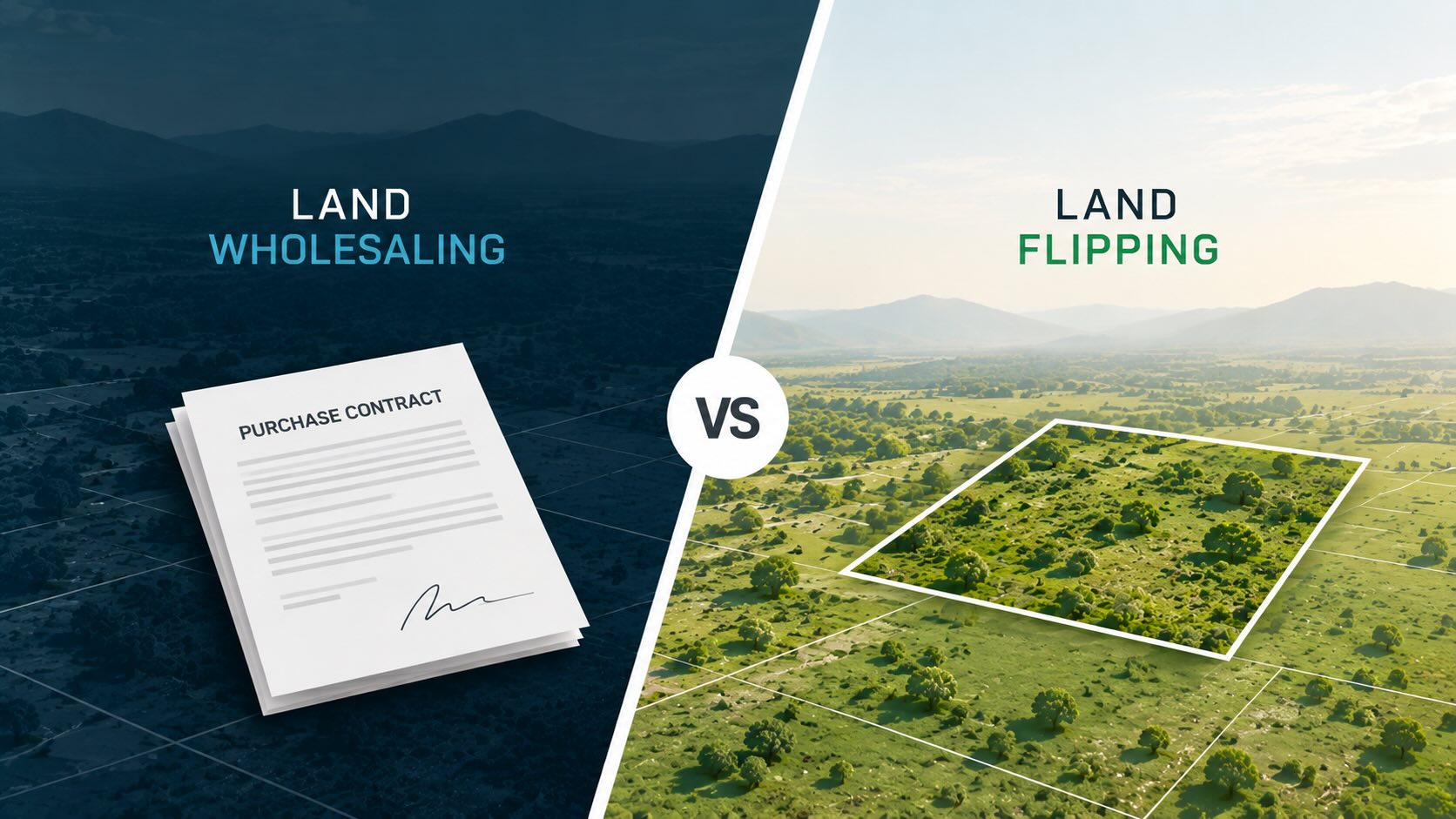
Land wholesalers and land flippers have a lot in common. Both need to find properties, research land values, contact owners, and identify profitable opportunities.
But there’s one major difference: land wholesalers typically assign purchase contracts to other buyers, while land flippers purchase the property and resell it themselves.
That difference affects which software features matter most.
Wholesalers often prioritize building targeted owner lists, contacting sellers, and finding cash buyers.
Flippers need those capabilities too, but they also spend more time evaluating properties, managing acquisitions, and preparing land for resale.
Here’s how their software needs compare and what to look for when choosing land investing software.
How Do Land Wholesaling and Land Flipping Differ?
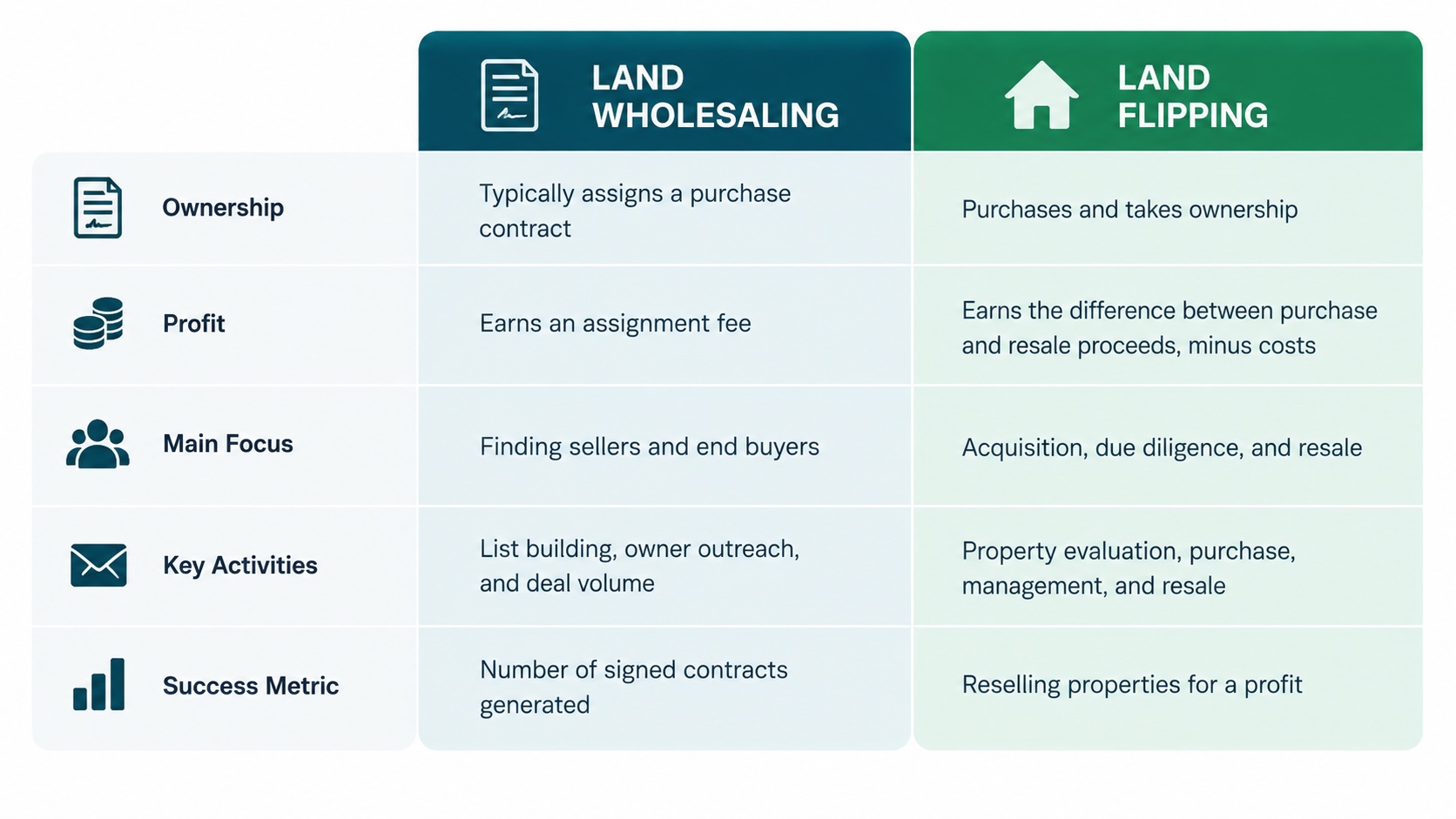
Land wholesaling involves getting a property under contract and typically assigning the contractual purchase rights to another buyer for a fee.
The wholesaler generally doesn’t take ownership of the property. Instead, they earn money by connecting a motivated seller with an investor willing to complete the purchase.
Land flipping works differently. The investor purchases the property, takes ownership, and then resells it for a profit.
Both strategies require accurate property research and a clear understanding of land values. However, the way investors approach each deal can differ.
It’s also important to understand that wholesaling regulations vary by state. For example, the Oklahoma Real Estate Commission explains that Oklahoma requires real estate wholesalers to hold a real estate license.
Investors should review applicable state requirements before wholesaling properties.
Which Software Features Matter Most for Land Wholesalers?
For land wholesalers, finding potential deals and connecting with property owners are major priorities.
The right software should make it easier to identify properties, evaluate potential margins, and contact sellers.
Targeted Property Lists
Wholesalers need a consistent way to find vacant landowners who fit their buying criteria.
Useful filters include acreage, location, vacant land status, ownership characteristics, road frontage, and other property conditions.
Instead of pulling every parcel in a county, investors can narrow their searches to properties that make sense for their target buyers.
Skip Tracing and Owner Outreach
Once a wholesaler has a list of properties, the next step is contacting owners.
Skip tracing helps identify available phone numbers and email addresses associated with property owners. Direct mail is another common way to reach potential sellers.
Investors using calls or texts also need to follow applicable contact regulations. The FCC’s guidance on unwanted robocalls and texts explains important consumer protections and consent requirements.
Comparable Sales and Offer Pricing
Wholesalers need to understand what a property is worth before negotiating a purchase contract.
Recent comparable land sales help estimate market value and determine whether there’s enough room for both an assignment fee and the end buyer’s profit.
An offer that doesn’t leave enough margin for the buyer can make a contract difficult to assign.
Cash Buyer Relationships
Finding a seller is only part of wholesaling. Investors also need buyers interested in purchasing the properties they put under contract.
A well-organized cash buyer list can help wholesalers match deals with investors based on location, acreage, price range, and property type.
This may be managed through a CRM or another system alongside the investor’s property research software.
The priority for wholesalers: Finding suitable properties, reaching owners, evaluating potential margins, and connecting deals with buyers.
Which Software Features Matter Most for Land Flippers?
Land flippers also need property lists, owner information, and comparable sales.
But because they’re purchasing and holding the property, evaluating potential issues before closing becomes especially important.
Road Access and Landlocked Properties
Road access can significantly affect a property’s usability and resale value.
A parcel might appear accessible on a map but rely on an easement or private road. Others may have no legal access at all.
Land investing software with road frontage and landlocked property filters helps investors identify potential concerns early.
Legal access should still be verified through appropriate property records, title research, or professional assistance.
Flood Zones and Wetlands
Environmental conditions can affect what buyers are willing to pay for a property and how they can use it.
FEMA’s flood maps help identify areas with mapped flood hazards.
Wetlands are another consideration. The EPA explains that certain activities involving dredged or fill material in federally regulated waters, including wetlands, may require permits under Section 404 of the Clean Water Act.
These mapping layers are useful for initial screening, but they don’t replace site-specific due diligence.
Slope and Terrain
A property with steep terrain may be less suitable for certain uses, particularly residential construction.
Slope analysis and contour mapping help investors understand a property’s topography before purchasing.
This can be particularly valuable when evaluating land for homesites, subdivision opportunities, or other development-related uses.
Sold Comps and Resale Pricing
Land flippers need to evaluate both their purchase price and potential resale price.
Recent sold comparable properties provide a stronger basis for estimating market value than relying on active listings alone.
Investors should compare properties with similar acreage, location, access, terrain, and other characteristics.
Property Marketing and Resale
After purchasing a property, flippers need to market it to potential buyers.
Useful tools include property maps, saved property information, photos, and shareable materials that help buyers understand the land.
Having that information organized makes it easier to prepare listings and communicate with interested buyers.
The priority for flippers: Buying properties at the right price, identifying potential issues before closing, and preparing land for a profitable resale.
Land Wholesaling vs. Land Flipping Software: Feature Comparison
Both strategies rely on similar property information, but they place different levels of importance on certain features.
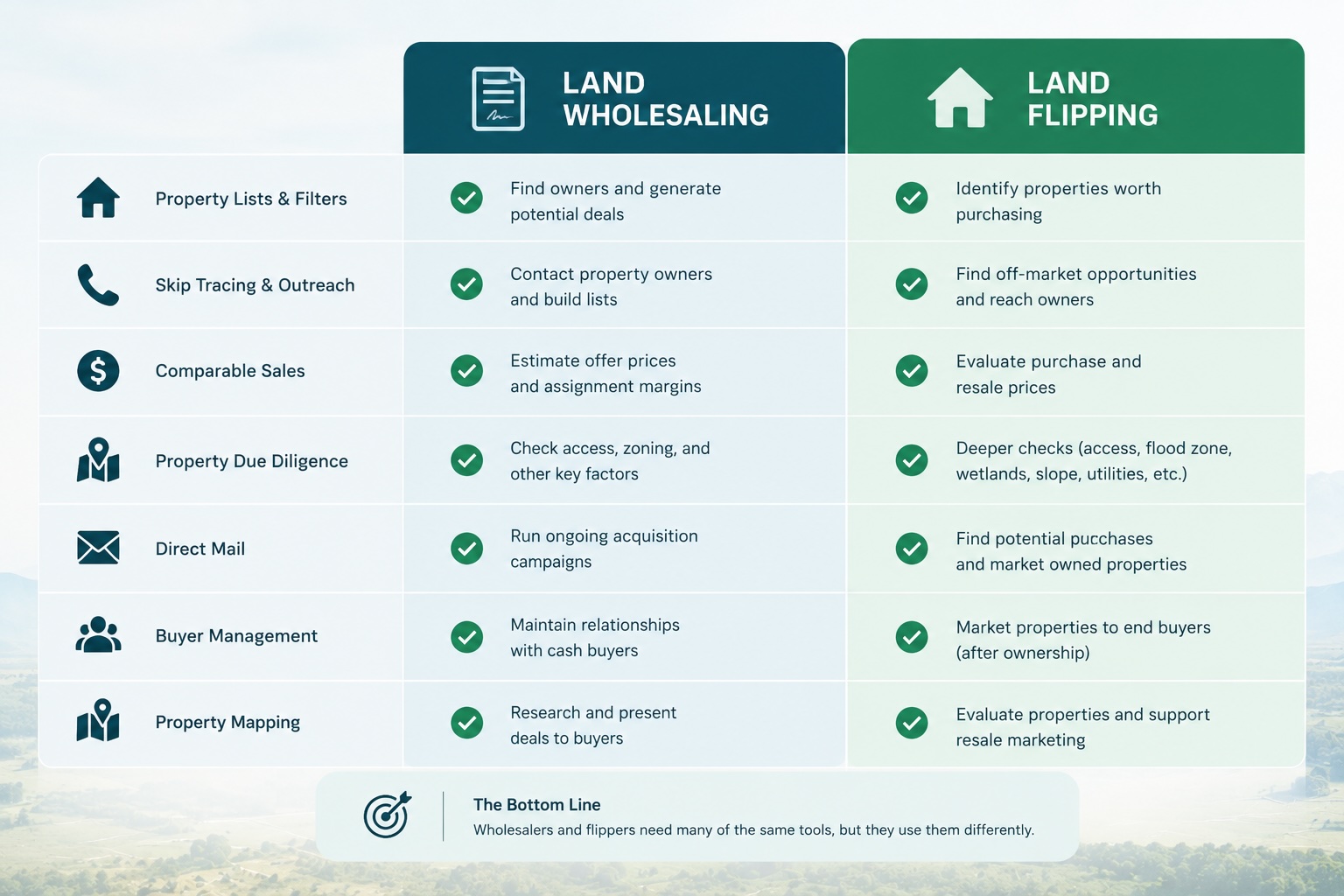
The key takeaway is that wholesalers and flippers need many of the same tools, but they use them differently.
Wholesalers may focus more heavily on finding sellers and managing outreach. Flippers may spend more time reviewing property conditions and resale opportunities.
Neither strategy should overlook due diligence or accurate property valuation.
Can One Land Investing Platform Work for Both?
Yes. In fact, many land investors use both strategies depending on the opportunity.
An investor might wholesale a property that doesn’t fit their current buying criteria while purchasing and flipping another parcel with strong resale potential.
Rather than maintaining separate research tools for each strategy, investors can benefit from software that supports both.
When comparing platforms, look for:
Property search and filtering to identify land that meets your criteria.
Market research and comparable sales to evaluate potential profit margins.
Mapping and due diligence tools to screen for access, wetlands, flood zones, and terrain concerns.
Owner information and skip tracing to support seller outreach.
Export and direct mail capabilities to help build and contact acquisition lists.
It’s also worth checking which features are available on each subscription plan.
How Land Portal Supports Both Strategies
Land Portal is built for land investors, bringing property research, mapping, valuation, and owner outreach tools into one platform.
For wholesalers, Land Portal helps investors:
Build targeted lists using Vacant Land AI, acreage, ownership, and other land-specific filters.
Find available owner contact information through individual and bulk skip tracing.
Evaluate potential deals using comparable sales and market research.
Send standard letters or real handwritten mail through the Mail Center.
For land flippers, Land Portal provides additional tools to help evaluate properties before purchasing:
Road Frontage AI and Landlocked filters.
Wetlands, FEMA flood zones, slope analysis, and contour mapping.
Nationwide MLS data and comparable land sales.
AI-powered comp reports through LP Estimate.
Saved Maps for organizing and sharing property information.
With nationwide property data and tools designed around land investing, the platform supports both finding opportunities and evaluating properties before making an offer.
Choosing the Right Software for Your Land Investing Strategy
Whether you’re wholesaling land, flipping properties, or doing a combination of both, the fundamentals remain the same.
You need to find the right properties, understand their value, identify potential issues, and connect with sellers and buyers.
The difference is where you spend most of your time.
Wholesalers may prioritize list building and owner outreach, while flippers may focus more heavily on property due diligence and resale research.
The best land investing software should support your strategy without limiting how your business grows.
Explore Land Portal’s plans and start your 7-day free trial to see how its research, mapping, and outreach tools can support your next deal.
Frequently Asked Questions
Is land wholesaling software different from land flipping software?
The core features often overlap. Both strategies require property research, comparable sales, and owner information. Wholesalers may place greater emphasis on outreach and buyer relationships, while flippers often prioritize due diligence and resale tools.
Do land wholesalers need a real estate license?
It depends on the state and how the transaction is structured. Some states have specific wholesaling licensing or disclosure requirements. Investors should review applicable laws and consult a qualified professional when necessary.
Can land wholesalers text owners using skip-traced phone numbers?
Having a phone number from skip tracing doesn’t automatically authorize marketing texts. Federal and state calling and texting rules may require consent depending on the communication method and circumstances. Investors should verify applicable requirements before contacting owners.
Why do land flippers need flood zone and wetlands information?
Flood hazards and wetlands can affect a property’s development potential, usability, and resale value. Reviewing these conditions before purchasing helps investors identify potential concerns and determine whether additional due diligence is necessary.
Are sold comps more important than active land listings?
Sold comps show what buyers have actually paid for comparable properties, making them particularly valuable for estimating market value. Active listings are still useful for understanding current competition and asking prices, but they don’t necessarily reflect what a property will sell for.
Your Premium Source For Real Estate Data
© Copyright 2026 Land Portal – All Rights Reserved