


Log in
12 Questions to Ask Before Choosing Land Investing Software
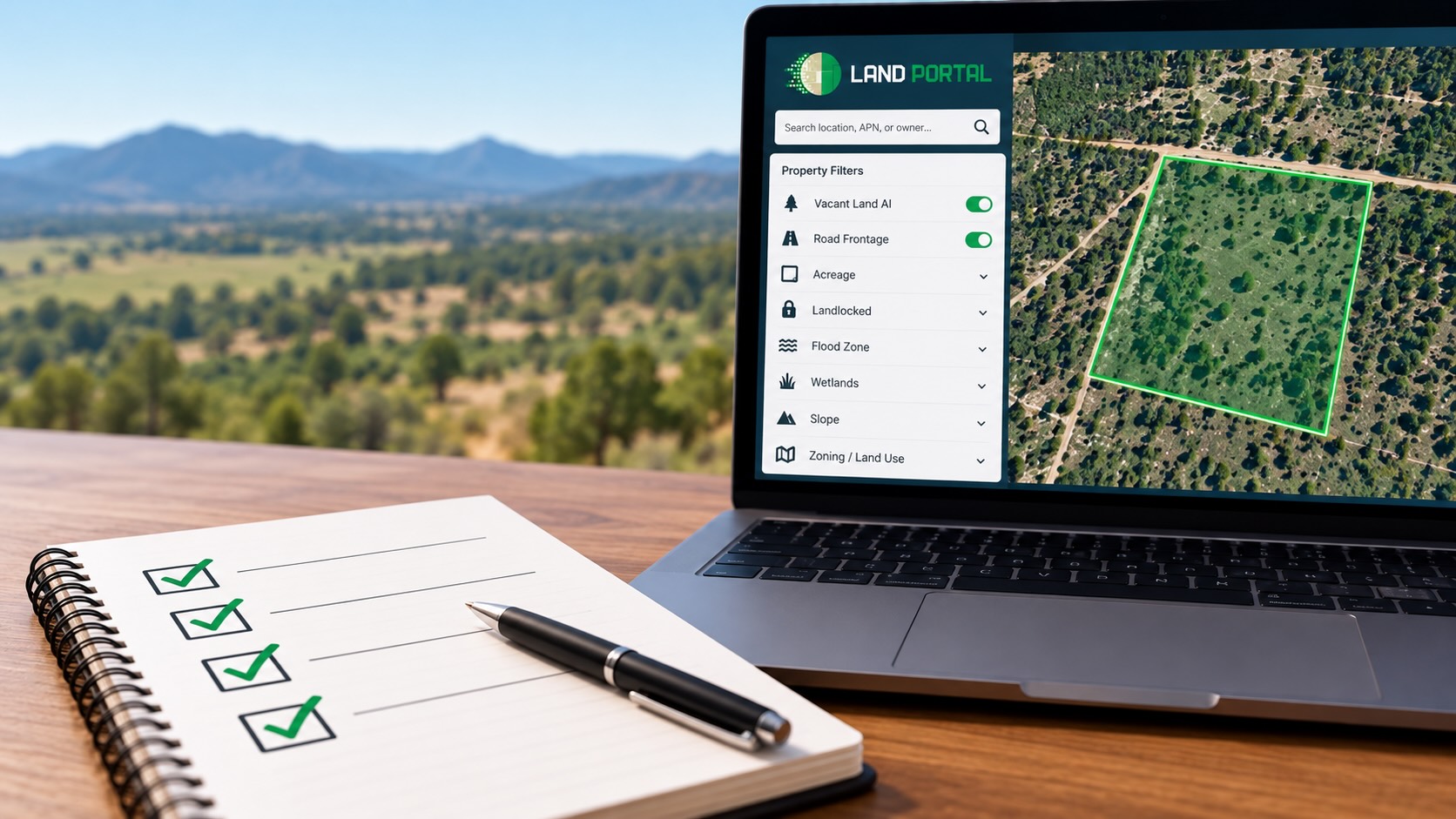
Choosing land investing software isn’t just about finding the platform with the most features.
You need reliable property data, tools that fit your investing strategy, and pricing that makes sense for your business.
Two platforms might both advertise nationwide parcel data, comparable sales, and advanced filters. But how accurate is that information? How often is it updated? And which features are actually included in your subscription?
Before committing to land investing software, it’s worth asking a few important questions.
A free trial can show you how a platform works, but understanding where its data comes from, how its tools operate, and what you’ll actually pay can help you make a more informed decision.
Here are 12 questions to ask when comparing land investing software providers.
Questions About Property Data and Accuracy
The quality of a land investing platform starts with its underlying property data.
Before comparing features, make sure you understand what information you’re working with.
1. Where Does Your Property Data Come From?
Land investing software combines information from multiple sources, including county assessor records, property deeds, MLS listings, and mapping datasets.
Ask the provider where its ownership information, parcel boundaries, and sales records come from.
What to look for: A clear explanation of the data sources behind the platform, rather than a general claim about having the most accurate property data.
2. How Often Is the Data Updated?
Property ownership, mailing addresses, listings, and sales records change over time.
However, not every type of property data is updated on the same schedule.
A platform might receive new ownership records regularly while updating environmental mapping layers less frequently.
What to look for: Transparency about how different datasets are updated and whether the platform can identify when information was last refreshed.
3. How Does the Software Identify Vacant Land?
Not every parcel classified as vacant in county records is necessarily free of structures.
For land investors building acquisition lists, that distinction matters. Mailing owners of properties that don’t fit your criteria wastes time and marketing dollars.
Ask how the software identifies vacant properties and whether it uses building data, imagery, AI, or other information.
What to look for: A clear explanation of the vacant land filter and any available information about its accuracy and limitations.
4. Where Do Comparable Sales Come From?
Comparable sales are essential for determining what land is worth and how much to offer.
Ask whether the platform provides actual sold transactions, active listings, or both.
Also find out how far back its sales history goes and whether you can filter comps by acreage, location, and sale date.
What to look for: Clearly identified sold comps, useful search filters, and enough sales history to evaluate your target markets.
5. How Are Property Value Estimates Calculated?
Some land investing platforms offer automated property valuations or AI-powered price estimates.
These can be useful starting points, but they shouldn’t replace reviewing comparable sales yourself.
Ask what information the estimate considers and whether you can see the properties used to support it.
What to look for: Transparent valuation methods, relevant comparable sales, and the ability to review or adjust the information behind an estimate.
Questions About Mapping and Due Diligence Tools
Finding a property that fits your acreage and price criteria is only the beginning.
The right software should also help you identify potential concerns before making an offer.
6. What Flood Zone Information Does the Platform Provide?
Flood zones can affect a property’s usability, development potential, and resale value.
Ask whether the software includes FEMA flood zone information and how frequently those maps are updated.
You should also understand whether the platform accounts for official map changes.
FEMA provides a process for requesting changes to flood zone designations, which may be relevant when researching individual properties.
What to look for: Clearly identified flood zone data, accessible map layers, and an understanding that mapped flood information may require additional verification.
7. Where Does the Wetlands Data Come From?
Wetlands can affect how a property can be developed or used.
Many land investing platforms provide wetlands overlays, but these are generally intended for preliminary research.
As the EPA explains, identifying wetlands for regulatory purposes involves evaluating soil, vegetation, and hydrology.
What to look for: Reliable wetlands mapping and a clear explanation that map overlays don’t replace professional site evaluations or regulatory determinations.
8. How Do Road Access and Slope Filters Work?
Road access and terrain can significantly influence a property’s value.
Ask whether the platform can identify road frontage, potentially landlocked parcels, and steep terrain.
It’s also worth understanding how these filters work.
For example, a property touching a mapped road doesn’t automatically mean it has legal access. Likewise, a slope percentage doesn’t necessarily tell you whether a specific building site is suitable.
What to look for: Useful access and terrain screening tools that help identify potential concerns without presenting their results as guaranteed.
Questions About Owner Outreach
If you plan to contact landowners through direct mail, phone calls, or other marketing methods, you’ll want to understand how the software supports those activities.
9. Does Skip Tracing Include Do Not Call Scrubbing?
Skip tracing helps investors find available phone numbers and email addresses associated with property owners.
However, obtaining contact information doesn’t automatically mean every number can legally be called or texted.
Ask whether the provider includes Do Not Call (DNC) and litigator scrubbing, what lists are checked, and how the screening process works.
The FTC provides guidance on Do Not Call requirements, including rules that may apply to certain telemarketing activities.
What to look for: Clear information about contact screening and its limitations. Investors remain responsible for following applicable outreach regulations.
10. How Does the Software Handle Direct Mail?
If direct mail is part of your acquisition strategy, find out whether the platform allows you to create and send campaigns directly.
Ask about available mail formats, customization options, pricing, and how mailing addresses are handled.
Address accuracy is particularly important when sending large campaigns. The USPS Move Update standards establish address-update requirements for certain discounted commercial mailings.
What to look for: Straightforward campaign setup, transparent per-piece pricing, and clear information about mailing address preparation.
Questions About Pricing and Account Access
Even if a platform has the features you need, it’s important to understand what happens as your business grows.
11. Can I Export My Data If I Cancel?
Over time, you may build property lists, save research, and organize information within your software.
Before subscribing, ask what you can export and whether there are limits on downloading your information.
Also find out what happens to saved maps, property notes, and other account data if you cancel.
What to look for: Clear export options and written information about what remains accessible after cancellation.
12. What’s Included in the Subscription, and What Costs Extra?
The monthly subscription price doesn’t always tell the full story.
Some platforms charge separately for skip tracing, property exports, direct mail, additional users, or advanced research features.
Before choosing a plan, ask:
How many property exports are included?
Are skip traces charged separately?
Which research and mapping features require a higher plan?
Are there additional charges for sending direct mail?
What happens if you exceed your monthly allowances?
What to look for: Transparent pricing that makes it easy to estimate your actual monthly costs based on how you plan to use the platform.
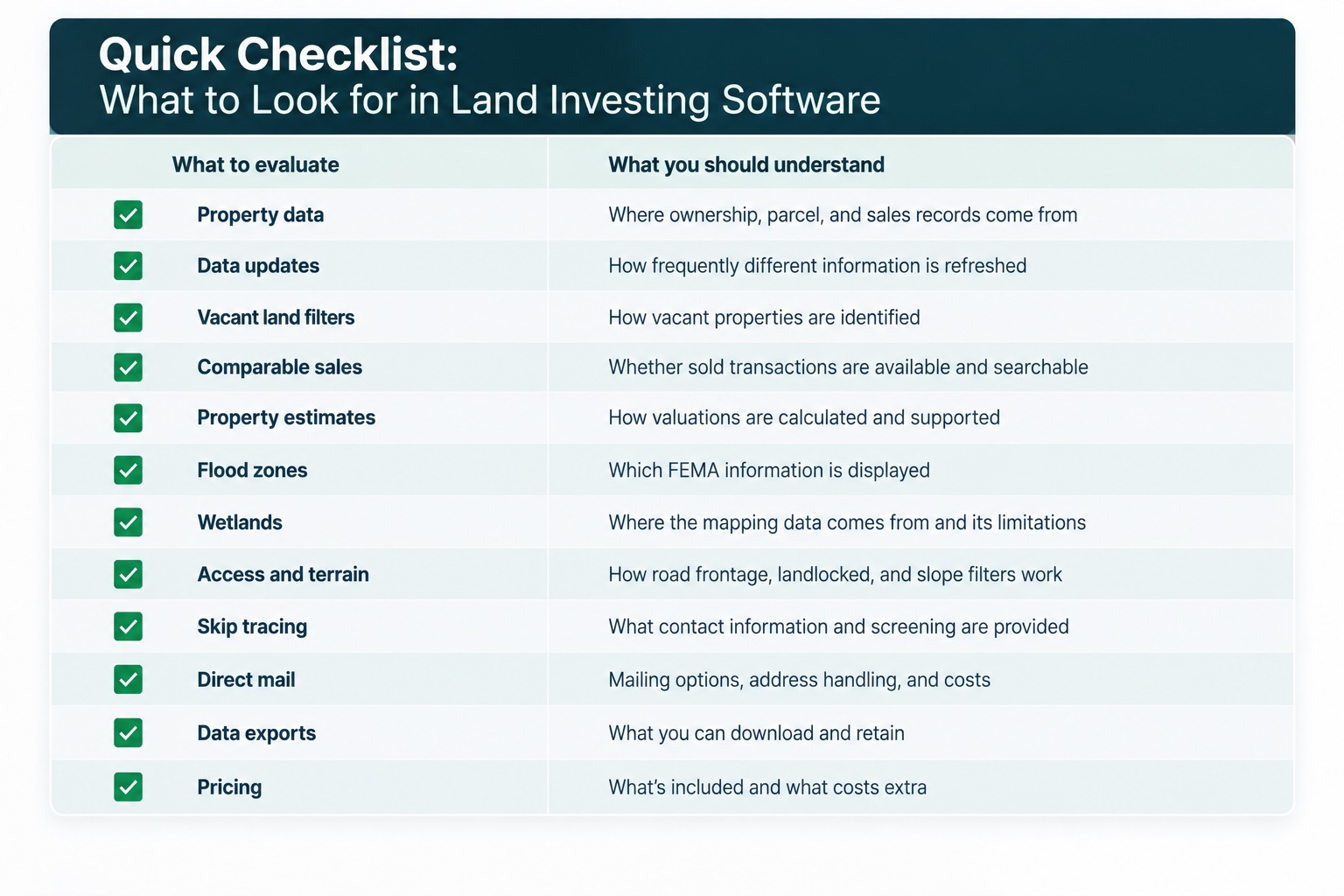
You don’t necessarily need every feature on this list.
The goal is to find software that supports how you actually invest in land, whether that’s building acquisition lists, evaluating properties, researching markets, or managing outreach.
How Land Portal Fits Into These Considerations
Land Portal is designed specifically for land investors, combining nationwide property data with market research, mapping, valuation, and owner outreach tools.
For property research, Land Portal includes features such as:
Vacant Land AI: Helps identify properties likely to be vacant.
Road Frontage AI and Landlocked filters: Screen properties for potential access concerns.
Wetlands, FEMA, and slope tools: Identify environmental and terrain characteristics that may require further investigation.
Market Research: Compare market activity using sold volume, inventory, days on market, and other metrics.
LP Estimate: Generate AI-powered comp reports supported by comparable property information.
For owner outreach, Land Portal offers individual and bulk skip tracing with DNC and litigator scrubbing, along with a Mail Center for sending standard letters and real handwritten mail.
Different features and allowances are available across subscription plans, so it’s worth reviewing which tools match your investing strategy.
Try the Software Before You Commit
Asking the right questions is important, but actually using the software is just as valuable.
During a free trial, try researching a market you already know. Pull a targeted property list, evaluate a few parcels, review comparable sales, and test the mapping tools.
You’ll quickly get a better understanding of whether the platform provides the information you need and how easily you can use it.
The best land investing software isn’t necessarily the one with the longest feature list. It’s the one that helps you find and evaluate better opportunities for your business.
Explore Land Portal’s plans and start your 7-day free trial to see how the platform fits your land investing strategy.
Frequently Asked Questions
What’s the most important question to ask a land investing software provider?
Start by asking where its property data comes from and how frequently it’s updated. Ownership records, parcel information, and comparable sales form the foundation of your research, so understanding their sources and limitations is important.
Is a free trial enough to evaluate land investing software?
A free trial is one of the best ways to evaluate usability and features, but it may not answer every question. You should also review pricing, data sources, export policies, and any usage-based charges before subscribing.
Does DNC scrubbing mean every phone number is safe to call?
No. DNC scrubbing can help identify numbers that appear on certain screening lists, but it doesn’t guarantee that every remaining number can legally be contacted. Applicable federal and state rules, consent requirements, and other restrictions may still apply.
Can flood zone and wetlands mapping replace property due diligence?
No. Mapping layers are valuable screening tools, but they don’t replace site-specific evaluations, title research, or professional assessments when necessary.
Are AI property value estimates reliable enough to make an offer?
AI estimates can provide a useful starting point, but investors should review the underlying comparable sales and account for property-specific factors such as location, acreage, access, and terrain before determining an offer price.

Your Premium Source For Real Estate Data
© Copyright 2026 Land Portal – All Rights Reserved