All-in-One Land Investing Software vs. Multiple Tools
Most land investors do not intentionally build a complicated software setup. It usually happens one tool at a time.
You use one platform to pull property records, another to run comps, another for skip tracing, and another to send mail. Before long, you are exporting spreadsheets, reformatting columns, removing duplicates, and moving the same property data between several different systems.
Using multiple tools can work, especially as a business grows. But every additional handoff creates more manual work and another opportunity for information to be lost or entered incorrectly.
Here is how an all-in-one land investing platform compares with using separate tools, and how to decide which approach makes the most sense for your business.
Where Using Multiple Tools Creates Problems
A typical land investing workflow includes several steps. You research a market, find properties that match your criteria, evaluate the parcels, review comparable sales, identify the owners, and begin outreach.
For investors involved in land flipping, this workflow helps identify promising properties, evaluate potential deals, and move efficiently from property research to acquisition and resale.
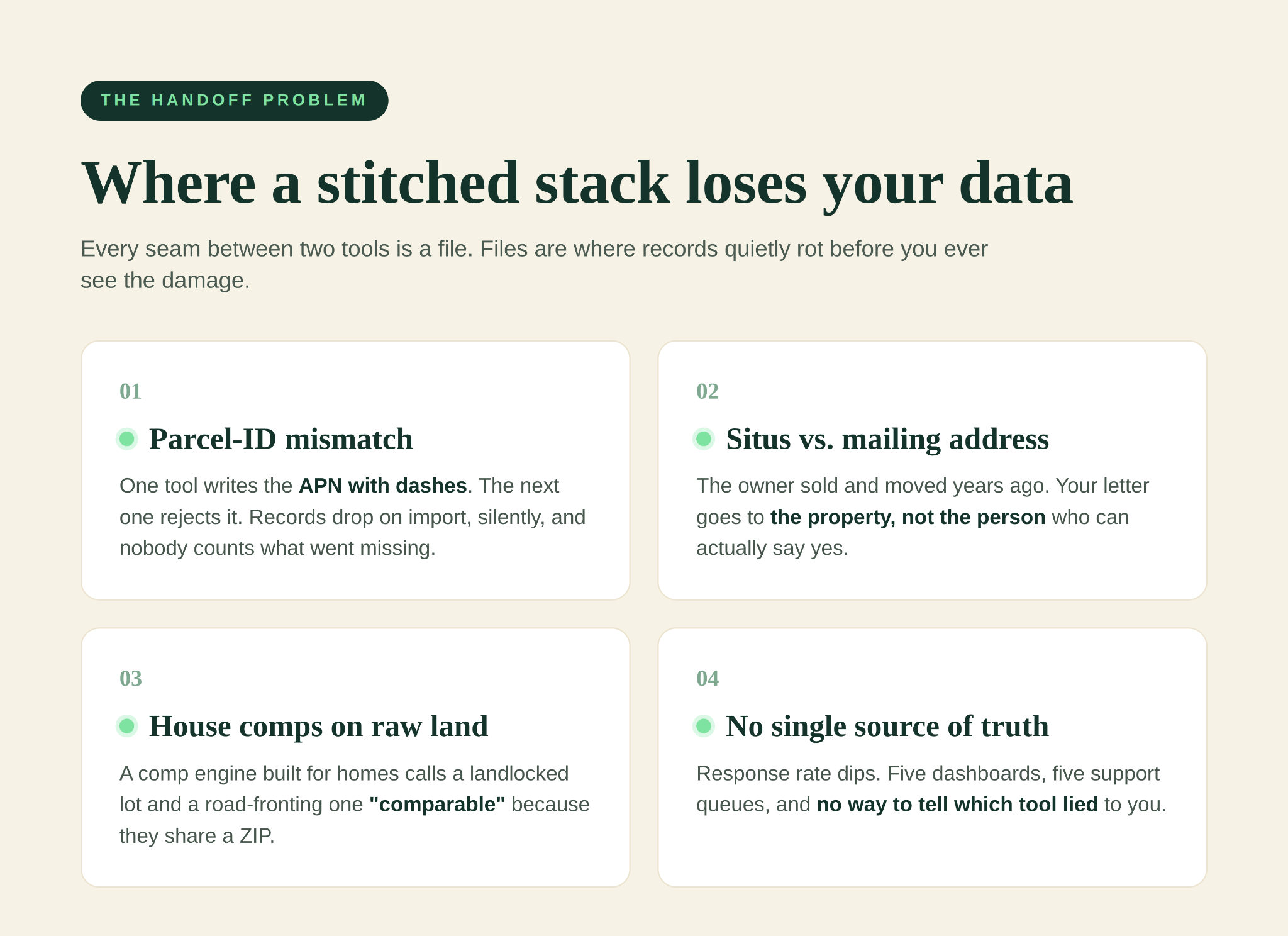
When each step happens in a different platform, the data has to be exported, reformatted, and uploaded repeatedly. That creates extra work and makes it easier for records to be duplicated, mismatched, or left behind.
Even small formatting differences can create problems. One platform may format APNs with dashes while another requires them without. A skip tracing service may match records using the property address, while your mailing campaign needs the owner’s mailing address.
When information moves through several systems, it becomes harder to spot where an error occurred. If a campaign underperforms, you may not know whether the issue came from the original property data, the filters, the valuation, the owner information, or the mail itself.
Keeping more of the process in one platform makes the workflow easier to track. Property data, research, comps, and owner information stay connected to the same parcel, reducing the amount of manual cleanup required.
The Real Cost of Using Multiple Tools
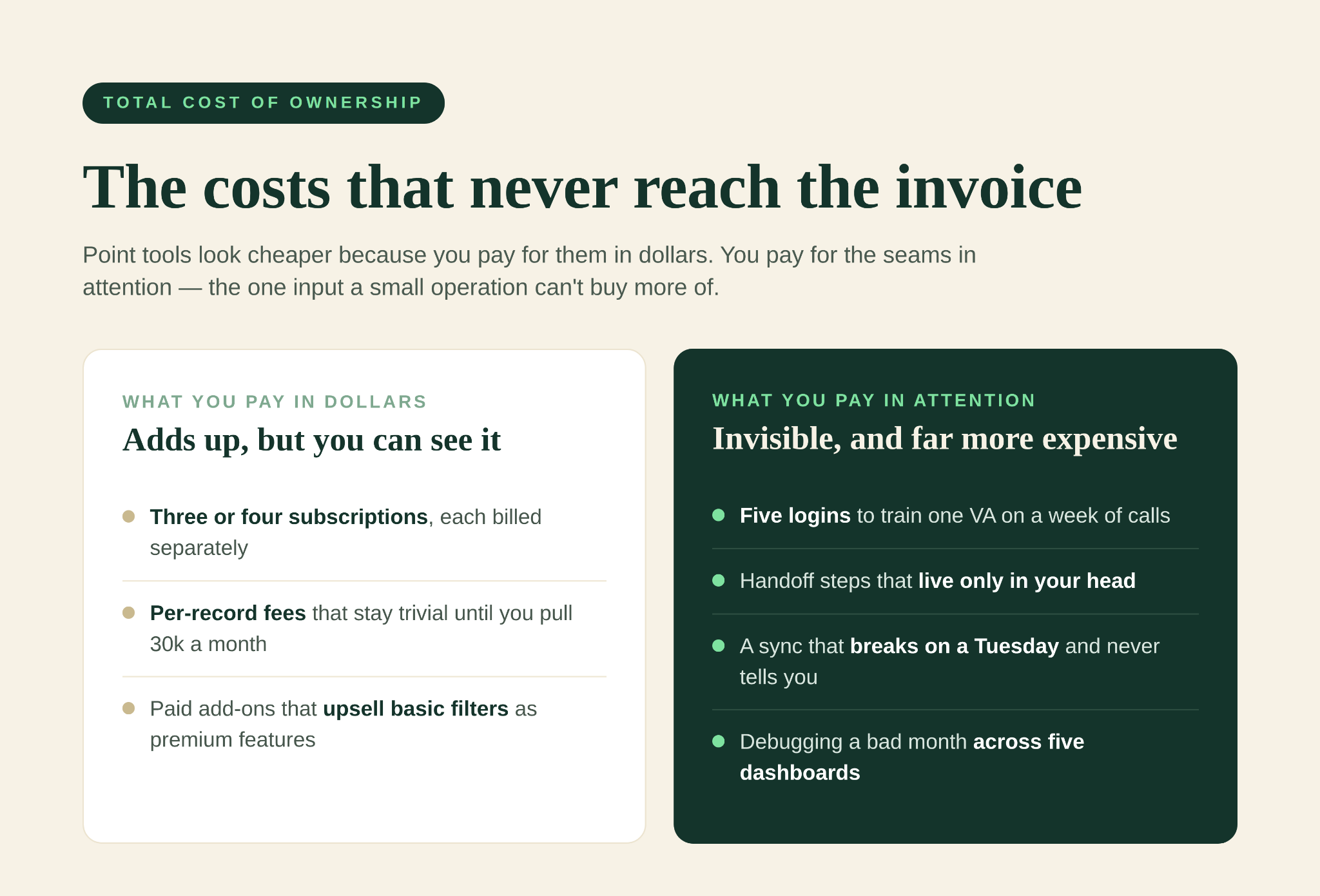
The monthly subscription prices are only part of the cost.
Multiple platforms also mean multiple logins, separate billing, repeated exports, and more steps to document and train. That may be manageable for one person, but it becomes harder when you bring in a virtual assistant or begin building a team.
Every additional tool also creates another dependency. Pricing can change, integrations can stop working, and team members need to learn how information moves from one system to the next.
Separate tools may appear less expensive individually, but the time spent managing them can quickly outweigh the difference in subscription cost.
Where an All-in-One Platform Adds Value
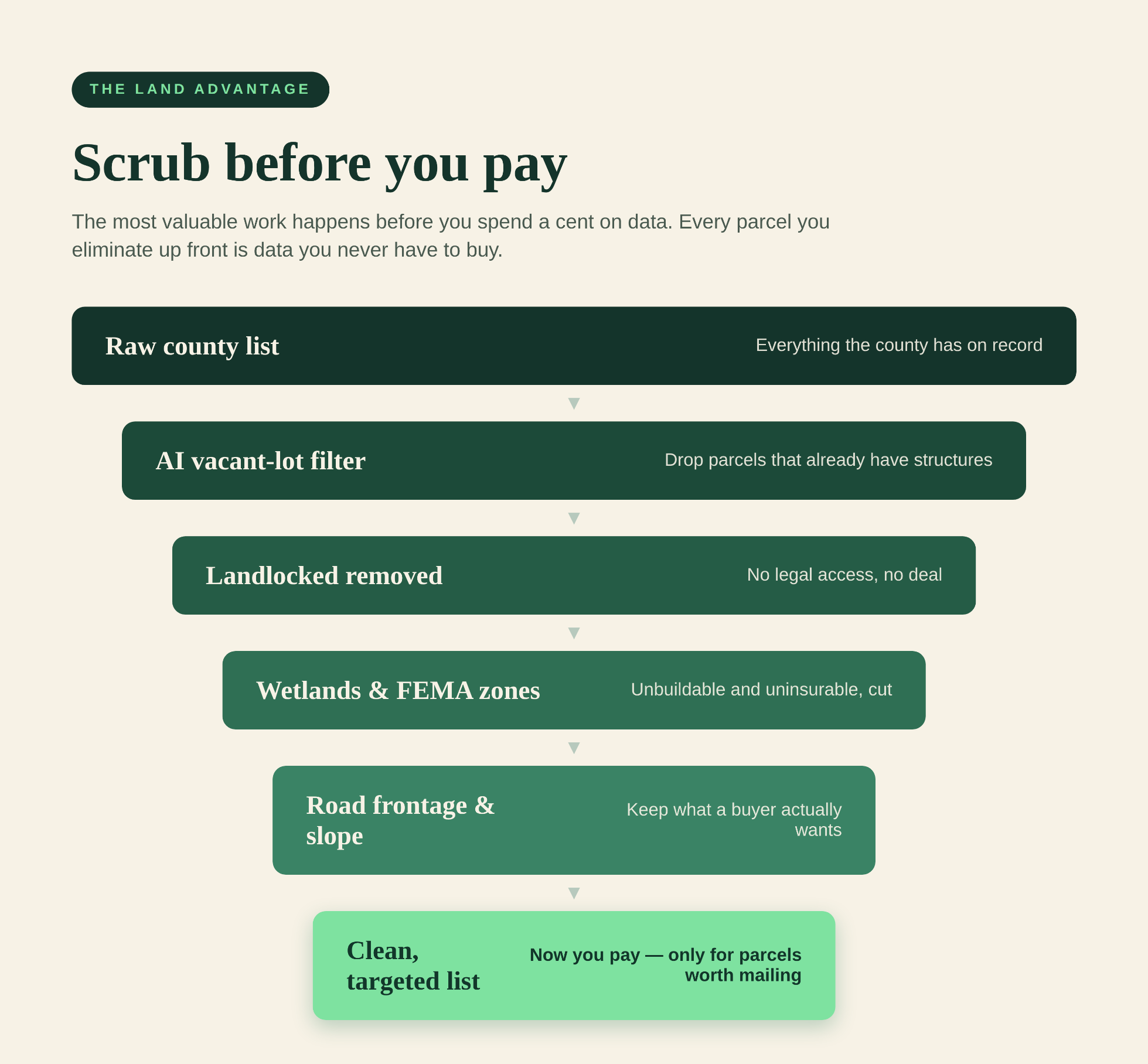
The biggest advantage of an all-in-one platform is being able to research and filter properties before spending money on records, skip tracing, or mail.
Landlocked parcels, heavy wetlands, steep slopes, flood zones, and hidden structures can make a property a poor fit before an investor ever contacts the owner.
When those checks require several different tools, evaluating a parcel takes more time and often happens after the record has already been purchased. A land-specific platform allows investors to apply those filters earlier and build a cleaner list from the start.
When these steps happen in one mapping environment, you can remove poor-fit properties before they reach your mailing list. The remaining parcels can then be researched, comped, exported, and skip traced without moving the data between several platforms.
Land Portal is built around that connected workflow. The parcel details, mapping layers, comparable sales, and owner information remain tied to the same property, making it easier to move from initial research to owner outreach.
The value of an all-in-one platform is not that it replaces every specialized tool. It reduces the number of manual handoffs involved in the parts of the process land investors use most often.
The Real Limitations of All-in-One Software
An all-in-one platform will not always replace every tool in a growing land business.
A team may still prefer a dedicated CRM, dialer, accounting platform, or project management system. Specialized tools often provide more advanced features for the specific job they were built to perform.
The goal is not necessarily to force every part of the business into one platform. It is to keep the core property research and acquisition workflow connected, then add specialized tools only when the need is clear.
Before choosing an all-in-one platform, make sure its strongest features match the work your business performs most often.
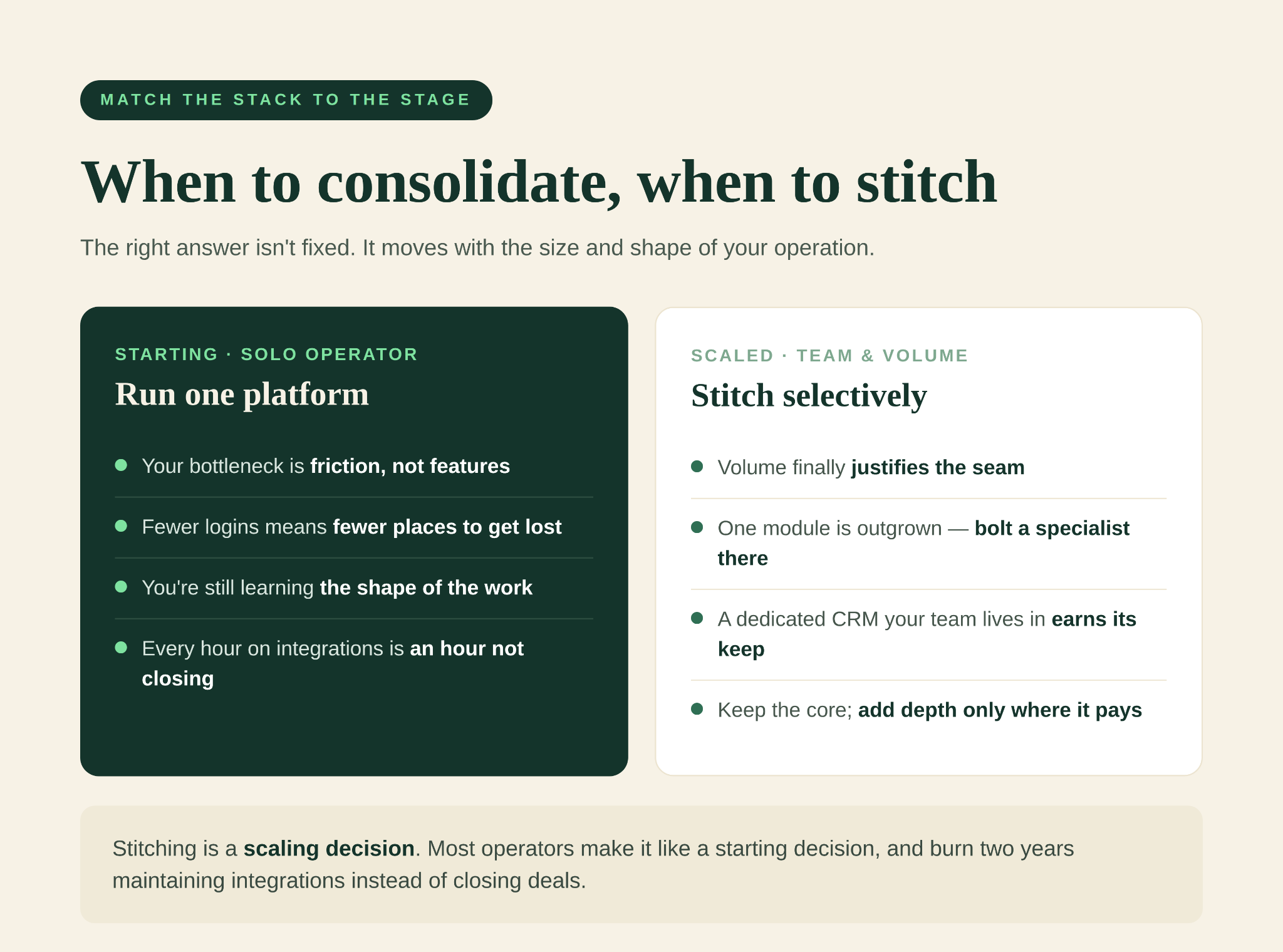
Your Software Needs Change as You Grow
The right answer changes depending on where you are.
How to Actually Make the Decision
For newer investors and smaller operations, using one platform is usually the simplest place to start. Fewer tools mean fewer logins, fewer exports, and less time spent learning how separate systems work together.
This is also why most land investing education starts with a straightforward process. It is easier to learn how to research markets, evaluate properties, and build mailing lists before creating a more customized software setup.
As the business grows, the needs may change. A larger team may require a dedicated CRM, project management system, dialer, or other specialized software.
Adding those tools can make sense once the volume and team structure justify them. The mistake is building a complicated setup before the business has a clear need for it.
Land Portal brings market research, land-specific property filters, mapping, MLS comps, owner data, skip tracing, and exports into one platform built specifically for land investors.
Every account also includes access to Land Portal University, with step-by-step training to help you build better lists, evaluate properties, and use the platform more effectively.