


Log in
5 Best Land Flipping Software Tools in 2026
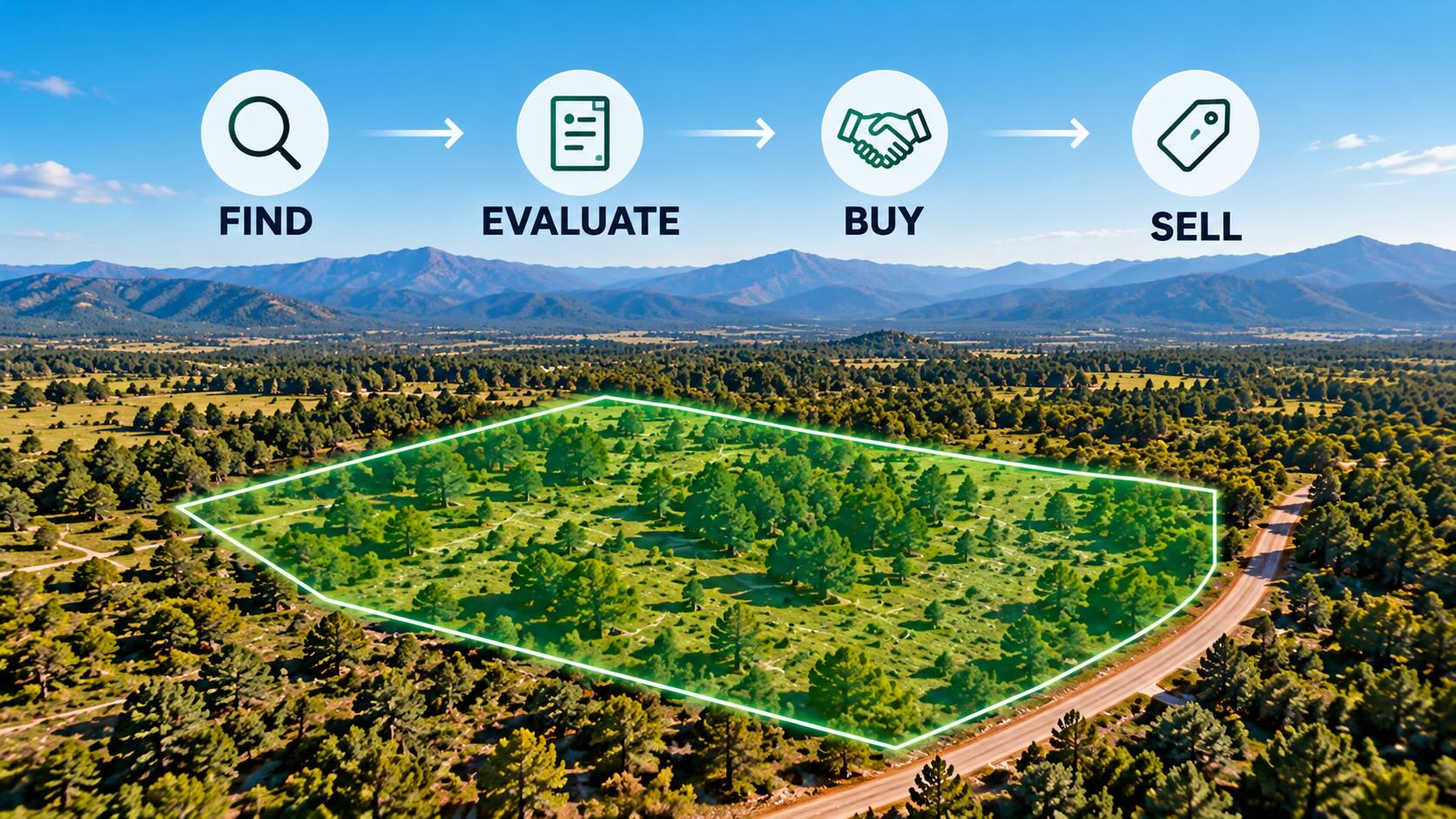
Flipping land involves more than finding a cheap property and selling it for a higher price.
You need to identify potential deals, research the property, determine what it’s worth, contact the owner, and eventually find a buyer.
The right software can make each of those steps easier. But not every land flipping platform is designed to do the same thing.
Some focus on finding off-market properties and building acquisition lists. Others specialize in comparable sales, property mapping, or marketing land for resale.
Here are five land flipping software tools worth considering in 2026, including what each does best and which investors they’re most useful for.
Best Land Flipping Software: Quick Comparison
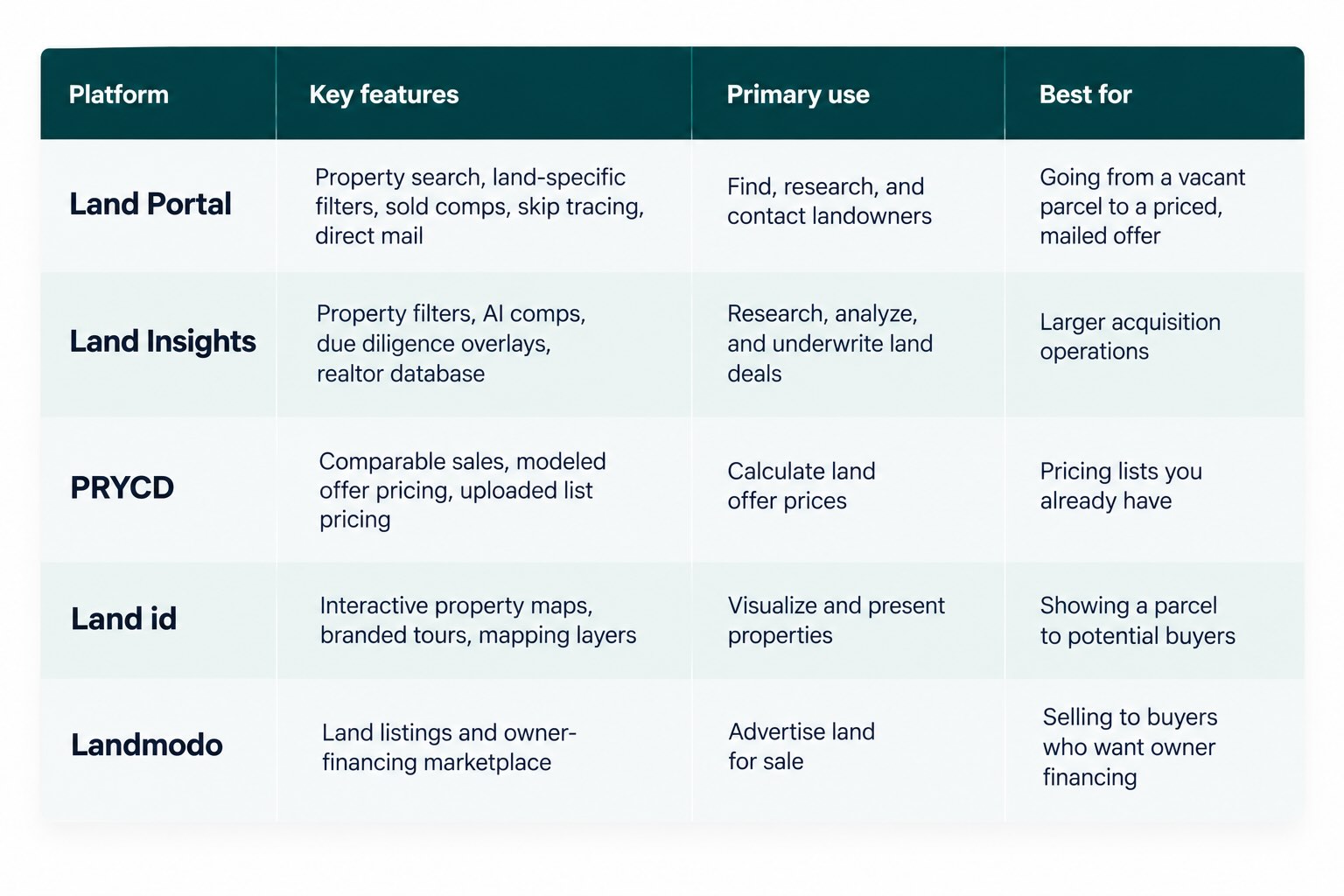
These platforms serve different parts of the land flipping business. Depending on your strategy, you may benefit from one comprehensive research platform or a combination of specialized tools.
1. Land Portal: Best for Finding and Evaluating Land Deals
Land Portal is designed specifically for land investors, combining nationwide property data with tools for finding, researching, valuing, and contacting landowners.
Instead of relying on separate services for property lists, comparable sales, and owner outreach, investors can handle much of the acquisition process in one platform.
Key features include:
Vacant Land AI: Identify properties likely to be vacant.
Road Frontage AI and Landlocked filters: Screen properties for potential access concerns.
Wetlands, FEMA, and slope tools: Research environmental and terrain characteristics.
Market Research: Compare land sales activity, inventory, days on market, and price per acre.
LP Estimate and AI Comp Reports: Evaluate potential property values using comparable sales.
Skip tracing and Mail Center: Find available owner contact information and send direct mail campaigns.
Land Portal also provides nationwide MLS data covering active and sold land listings, which is particularly useful when determining offer prices.
For investors who regularly build acquisition lists and contact property owners, having these tools together can simplify the process of finding potential deals.
Best for: Land flippers who want to find off-market opportunities, evaluate properties, and contact owners using one platform.
Pricing: Monthly plans are available, with features and usage allowances varying by subscription. See Land Portal’s current plans.
2. Land Insights: Best for Larger Acquisition Operations
Land Insights is another land investing platform offering property research, data filtering, and underwriting tools.
It provides more than 100 property filters, due diligence mapping layers, and AI-powered comparable sales.
The platform also includes features for evaluating potential profits and researching real estate agents who may help with resale.
Key features include:
-
Advanced property search and filtering
-
Environmental and due diligence overlays
-
AI comparable sales
-
Offer and profit calculations
-
Realtor research tools
-
Property data exports
-
Land Insights can be particularly useful for investors who regularly analyze large property lists and want research and underwriting tools together.
Its subscription structure is also worth considering, as the agency’s research identifies quarterly and annual payment options rather than a standard month-to-month arrangement.
Best for: Land investors running larger acquisition operations who want extensive filtering, property analysis, and export capabilities.
Pricing: See Land Insights for current subscription options and data costs.
3. PRYCD: Best for Calculating Land Offer Prices
PRYCD focuses on helping investors research property values and determine potential offer prices.
Its tools are particularly relevant for land flippers who already have acquisition lists but need help deciding what to offer.
Rather than manually pricing every property from scratch, investors can use modeled pricing and comparable sales information to establish starting points.
Key features include:
Comparable sales research
Modeled property offer pricing
Pricing for uploaded property lists
Market-based valuation information
Property comp reports
For investors sending offers to large numbers of landowners, PRYCD can help streamline the pricing process.
However, automated offer prices still need to be reviewed against actual comparable sales and individual property conditions.
Best for: Investors who already have property lists and want help calculating potential offer prices.
Pricing: Subscription plans and usage-based charges are available. Review PRYCD’s pricing.
4. Land id: Best for Property Maps and Buyer Presentations
Land id is a mapping platform that helps users explore and present property information.
While mapping is useful during acquisition research, Land id’s branded property tours and shareable maps can be particularly valuable when marketing land for resale.
Investors can use these tools to help potential buyers understand a property’s location, boundaries, surrounding area, and other characteristics.
Key features include:
Interactive property maps
Parcel and ownership information
Multiple mapping layers
Branded property tours
Shareable and embeddable maps
Comparable sales reports on eligible plans
For land flippers selling rural or undeveloped properties, clear property maps can make listings more informative and help buyers visualize the land.
Land id is primarily a mapping and presentation tool, so investors may still need additional software for certain acquisition and outreach activities.
Best for: Investors who want professional property maps and visual presentations to share with potential buyers.
Pricing: See Land id’s pricing for available plans and mapping features.
5. Landmodo: Best for Marketing Owner-Financed Land
Landmodo is different from the other platforms on this list.
Rather than focusing on finding or evaluating properties, it’s a marketplace where landowners and investors can advertise land for sale.
The platform is particularly relevant for investors who offer owner financing, allowing buyers to purchase land through installment payments rather than paying the entire purchase price upfront.
Key features include:
Vacant land listings
Owner-financed property listings
Multiple listing allowances based on membership
Property descriptions and photos
Exposure to buyers searching for land
For land flippers, Landmodo can be an additional place to market properties after acquisition.
However, it isn’t a substitute for software used to research properties, build acquisition lists, or evaluate comparable sales.
Best for: Land flippers looking for an additional marketplace to advertise properties, particularly when offering owner financing.
Pricing: Listing plans vary by the number of properties and membership level. See Landmodo’s membership options.
What Features Matter Most in Land Flipping Software?
The best software depends on how you operate your land flipping business.
However, several capabilities are particularly valuable when finding and evaluating properties.
Property Search and Targeted Lists
Finding suitable properties is the starting point for most land flipping businesses.
Look for software that lets you filter properties by acreage, location, ownership, vacant land status, and other criteria relevant to your buying strategy.
More targeted lists can help reduce the time and money spent contacting owners of properties that don’t fit your criteria.
Land-Specific Due Diligence
A property that looks like a great deal on paper may have issues that affect its usability or resale value.
Road access, wetlands, flood zones, slope, and zoning are all worth investigating.
Mapping overlays and land-specific filters help identify potential concerns early, although important details still need verification before purchasing.
Comparable Sales and Valuation
Knowing what land is worth is essential for determining a profitable offer.
Look for software that provides recent sold land comps and allows you to compare properties based on acreage, location, and other relevant characteristics.
AI-powered estimates can be helpful, but they should support your research rather than replace it.
Owner Contact Information and Direct Mail
Many land flippers find deals by contacting owners of off-market properties.
Skip tracing, property exports, and direct mail tools can help support those efforts.
When comparing platforms, consider the costs of exporting records, finding contact information, and sending mail—not just the subscription price.
Resale and Property Marketing
Finding a profitable deal is only half the process. You also need a plan for selling the property.
Depending on your strategy, useful resale tools might include shareable property maps, listing marketplaces, realtor research, and property marketing materials.
Think about how you plan to reach buyers before purchasing a property.
How to Choose the Right Land Flipping Software
Before subscribing to a platform, consider where you spend the most time in your business.
If you’re primarily focused on finding off-market deals, property research and owner outreach tools will likely be your priorities.
If you already have acquisition lists but struggle with pricing, comparable sales and offer calculation tools may be more valuable.
And if you’re acquiring properties successfully but need more buyers, mapping and listing platforms could help support your resale efforts.
When comparing software, ask yourself:
1. Does it cover my target markets? Make sure property data and comparable sales are available in the counties where you invest.
2. Does it have land-specific features? Road access, wetlands, slope, and vacant land filters are often more useful than general real estate search criteria.
3. Can I review sold comps? Accurate offer pricing depends on understanding what comparable properties have actually sold for.
4. What will it cost to use regularly? Consider exports, skip tracing, direct mail, and other usage-based charges.
5. Does it support my current strategy? Choose tools that address the parts of your business where you need the most help.
You don’t necessarily need five different platforms to run a successful land flipping business.
For many investors, starting with software that handles property research, valuation, and acquisition can provide the foundation for finding profitable opportunities.
Additional tools can be added as your business grows.
Which Land Flipping Software Is Best for You?
Each of these platforms offers something different.
Land Portal is a strong choice for investors who want to find vacant land, evaluate properties, research comparable sales, and contact owners from one platform.
Land Insights offers extensive research and underwriting capabilities for investors managing larger acquisition operations.
PRYCD focuses on pricing offers and evaluating existing property lists.
Land id helps investors create detailed property maps and presentations.
Landmodo provides a marketplace for advertising land, particularly owner-financed properties.
For active land flippers, the biggest priority is usually finding properties that can be purchased at the right price and resold profitably.
That’s why having reliable property data, sold comps, and land-specific research tools matters.
If you’re looking to improve how you find and evaluate land deals, explore Land Portal’s plans and start your 7-day free trial.
Frequently Asked Questions
What is the best land flipping software in 2026?
It depends on your needs. Land Portal is a strong option for finding, researching, valuing, and contacting landowners.
Land Insights offers extensive research and underwriting tools, PRYCD focuses on offer pricing, Land id specializes in mapping, and Landmodo helps investors advertise land for resale.
How much does land flipping software cost?
Pricing varies by platform. Some offer monthly subscriptions, while others use quarterly or annual plans.
Additional charges may apply for property exports, skip tracing, valuation reports, and direct mail. Compare the total cost based on how you plan to use the software.
How does land flipping software help calculate offer prices?
Many platforms provide comparable sales, automated valuations, or modeled offer prices. Investors can use this information to estimate resale value and determine a purchase price that leaves room for profit after transaction, holding, and marketing costs.
Should land flippers check wetlands before making offers?
Yes. Wetlands can affect a property’s usability and development potential. Reviewing wetlands mapping during initial research can help identify concerns, but investors should verify important findings before purchasing.
The U.S. Fish and Wildlife Service provides national wetlands research and mapping resources.
Do I need different land flipping software for every state?
Not necessarily. Several platforms provide nationwide property information.
What’s more important is confirming that the software has useful ownership records, comparable sales, and mapping information for the specific counties where you invest.
Your Premium Source For Real Estate Data
© Copyright 2026 Land Portal – All Rights Reserved