


Log in
Land Investing vs Residential Real Estate: Full Comparison
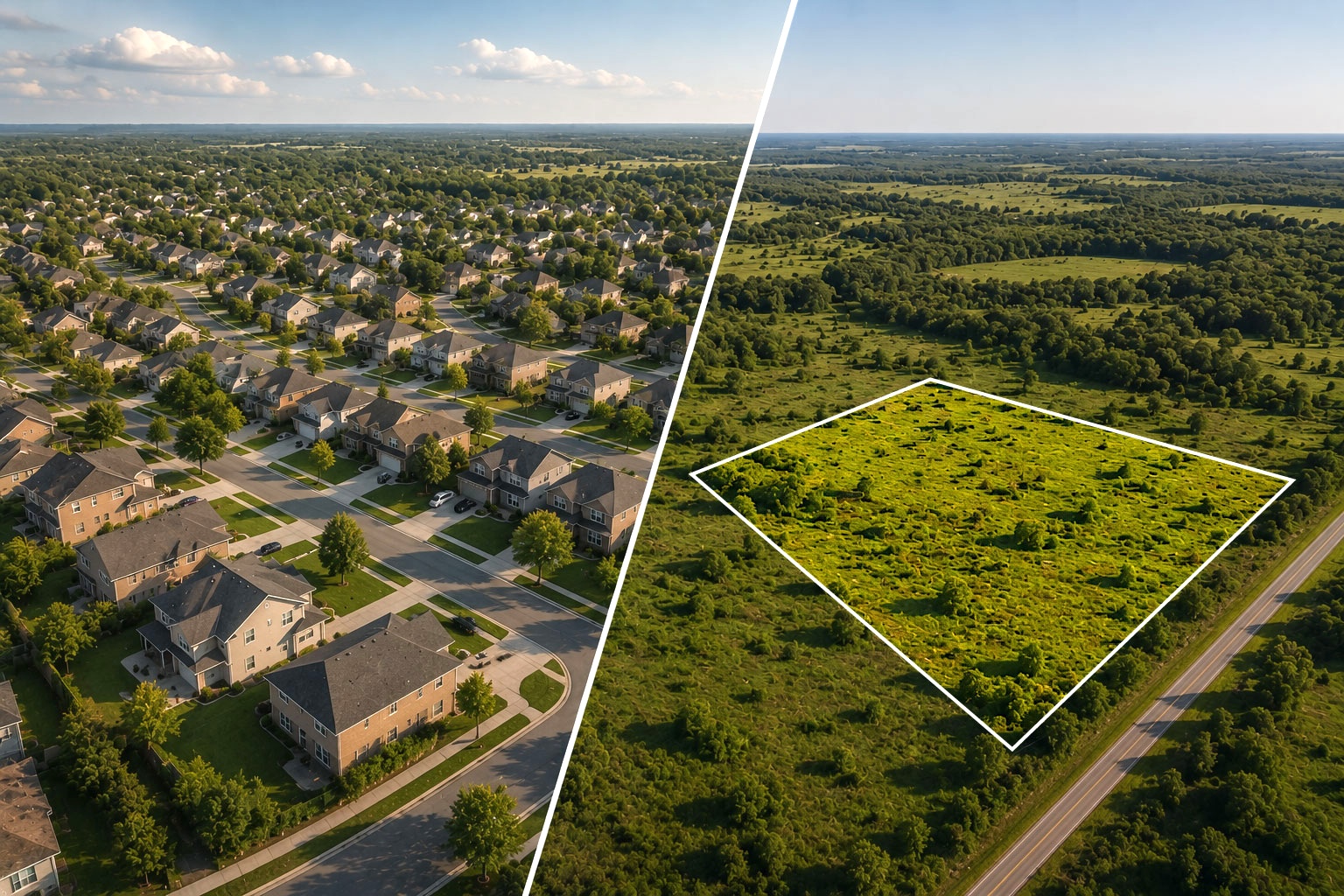
Land investing and residential real estate investing both involve buying property with the goal of creating a return, but the day-to-day business models are very different.
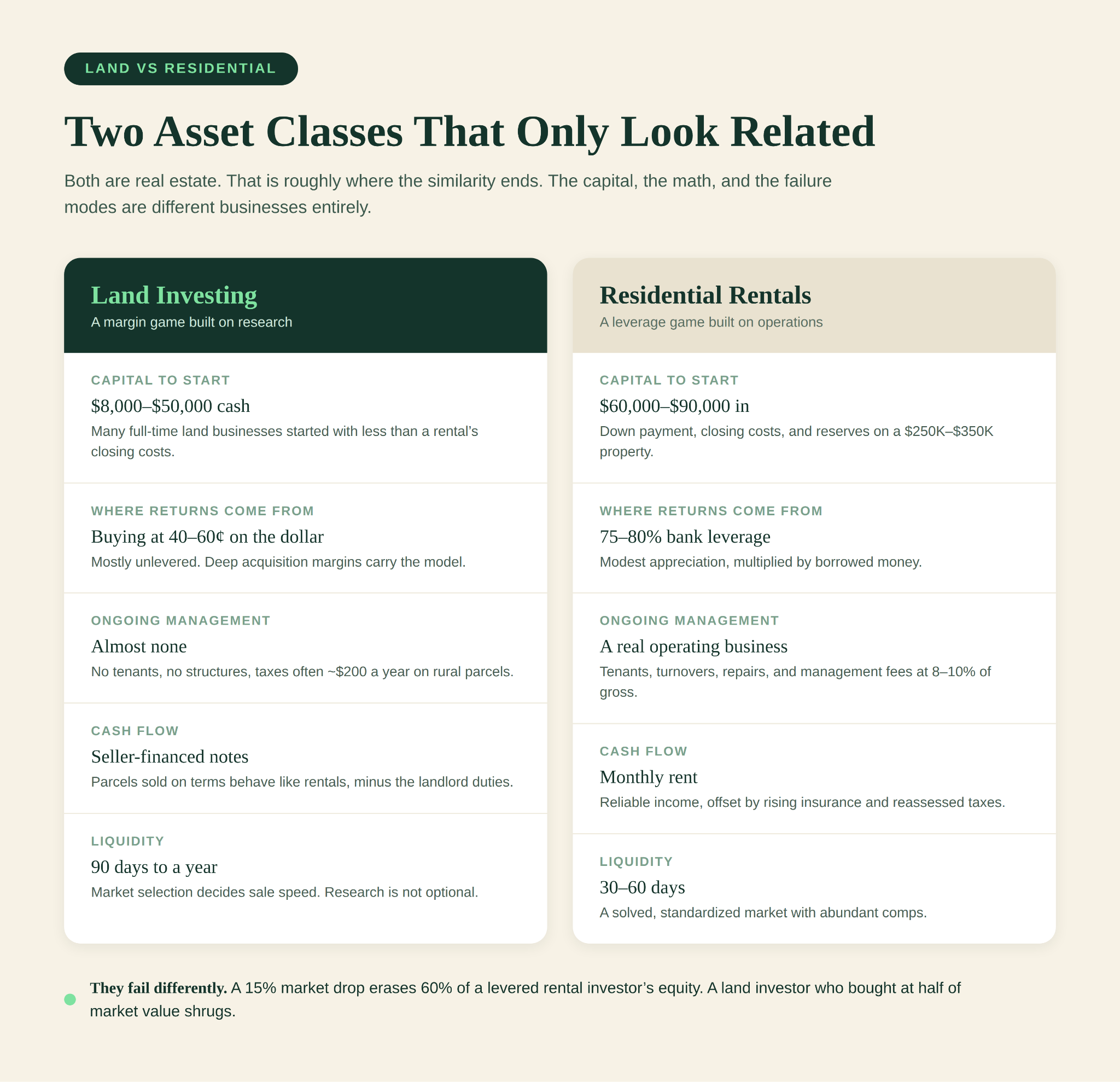
Residential investors typically rely on financing, rental income, appreciation, and property management. Land investors tend to focus more heavily on market research, buying below market value, property evaluation, and creating a profitable exit through resale, seller financing, or subdivision.
Neither approach is automatically better. The right fit depends on your available capital, how you want to spend your time, the type of risk you’re comfortable with, and whether you prefer managing properties or finding and evaluating deals.
Here’s how the two strategies compare.
Startup Capital
Residential real estate usually requires more upfront capital because investors are often buying higher-priced assets and financing them through traditional lenders.
Even with a mortgage, a rental property may require a substantial down payment, closing costs, reserves, repairs, and ongoing operating expenses.
Vacant land can often be acquired at a lower total purchase price, which can make it more accessible for investors starting with less capital. Many land investors also purchase properties with cash rather than relying on conventional financing.
That lower barrier to entry is one of land investing’s biggest advantages, but it also means more investors can enter the same markets.
As competition grows, choosing the right market and targeting the right properties becomes more important than simply sending mail into any county that looks inexpensive.
Ongoing Management Looks Very Different
Residential rentals require ongoing management.
Depending on the property and market, that may include:
• Tenants, turnovers, and maintenance
• Repairs and maintenance
• Property management
• Insurance
• Property taxes
• Vacancies and collection issues
Vacant land generally has fewer operating responsibilities because there are no tenants, structures, appliances, or routine maintenance issues.
Land still has carrying costs, including property taxes and sometimes association fees, maintenance, or other property-specific expenses, but the ongoing management burden is usually much lighter than a rental property.
The Trade-Off: Monthly Cash Flow
Rental properties can produce monthly income while the investor continues to hold the asset.
Vacant land usually doesn’t generate income while it’s sitting in inventory, which means market selection and expected resale time matter even more. If a parcel takes longer than expected to sell, there may be no monthly rent to offset the wait.
Land investors can create recurring income by selling properties with seller financing and collecting payments over time.
That gives land investors the ability to build a note portfolio, but the cash flow works differently from rent. It depends on finding the right buyer, structuring the terms appropriately, and managing the note rather than managing the physical property.
Land Is Harder to Value
Residential properties are generally easier to compare because they have more standardized characteristics and often more recent sales data.
Vacant land is less standardized.
Two parcels with the same acreage in the same area can have very different values depending on access, terrain, wetlands, utilities, zoning, buildability, and other physical characteristics.
That makes comparable sales research especially important in land investing.
Why land comps are hard
Two parcels with similar acreage can still have very different values because one may have:
• Better road frontage
• Legal access
• More usable acreage
• Better soil or septic potential
• Fewer wetlands or flood constraints
• Easier terrain
• Better utility access
Land sales can also be less frequent than residential sales in many rural markets, which means investors may have fewer close comps to work with.
Strong land valuation therefore depends on both the quality of the sales data and the investor’s ability to understand the physical differences between the subject property and the available comps.
Why Land-Specific Research Tools Matter
This is where software built specifically for land investing can make a meaningful difference.
Land Portal combines market research, nationwide MLS land comps, property data, mapping, and land-specific filters so investors can evaluate both the market and the individual parcel in the same workflow.
Instead of relying only on a county-wide average or a handful of nearby listings, investors can compare recent sold properties, narrow comps by acreage and location, and review the physical characteristics that may affect value.
Better data doesn’t replace judgment, but it gives you a stronger foundation for that judgment.
Financing Works Differently
Traditional lenders are generally more comfortable financing houses because residential real estate has standardized appraisal methods, established lending products, and a large resale market.
That gives residential investors more opportunities to use leverage and preserve their cash for additional investments.
Financing vacant land can be more limited, particularly for smaller or unimproved properties.
Land loans may require larger down payments, shorter terms, or different underwriting than residential mortgages, and many land investors choose to purchase lower-priced deals with cash.
That difference changes how each strategy typically creates returns.
Residential investors may rely more heavily on leverage, appreciation, and rental income.
Land investors often rely more heavily on buying at an attractive price and creating enough margin between acquisition and resale.
Neither approach is inherently safer. They simply expose the investor to different types of risk.
Due Diligence Is Different for Vacant Land
Residential due diligence usually centers on the structure, title, and value of the property.
Vacant land requires a different set of checks because many of the issues that affect value and usability aren’t visible without additional research.
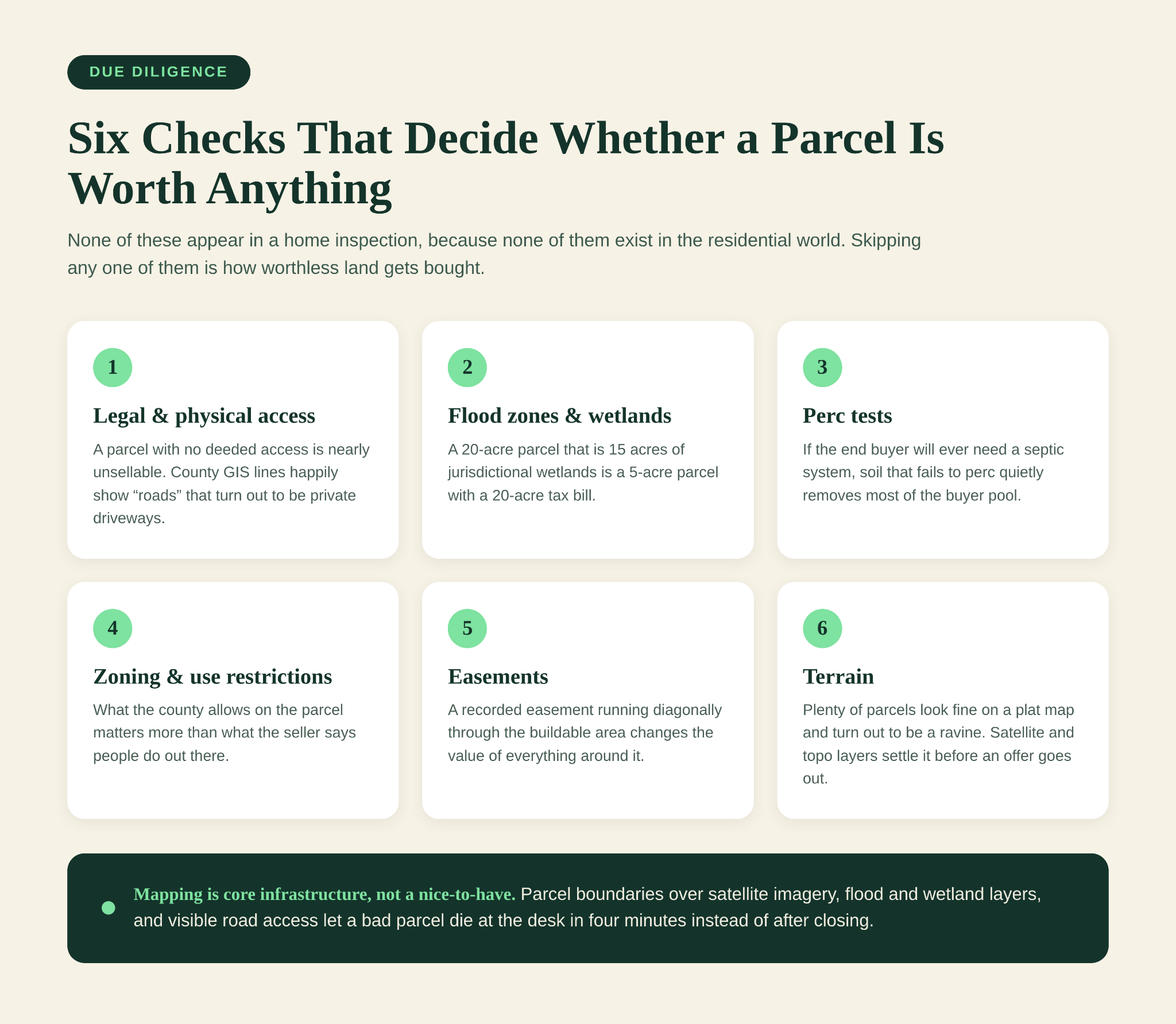
Common land due diligence items include:
• Legal and physical access: Does the property have a documented right to reach a public road, and can you actually get there?
• Flood zones and wetlands: How much of the property may be affected?
• Septic and soil conditions: Can the property support the intended use if public sewer isn’t available?
• Zoning and use restrictions: What can legally be built or done on the property?
• Easements and recorded restrictions: Are there rights or limitations affecting the parcel?
• Terrain and slope: How much of the property is reasonably usable?
Mapping Helps You Catch Problems Earlier
Mapping can reveal problems that aren’t obvious from a spreadsheet or basic property record.
Parcel boundaries, aerial imagery, road access, slope, wetlands, flood zones, and surrounding land uses all provide context that can affect whether a property fits your investment criteria.
Land Portal brings those mapping tools into the same platform as market research, property data, and comps, making it easier to screen potential issues before you move deeper into due diligence.
The goal isn’t to replace professional inspections, surveys, or local verification when they’re needed. It’s to catch obvious problems earlier.
Market Selection Matters More in Land
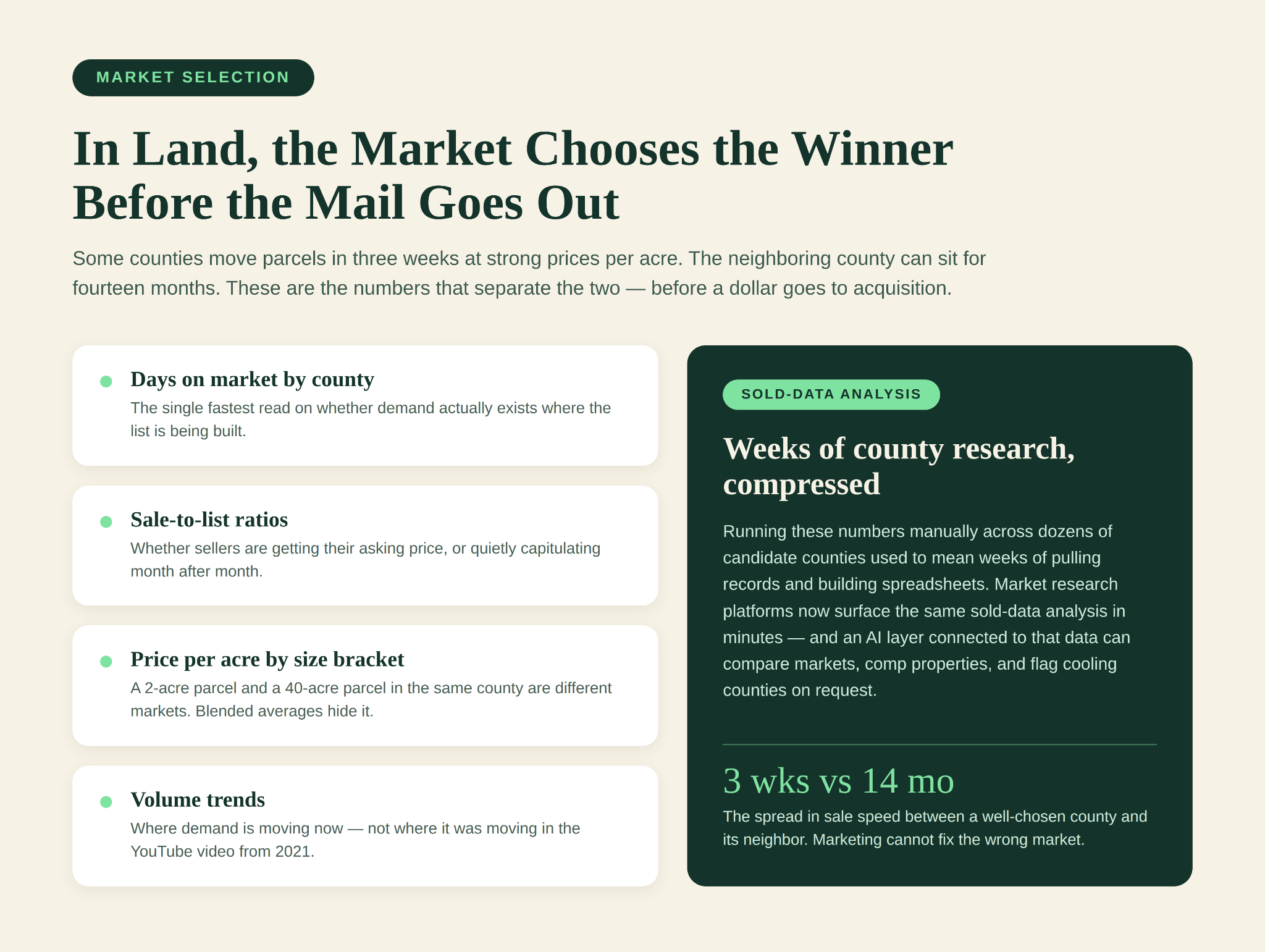
Market selection matters in both strategies, but land investors often have less room for error because vacant land doesn’t usually produce rent while it’s waiting to sell.
Some land markets have consistent transaction activity and strong buyer demand. Others may have a large amount of inventory with relatively few closed sales.
If you buy in a slow market, longer hold times can tie up capital and reduce the return on the deal.
That’s why researching the market before you start buying or mailing is so important.
What Land Investors Should Research Before Choosing a Market
Useful market research may include:
• Sold volume
• Active inventory
• Active inventory
• Price per acre by acreage range
• Recent pricing trends
• Buyer demand
• Local zoning or subdivision considerations
Land Portal is built to help investors research and compare markets before committing acquisition dollars.
You can evaluate sold activity, price per acre, days on market, active inventory, and other market data, then use land-specific property filters to turn that research into a targeted acquisition list.
Skip tracing and direct mail are also available in the platform, but the quality of the outreach starts with the quality of the market and property targeting that comes before it.
LP Intelligence
Land Portal also includes LP Intelligence, an AI-powered research assistant that works with the property and market data inside the platform.
Investors can use it to ask questions such as:
• Which markets have stronger sales activity for the acreage range I target?
• How does this property compare with recent sold land?
• Is this market becoming more or less active?
• Which comparable sales should I review for this parcel?
The goal isn’t to replace the investor’s analysis. It’s to make it faster to move from a question to the information needed to evaluate a market or property.
Liquidity and Exit Strategies
Residential property is generally more liquid than vacant land because there are more buyers, more standardized financing options, and more comparable transactions.
Land can take longer to sell, which is another reason market selection matters so much.
Land investors also have several possible exit strategies, depending on the property:
• Resell the property for cash
• Sell with owner financing and create monthly note income
• Subdivide when local rules and economics support it
• Improve or entitle the property before resale
Residential investors may sell, refinance, or continue holding the property for rental income.
The two models therefore build wealth differently. Residential investors often focus on long-term ownership, leverage, and recurring rent. Land investors tend to spend more time on market research, acquisition, valuation, and creating profitable exits.
Which Strategy Is a Better Fit for You?
Both strategies can work well, but they fit different investors.
Residential real estate may be a better fit if you:
• Want recurring rental income
• Are comfortable using leverage
• Prefer long-term ownership
• Don’t mind property management or working with a manager
Land investing may be a better fit if you:
• Want to start with lower-priced assets
• Prefer acquisition and research over tenant management
• Are comfortable with irregular deal income
• Like finding opportunities, evaluating properties, and creating resale margins
Whichever model you choose, the fundamentals still matter. Good deals come from understanding the market, buying at the right price, and knowing how you’re going to exit before you commit your capital.
Land Portal is built specifically for that research side of land investing, combining market analysis, land-specific property filters, mapping, nationwide land comps, owner data, LP Intelligence, skip tracing, and direct mail in one platform.
Start a 7-day free trial of Land Portal to research your next market or land deal.

Your Premium Source For Real Estate Data
© Copyright 2026 Land Portal – All Rights Reserved