Land Portal vs PRYCD: Which Platform Is Better for Land Investors?
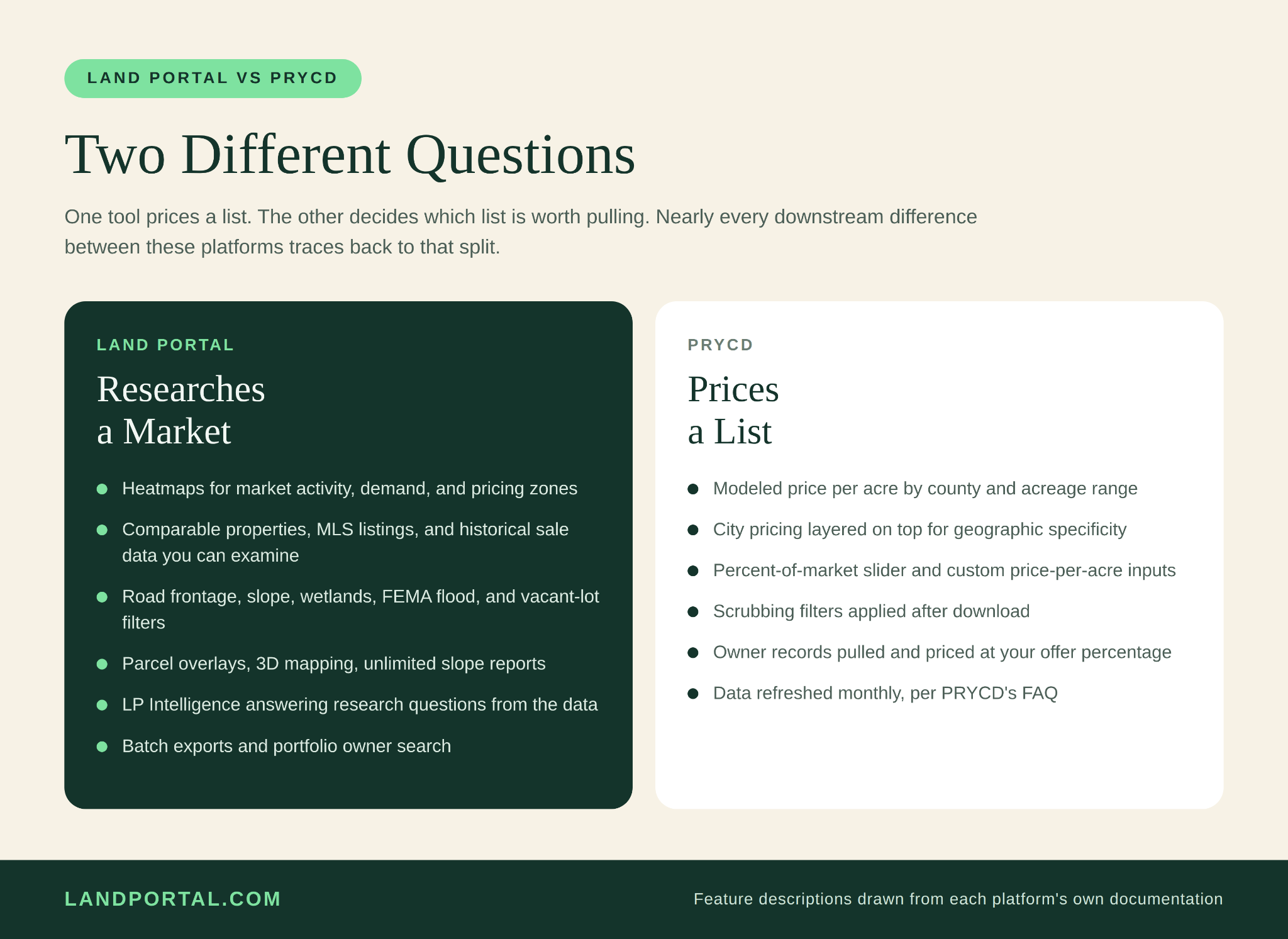
PRYCD and Land Portal are both designed for land investors, but they solve different problems.
PRYCD focuses on helping investors generate offer prices across large property lists as quickly as possible.
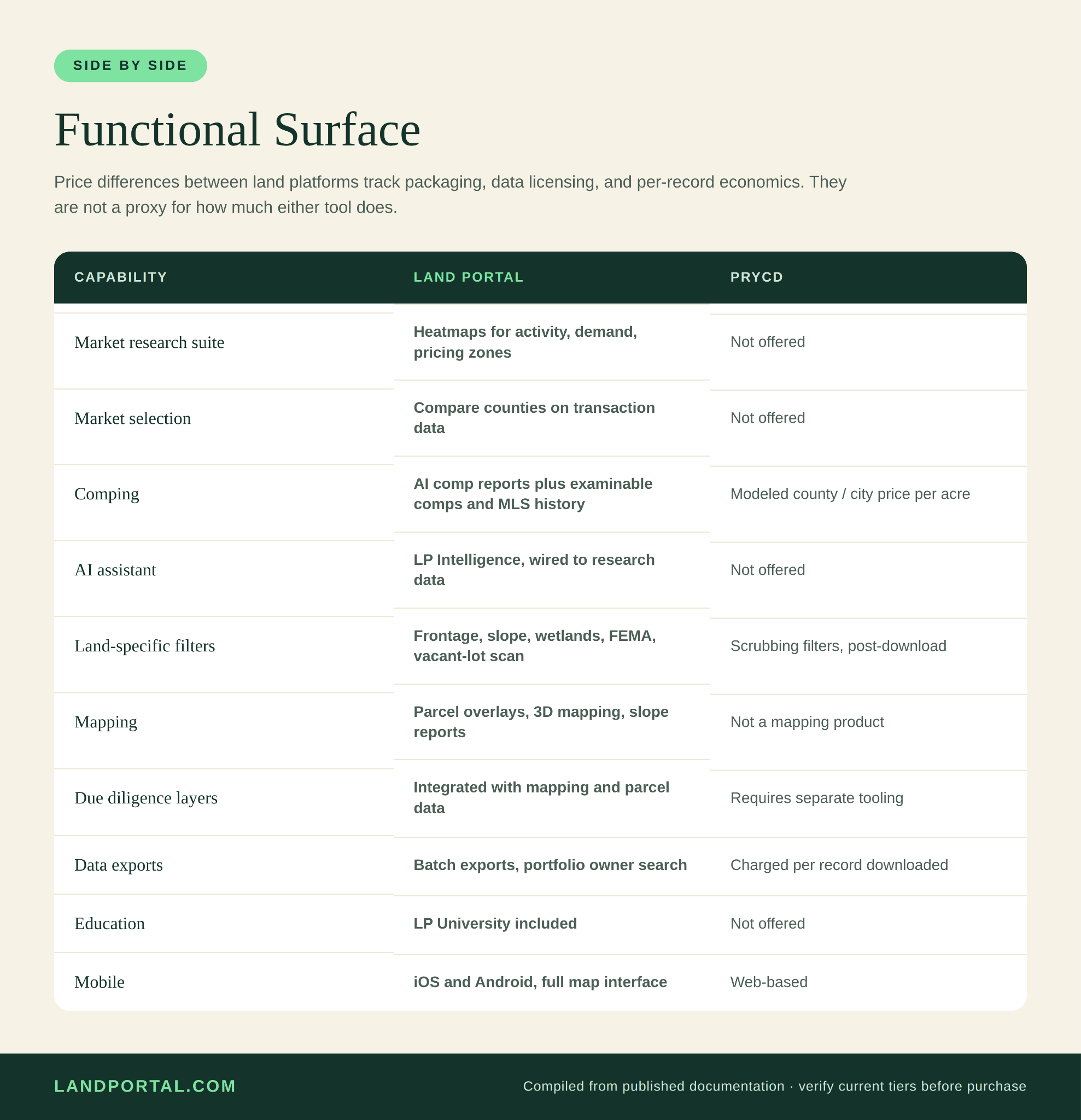
Land Portal combines market research, comparable land sales, mapping, land-specific property filters, owner data, and AI-powered research tools into one platform.
This comparison explains where each platform excels and which type of investor is likely to benefit most from each approach.
What Each Was Built to Do
PRYCD is designed to help land investors price large property lists quickly.
Investors can upload a list, apply their pricing strategy, and generate offer prices across hundreds or thousands of parcels in a short amount of time.
The platform gives users flexibility to adjust pricing by market, acreage range, or target offer percentage, making it a strong fit for investors running high-volume mail campaigns in markets they already know well.
Land Portal takes a broader approach. Instead of focusing primarily on pricing, it helps investors research markets, analyze comparable land sales, evaluate individual properties, and build targeted mailing lists before deciding what to offer.
The platform combines market research, nationwide MLS land comps, mapping, land-specific property filters, owner data, AI-powered research tools, and direct mail into one workflow designed specifically for land investors.
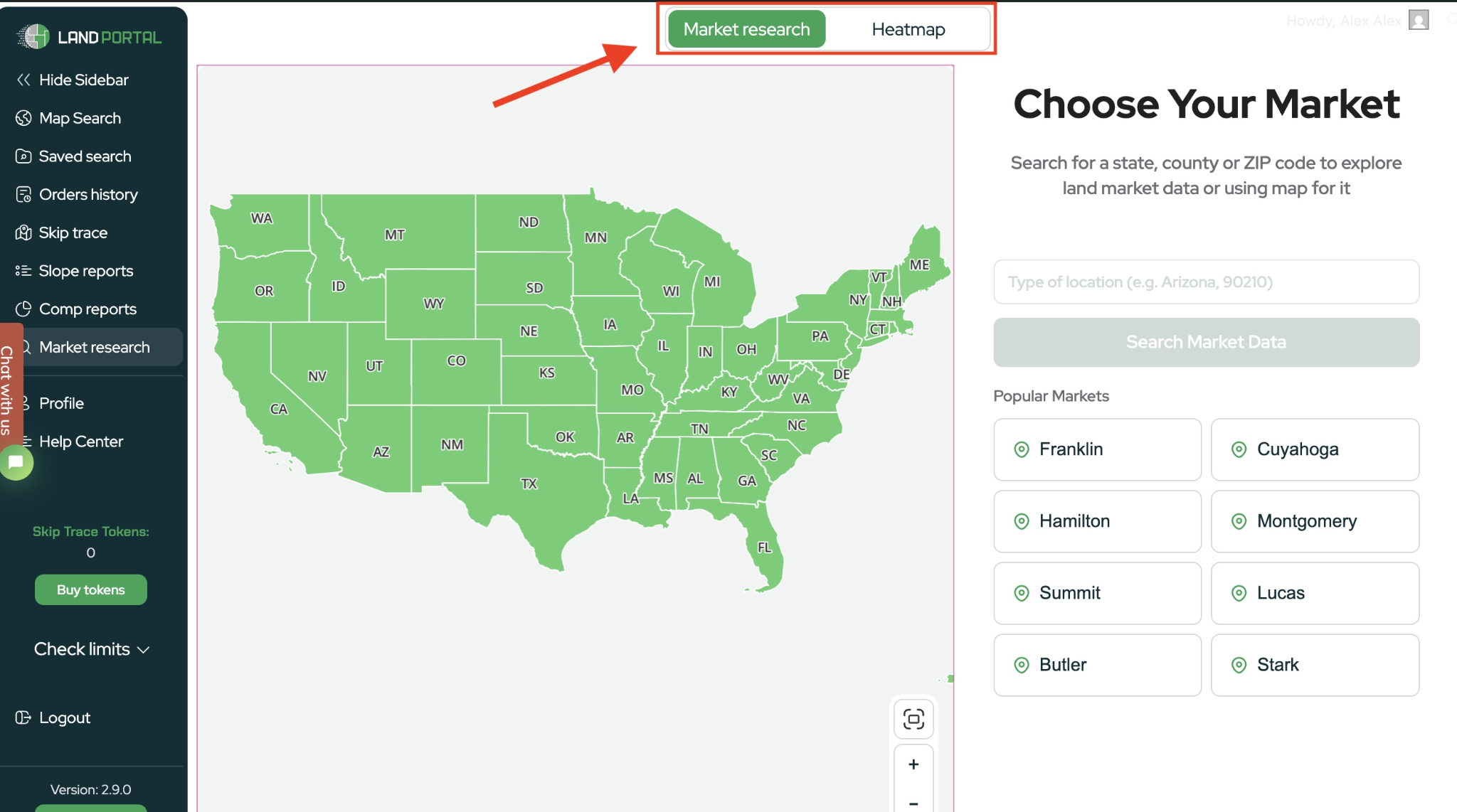
Market Research
Market research is one of the biggest differences between the two platforms.
Before pricing properties, investors first need to identify markets with enough transaction activity, buyer demand, and comparable sales to support a successful acquisition strategy.
Land Portal was designed around that earlier stage of the workflow.
Land Portal’s research layer is built for that question:
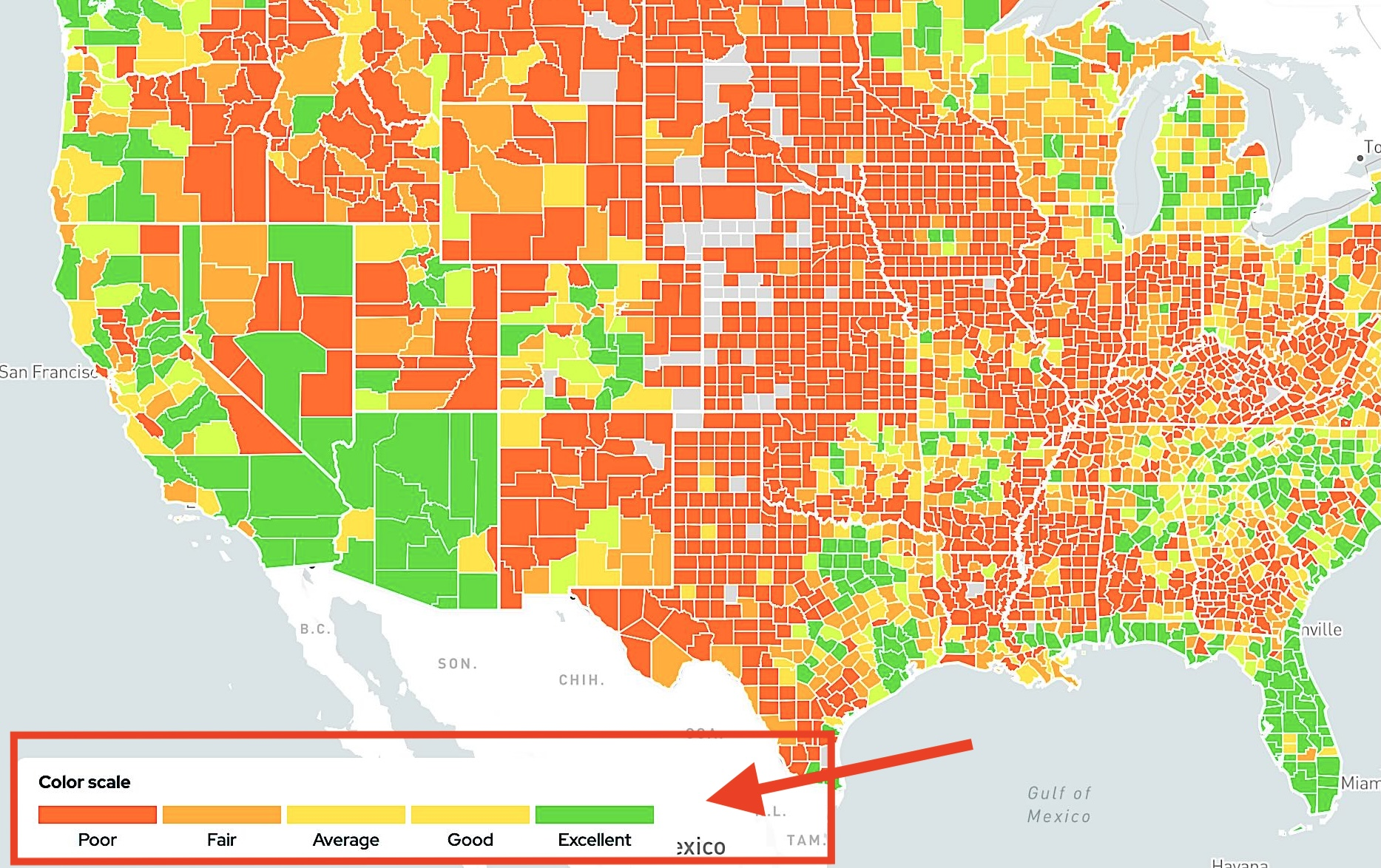
• Heatmaps show market activity, demand, and estimated prices across target areas so growth opportunities surface geographically rather than county by county.
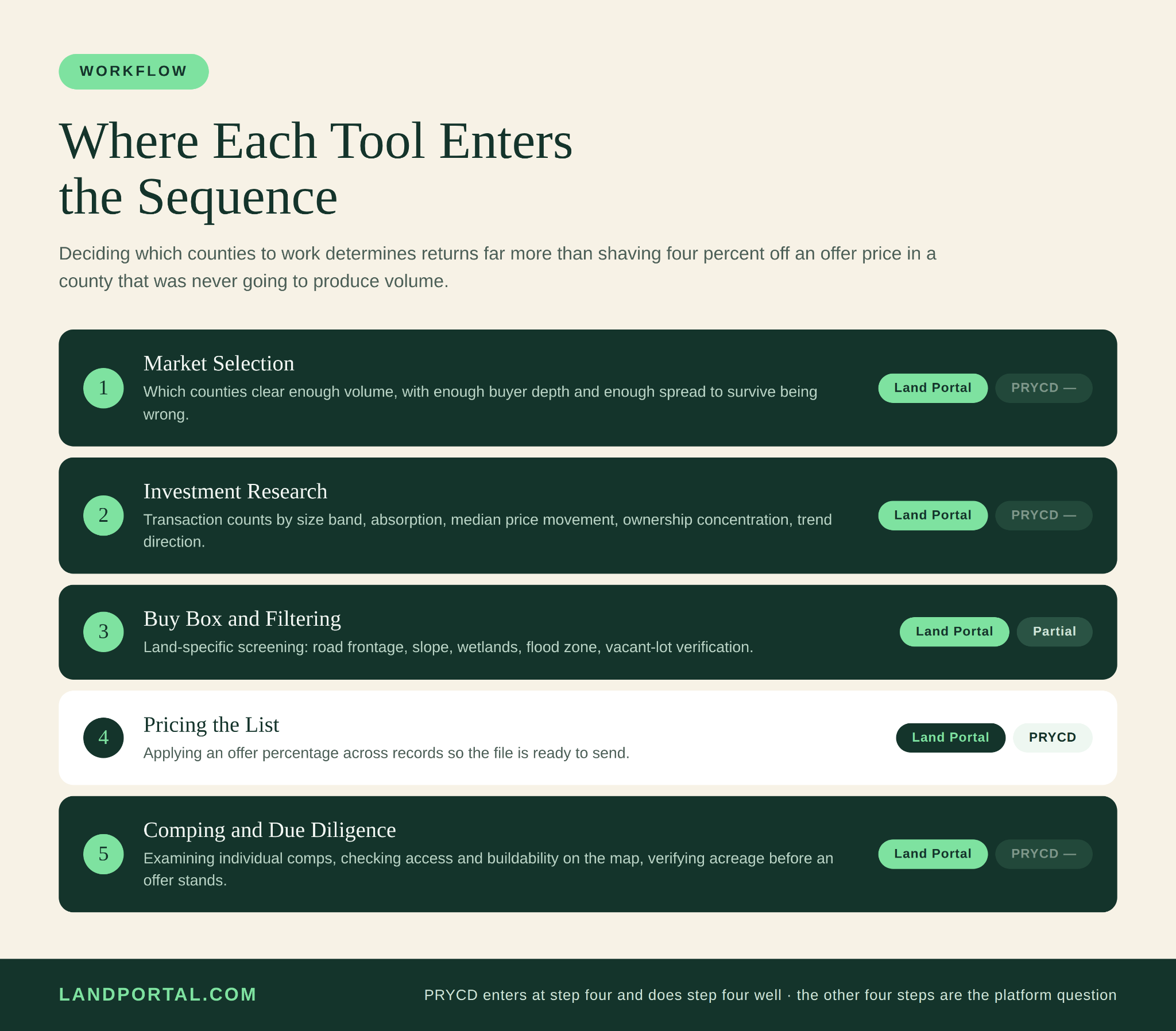
Combined with transaction history and ownership data, that supports the actual sequence a disciplined operator runs: identify candidate markets, test them for volume and buyer depth and spread, then build a buy box, then price parcels.
PRYCD is designed primarily for the pricing stage of the acquisition process.
For investors who already know exactly where they want to market, that can be an efficient workflow.
Investors who are still evaluating markets may benefit from additional research tools before generating offer prices.
Comping
Automated pricing can be extremely useful, but vacant land presents challenges that are difficult for any valuation model.
Two similarly sized parcels can have very different values because of road access, terrain, wetlands, utilities, zoning, or other physical characteristics.
PRYCD uses comparable sales and other data to generate pricing estimates, providing investors with a fast starting point for evaluating large property lists.
The risk with any model is the comp you can’t see. RETipster’s review is worth reading before relying on the output. Seth cautions against taking Comp Report results at face value, noting that nuance often hides beneath the surface until you examine the details and the validity of the chosen comps.
This isn’t a limitation unique to PRYCD—it’s a challenge shared by nearly every automated land valuation system.
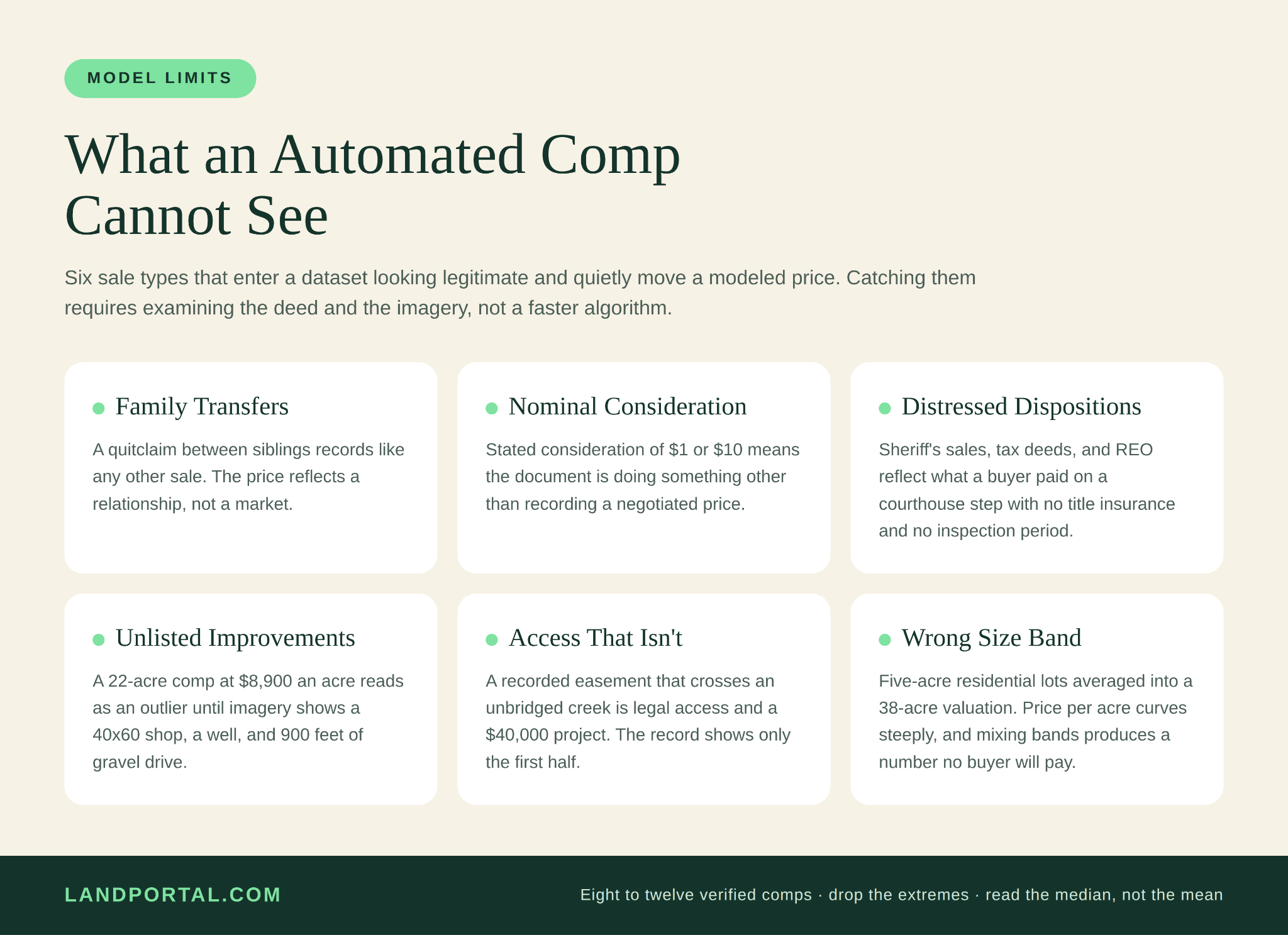
Land comps break on things a model can’t reliably see: a quitclaim between siblings, a $10 consideration transfer, a sheriff’s sale, a 22-acre tract that closed low because it carried a 40×60 shop the assessor never picked up, or a comp with recorded but unimproved access across a creek. Those need eyes on the parcel and the deed.
Land Portal combines AI-generated reports with comparable sales, MLS data, mapping, and parcel information so investors can review each comparable property before making a pricing decision.
Rather than replacing investor judgment, the platform is designed to support it.
Land-Specific Filters and Data Quality
Generic property filters were designed for houses, so beds, baths, square feet, year built. None of that describes dirt.
Land Portal’s filter set is parcel-native: road frontage, slope, flood zones, and wetlands among others, with a FEMA layer for flood risk, a vacant-lots scan that detects whether structures sit on a parcel, and proprietary in-house filters and data. Subdivide targeting and nationwide MLS access sit in the same environment.
Land-specific filters help investors narrow property lists before exporting records or launching direct mail campaigns.
Features such as road frontage, wetlands, flood zones, slope, and vacant-land detection can improve list quality and reduce unnecessary outreach.
Investors should also compare how frequently ownership data is updated when evaluating any land investing platform.
Mapping and Due Diligence
Mapping is an important part of evaluating vacant land.
Land Portal combines parcel boundaries, aerial imagery, terrain analysis, slope reports, road frontage, flood zones, wetlands, and owner information into one mapping interface.
PRYCD focuses primarily on pricing rather than mapping, so many users pair it with a separate GIS or mapping platform when conducting due diligence.
LP Intelligence
LP Intelligence is Land Portal’s AI-powered research assistant.
It allows investors to ask questions about comparable sales, market trends, parcel information, ownership records, and county activity using the same research data already available inside the platform.
Instead of manually searching through reports, investors can compare markets, analyze comparable sales, and organize research using natural language.
The goal isn’t to replace investor judgment, but to make research faster and more efficient.
Exports
Both platforms export. The terms differ.
Land Portal supports portfolio owner search, batch exports, and export-ready reports with ownership details. PRYCD charges per record downloaded, with the analysis-page count representing what you’ll pay for.
Both platforms provide export capabilities, but investors should compare each platform’s export options, pricing structure, and data availability based on their own workflow and business needs.
Where PRYCD Still Earns Its Place
Comparison articles that find zero merit in the competitor are advertisements, so here’s the honest version.
If your business is high-volume blind offer mail and you already know your counties, PRYCD’s workflow is tight:
• Owner records pulled, file scrubbed, every parcel priced at your offer percentage, ready to mail in minutes
• The percent-of-market slider and custom price-per-acre inputs give you direct control over aggressiveness by county or city
It remains a specialized tool by design. It prices lists. It does not select markets, map parcels, run due diligence layers, or answer open-ended research questions.
For an operator whose only bottleneck is pricing throughput, narrow is a feature.
Which Platform Is Right for You?
PRYCD is an excellent choice for investors whose primary objective is pricing large property lists quickly.
Land Portal is designed for investors who want to combine market research, mapping, comparable land sales, owner data, AI-powered research, and land-specific property filters into one workflow.
Many investors may find value in using both platforms together, depending on how they research markets and generate offers.
The best approach is to evaluate each platform using a market you already know well and determine which workflow best fits your business.