


Log in
Skip Tracing for Land Investors: How It Works

Finding a property you want to buy is only the first step. You still need to figure out how to reach the owner.
County property records can give you an owner name and mailing address, but that information doesn’t always give you everything you need to start a conversation. The owner may live out of state, the mailing address may be outdated, or the property may be owned by an LLC, trust, or estate.
That’s where skip tracing comes in.
Skip tracing helps land investors find additional contact information connected to a property owner, including phone numbers and, depending on the data available, email addresses and updated mailing information.
Used correctly, it can help turn a targeted property list into an actual outreach campaign.
What Is Skip Tracing?
Skip tracing is the process of using identifying information about a property owner to find additional contact information associated with that person.
For land investors, that usually starts with information already tied to the property, such as:
• Owner name
• Mailing address
• Property address, when applicable
• Other available ownership information
skip tracing provider attempts to match that information against the data sources available to it. When a match is found, the results may include phone numbers, email addresses, and additional address information.
The important thing to understand is that skip tracing is based on matching records, which means the quality and accuracy of the information you start with matters.
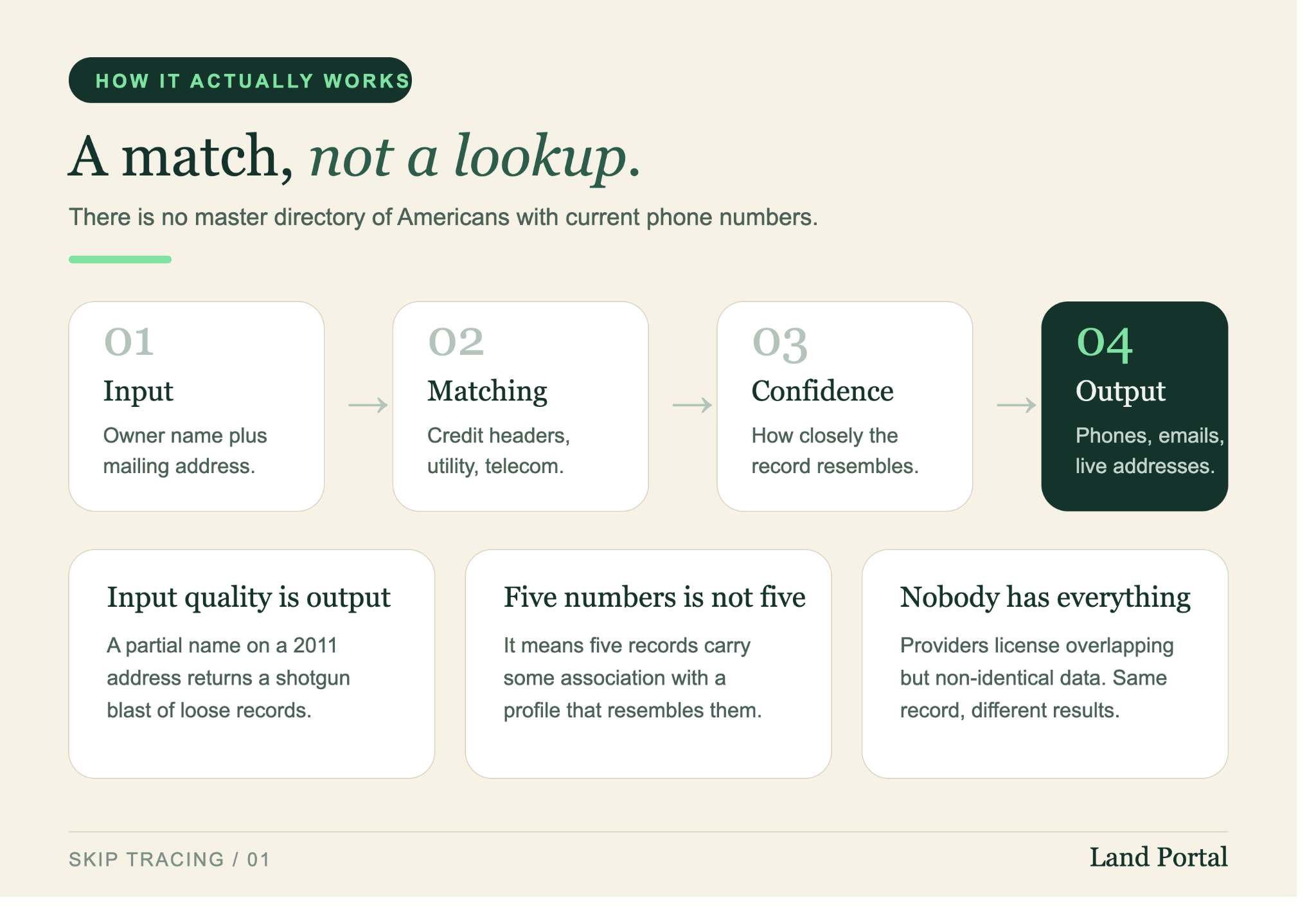
A few things are important to keep in mind when reviewing skip tracing results:
Better input usually means better results. A complete owner name and accurate mailing address give the system more information to match than an incomplete or outdated record.
Not every result is guaranteed to belong to the owner. A trace may return multiple possible phone numbers or email addresses, so results still need to be reviewed before outreach.
Results can vary between providers. Skip tracing companies don’t all use exactly the same data sources, so the information returned for the same owner may differ from one service to another.
Why Skip Tracing Landowners Can Be More Difficult
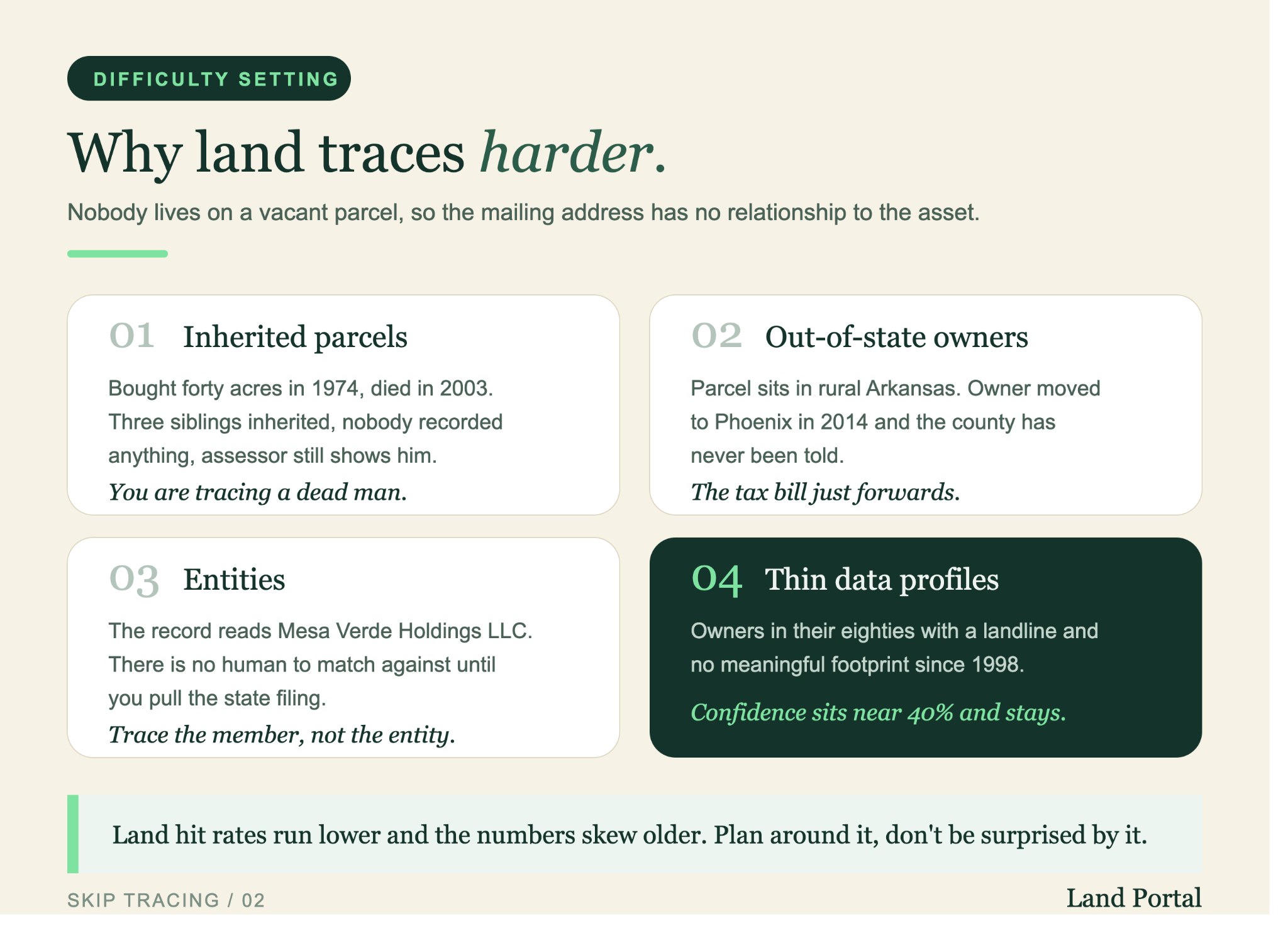
Skip tracing vacant landowners can be more difficult because the property itself often doesn’t give you a residential address connected to the owner.
Many land investors also intentionally target absentee owners, long-term owners, inherited properties, and entity-owned parcels. Those situations can make matching the correct person more complicated.
Some common challenges include:
Inherited property. County records may still show a previous owner even after the property has passed to heirs or an estate.
Out-of-state owners. An owner may have moved since the mailing address on the property record was last updated.
LLCs and other entities. The property record may list a company rather than the individual you ultimately need to contact.
Trust-owned property. The tax record may not clearly identify the person responsible for the property.
None of these automatically makes a lead bad. It simply means some properties require additional owner research when a standard skip trace doesn’t give you a clear result.
How to Skip Trace Landowners
Let’s get into how this works.
Step 1: Start With Clean Owner Data
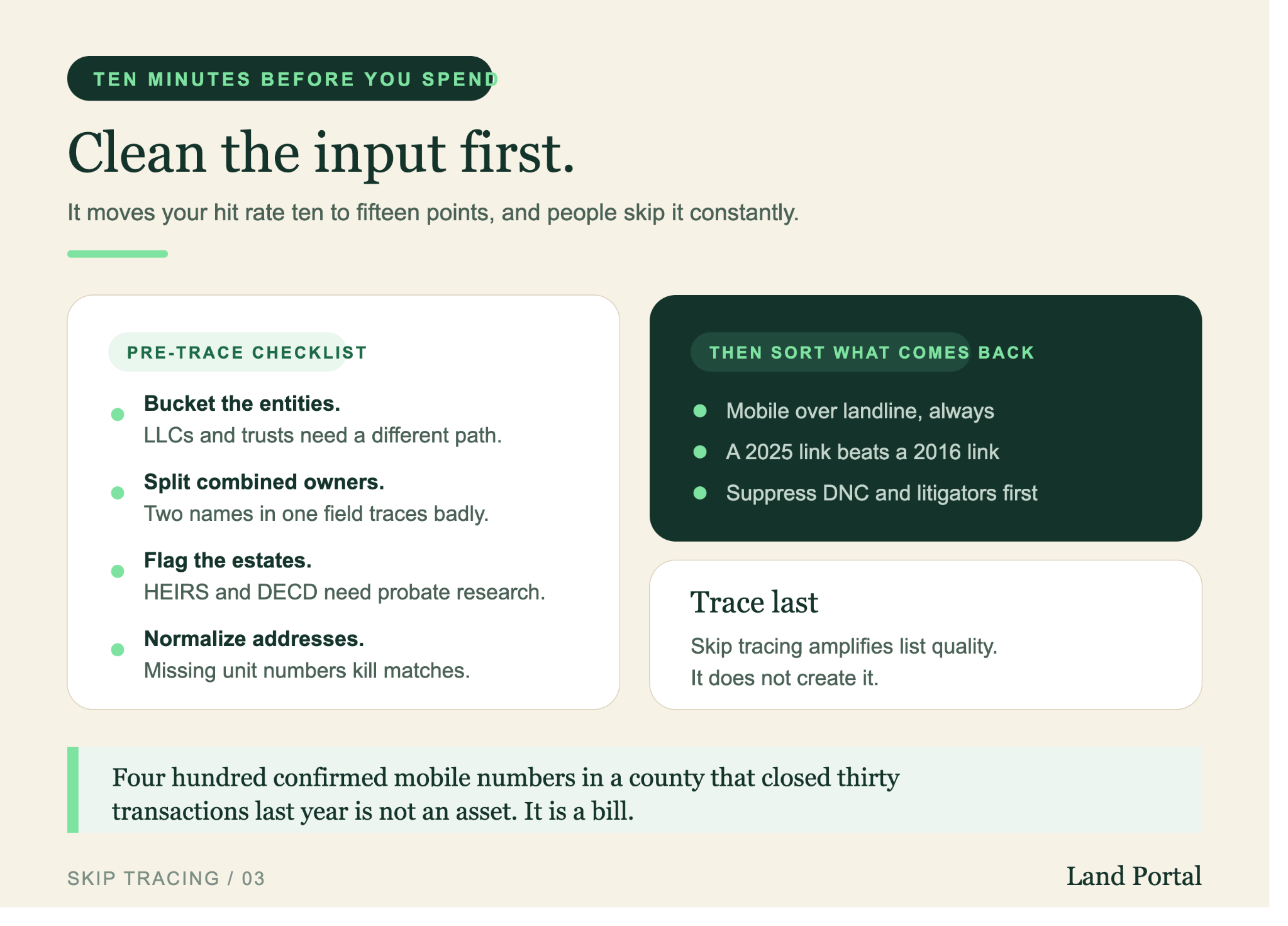
Before running a skip trace, make sure the owner information you’re using is as complete and accurate as possible.
Check for:
• Multiple owners combined in one field
• LLCs, corporations, trusts, and other entities
• Estate or deceased-owner indicators
• Incomplete or improperly formatted mailing addresses
Cleaning up obvious issues before tracing gives the system better information to work with and can make the returned results easier to review.
Step 2: Run the Skip Trace
Skip tracing can be done one property at a time or across an entire list.
Bulk skip tracing is useful when you’re preparing a larger outreach campaign. Instead of researching owners individually, you can process the list together and review the returned contact information before beginning your outreach.
In Land Portal, investors can skip trace individual properties or process larger lists in bulk. Because the property and owner information already lives in the platform, you can move from property research to owner contact without rebuilding the list in another system.
Individual skip tracing is useful when you’re researching a specific property or working through a smaller list one lead at a time.
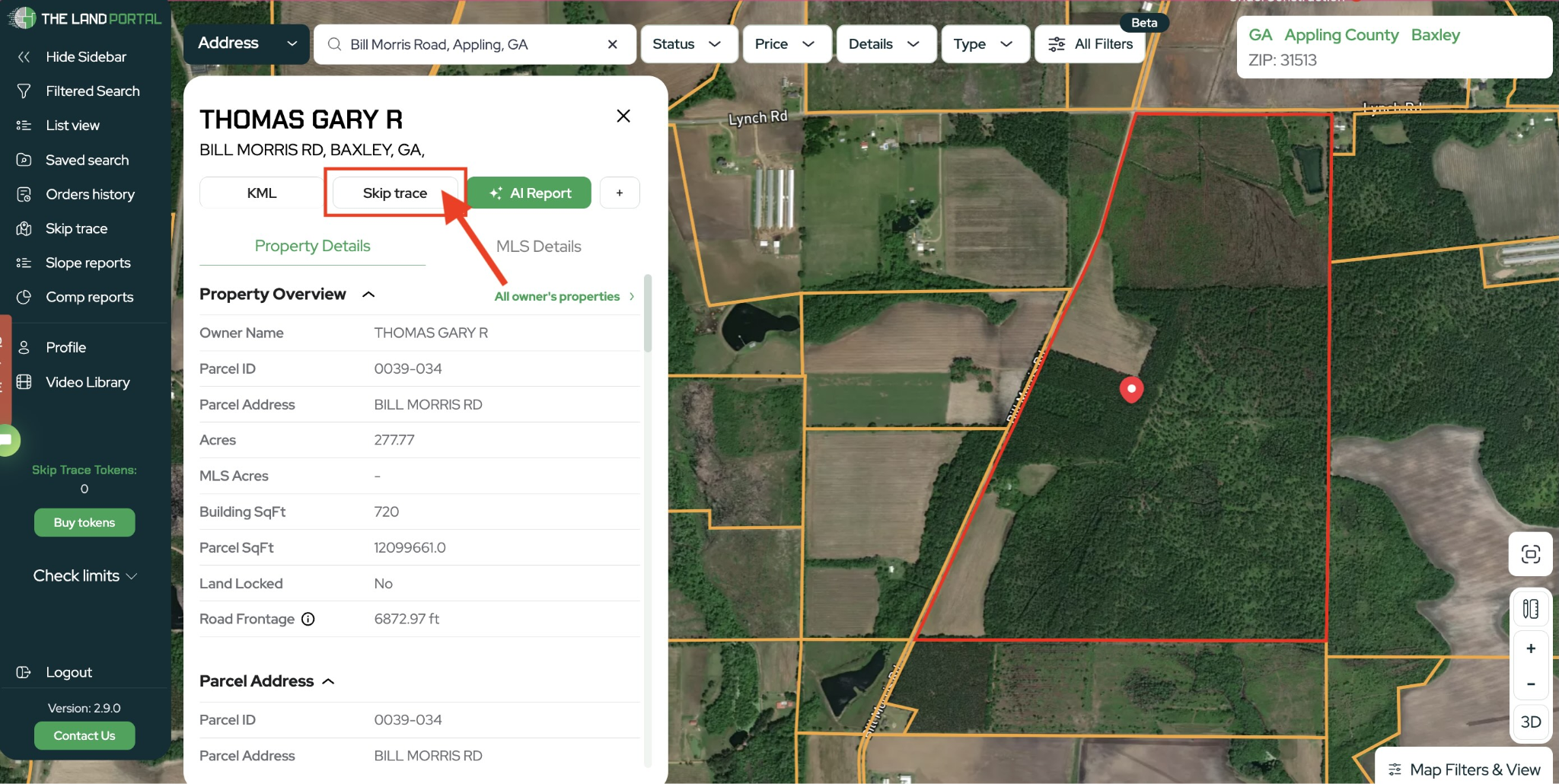
In Land Portal, you can run a skip trace directly from an individual property record, making it easy to move from researching the parcel to finding available owner contact information.
Step 3: Review the Results
A skip trace may return multiple phone numbers or other possible contact details for the same owner.
Review the available information rather than assuming every returned result is equally useful.
Depending on the provider, you may be able to see information such as phone type, recency, or other indicators that help you decide which result to try first.
You should also make sure your outreach process follows applicable federal and state requirements, including rules that may apply to calls and text messages. Land Portal includes DNC scrubbing as part of its skip tracing workflow to help investors identify numbers that require additional consideration before outreach.
Start With a List Worth Contacting
Skip tracing can help you reach property owners, but it can’t fix a poorly targeted lead list.
Before paying for contact information, make sure you’re targeting properties that actually fit your investment criteria.
That means starting with the market, then narrowing the list using the property characteristics that matter to your strategy, acreage, access, road frontage, slope, wetlands, flood zones, ownership criteria, and whatever else defines a property you’d seriously consider buying.
Once you’ve built a list you’re comfortable pursuing, skip tracing becomes the next step in turning those properties into conversations.
Build the right list first. Then find the people behind it.
How to Contact Landowners
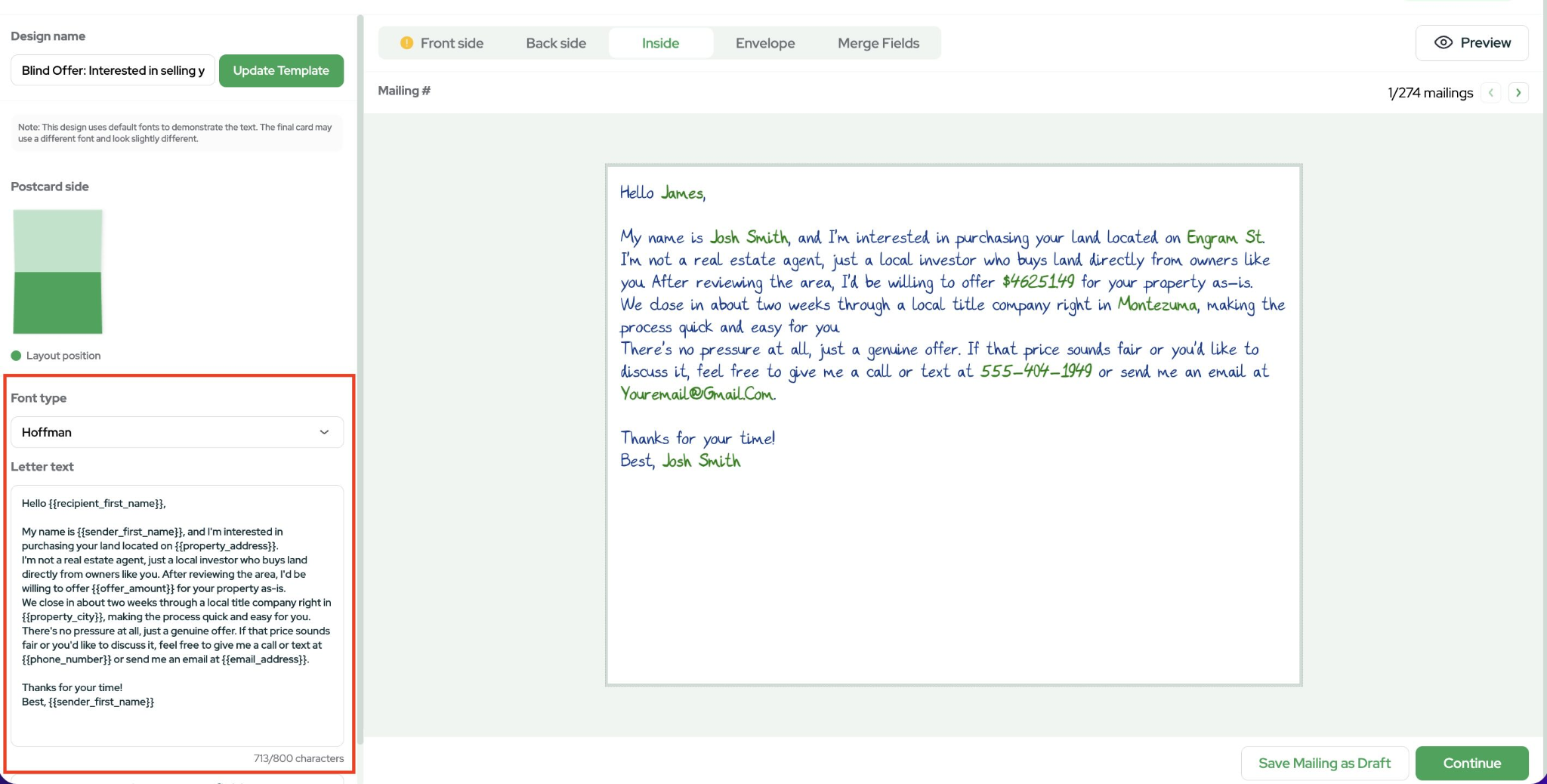
Direct mail remains a popular outreach method for land investors because it gives you a way to reach owners even when phone or email information is unavailable.
Your mail doesn’t need to be complicated. The goal is to clearly explain why you’re contacting the owner, identify the property you’re interested in, and give them an easy way to respond.
Consistency also matters. Some owners respond immediately, while others may not be ready to sell until months after your first letter.
If you’re building a campaign, see our guide on how to create a handwritten mail campaign.
Cold Calling
Calling can give you a much faster answer than waiting for a mail response, but it also requires more care.
Before calling property owners, make sure you understand the federal, state, and local requirements that apply to your outreach, including applicable Do Not Call rules and calling restrictions.
When you do speak with an owner, keep the conversation simple. Introduce yourself, explain which property you’re calling about, and ask whether they would consider selling.
You don’t need a complicated script or a hard sales pitch. The first goal is simply to find out whether there’s a conversation worth continuing.
“Hi, is this Ray? My name is Dan. I’m reaching out about the land you own near County Road 9. I wanted to see if you’d ever consider selling the property.”
Texting
Text messaging can be another way to reach property owners, but marketing texts are subject to significant federal and state requirements.
Before using texting as part of an outreach campaign, make sure your process complies with the laws and consent requirements that apply to your business and the owners you’re contacting.
Email can supplement your other outreach methods when a reliable email address is available. It can be particularly useful for follow-up after an owner has already responded through another channel.
Like calls and texts, marketing email is subject to applicable outreach requirements, so make sure your campaigns are set up appropriately.
What to Do When Skip Tracing Doesn't Find the Owner
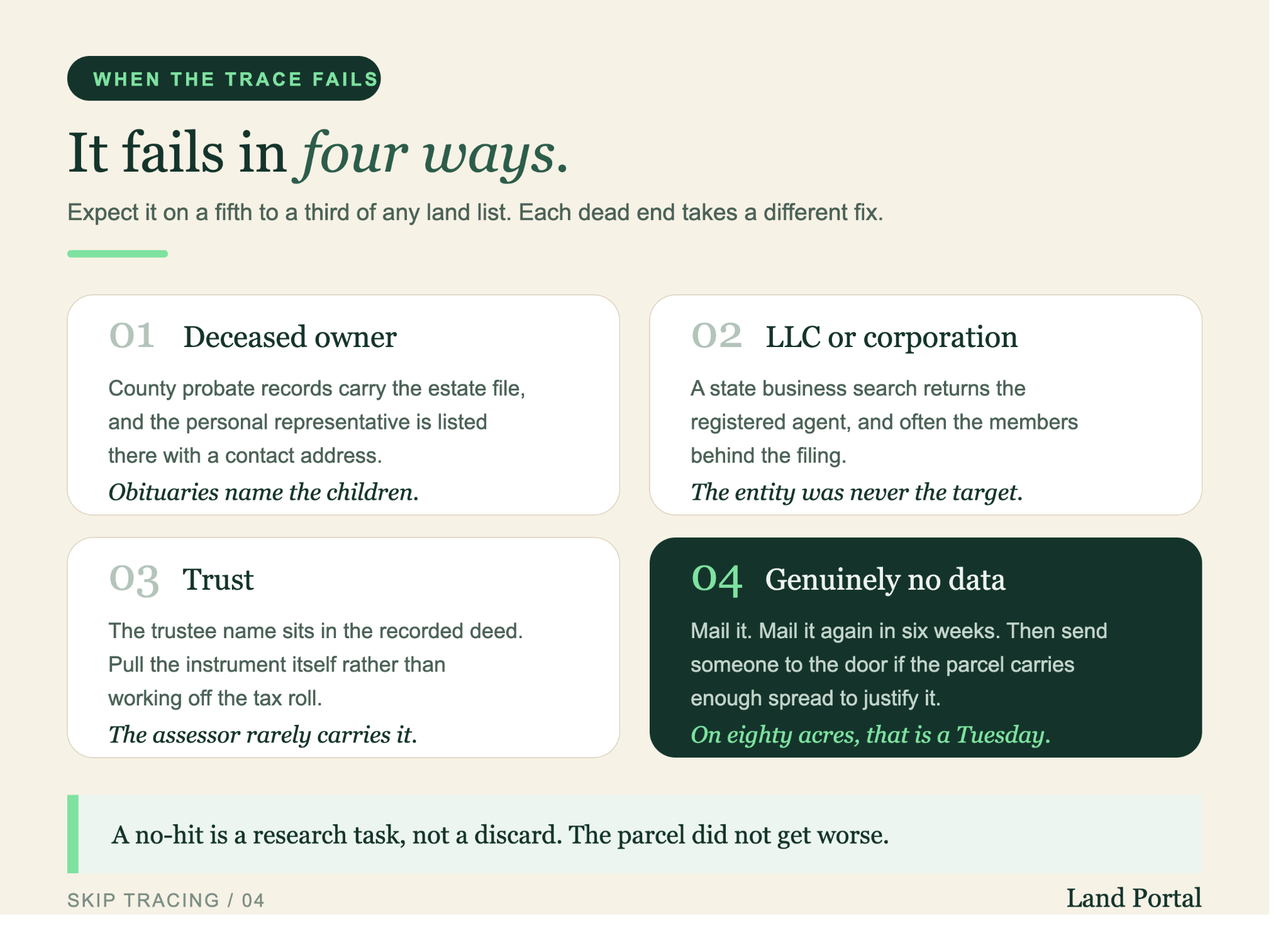
Not every property will return usable contact information. When that happens, the next step depends on how the property is owned.
Deceased owner or estate: Check county probate records and recorded documents for information about the estate or personal representative.
LLC or corporation: Search the appropriate Secretary of State business records to identify the registered agent or other publicly available company information.
Trust: Review the recorded deed and other available property documents for trustee information.
No usable contact information: Direct mail may still give you a way to reach the owner at the mailing address on record. For especially valuable opportunities, additional public-record research may also be worthwhile.
A failed skip trace doesn’t necessarily mean the property is a bad lead. It may simply mean the owner requires more research.
Keep Your Contact Data Organized
As your lead volume grows, keeping your owner and contact information organized becomes just as important as finding it.
Three things are especially useful:
Maintain a suppression list. If someone asks not to be contacted again, make sure that information carries across future campaigns.
Think at the owner level, not just the parcel level. One owner may hold multiple properties. Portfolio owner research can help you see those relationships instead of treating every parcel as a completely separate lead.
Track responses and callbacks. Owners don’t always respond from the same phone number or email address you originally contacted. Make sure responses can be connected back to the correct owner and property.
Skip Tracing Works Best as Part of the Right Workflow
Skip tracing is most useful when it’s the final step in a solid lead-generation process, not the starting point.
First, choose a market that makes sense for your investment strategy. Then use land-specific property data and filters to build a list of parcels you’d actually consider buying. Research the owners, review the properties, and only then spend time and money trying to reach them.
Land Portal brings those steps together in one platform. You can research markets, find properties using land-specific filters, review owner information, identify additional properties held by the same owner, and skip trace leads without rebuilding your list somewhere else.
Better outreach starts with better targeting.
Start your 7-day free trial of Land Portal and build your next landowner list from market research through owner contact.

Your Premium Source For Real Estate Data
© Copyright 2026 Land Portal – All Rights Reserved