


Log in
How to Perform Due Diligence on Vacant Land
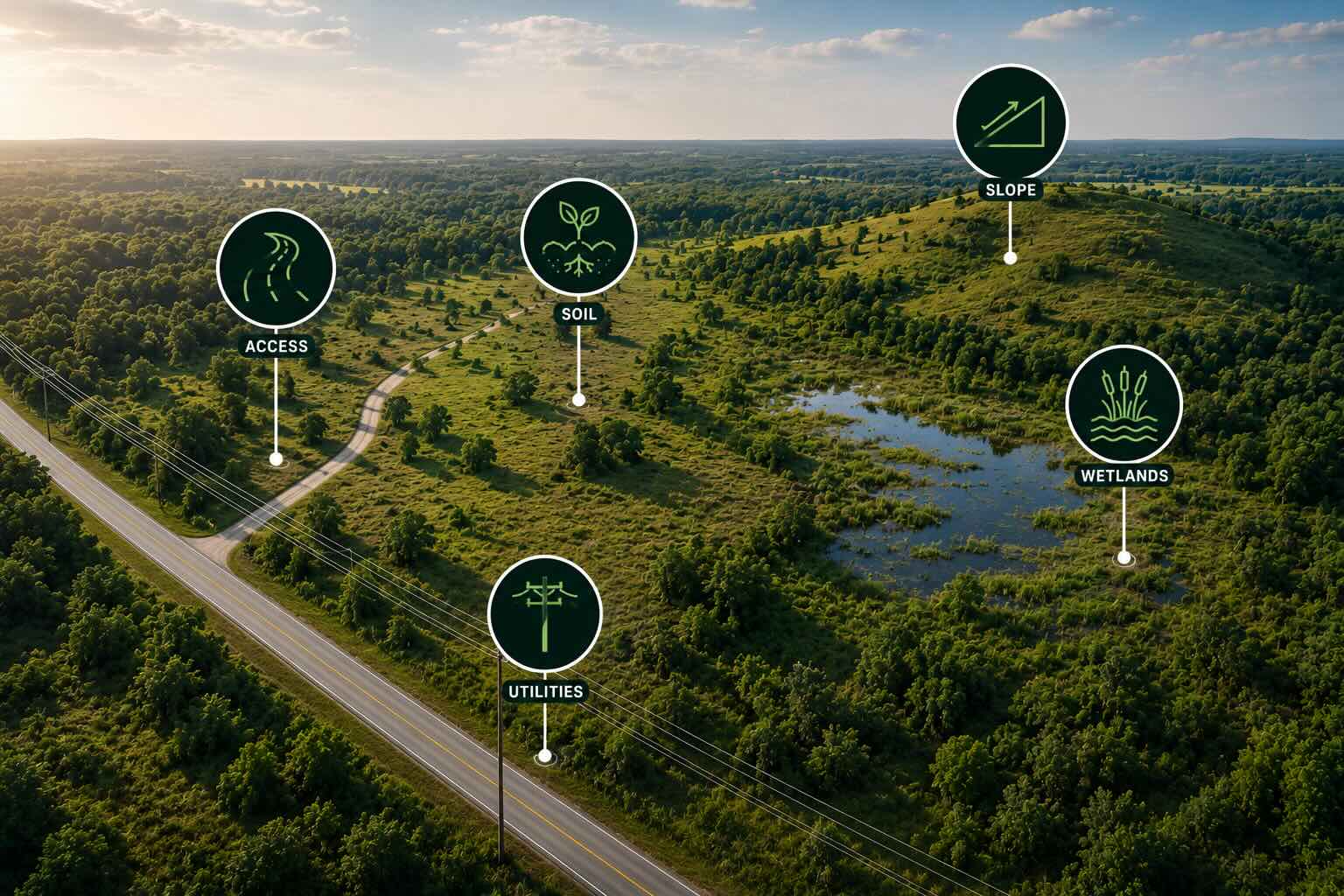
Vacant land can look simple from the outside, but many of the issues that affect its value and usability aren’t obvious from the property itself.
Legal access, easements, wetlands, flood zones, zoning restrictions, soil conditions, utilities, title issues, and property boundaries can all affect whether a parcel works for your intended use.
That’s why due diligence matters. The goal is to understand what you’re actually buying before your inspection period expires and before you spend money on surveys, soil tests, or other more expensive evaluations.
A good due diligence process starts with the easiest and least expensive checks, then moves into more detailed investigation only after the property continues to make sense.
Review the Title and Recorded Documents
A title review can uncover issues that aren’t obvious from the parcel data or the map.
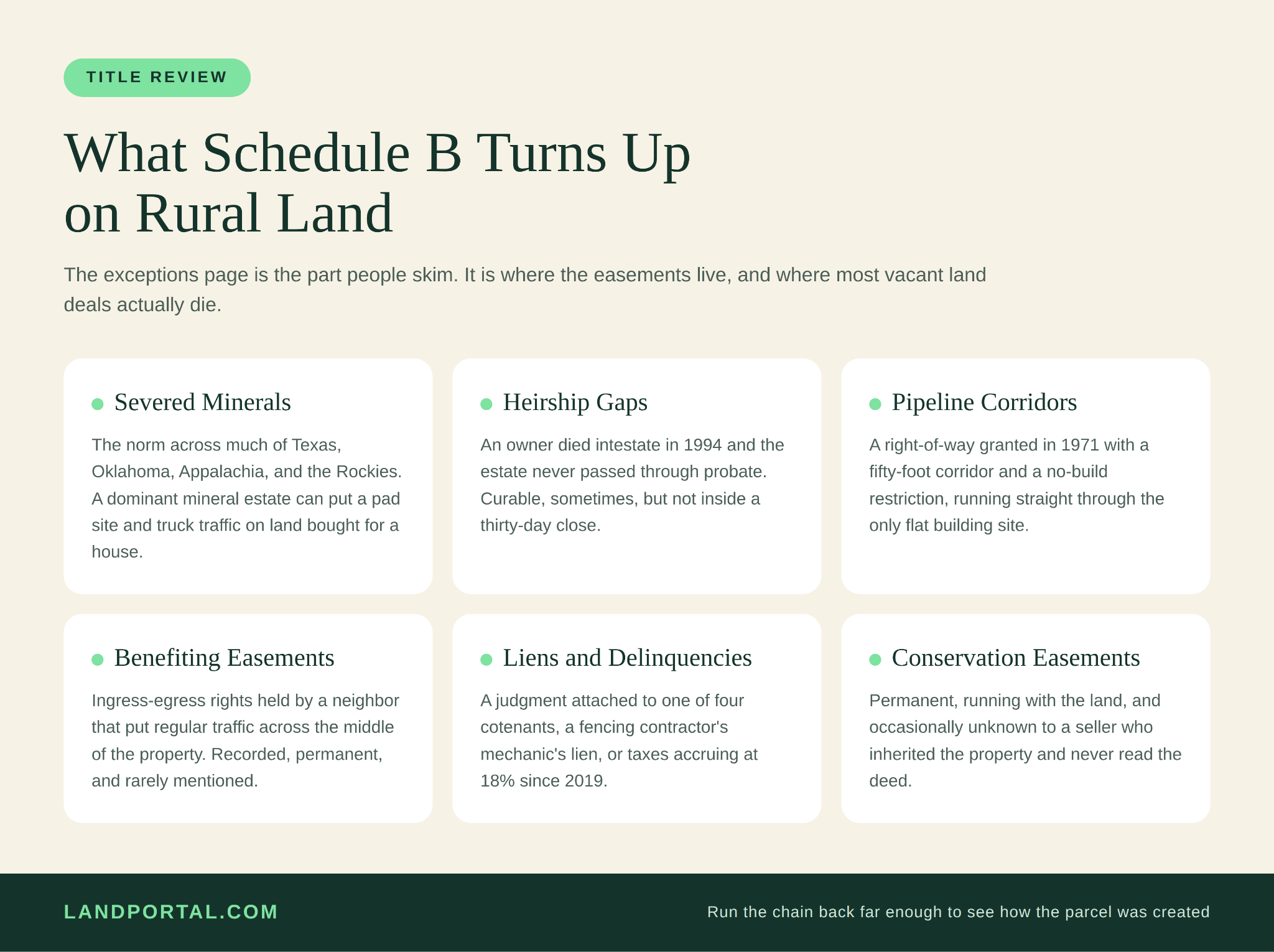
Review the title commitment carefully, especially the exceptions listed in Schedule B. These may include easements, rights-of-way, liens, restrictions, mineral reservations, and other recorded interests that affect how the property can be used.
In areas where mineral rights are commonly severed from the surface estate, it’s also important to understand what rights are included in the sale and whether another party retains rights that could affect future use of the property.
The property’s ownership and transfer history can provide additional context as well. Older legal descriptions, previous parcel splits, or a lack of survey information may be reasons to investigate the boundaries more closely.
If something in the title commitment or deed history is unclear, work with the title company, closing attorney, or another qualified professional before moving forward.
Road Access
Legal access and physical access are two separate things, and both need to be confirmed.
Legal access means the property has a recognized right to reach a public road, either through direct road frontage or a recorded easement.
Physical access asks whether you can actually reach the property under normal conditions. A deeded easement may cross steep terrain, a creek, an unimproved road, or another area that would require significant work before normal vehicle access is practical.
If access relies on a private road, also look for any road maintenance agreement and understand who is responsible for upkeep and repair.
Access problems can affect both the value of the property and your ability to resell it, so don’t assume a road shown on a map automatically means the parcel has usable access.
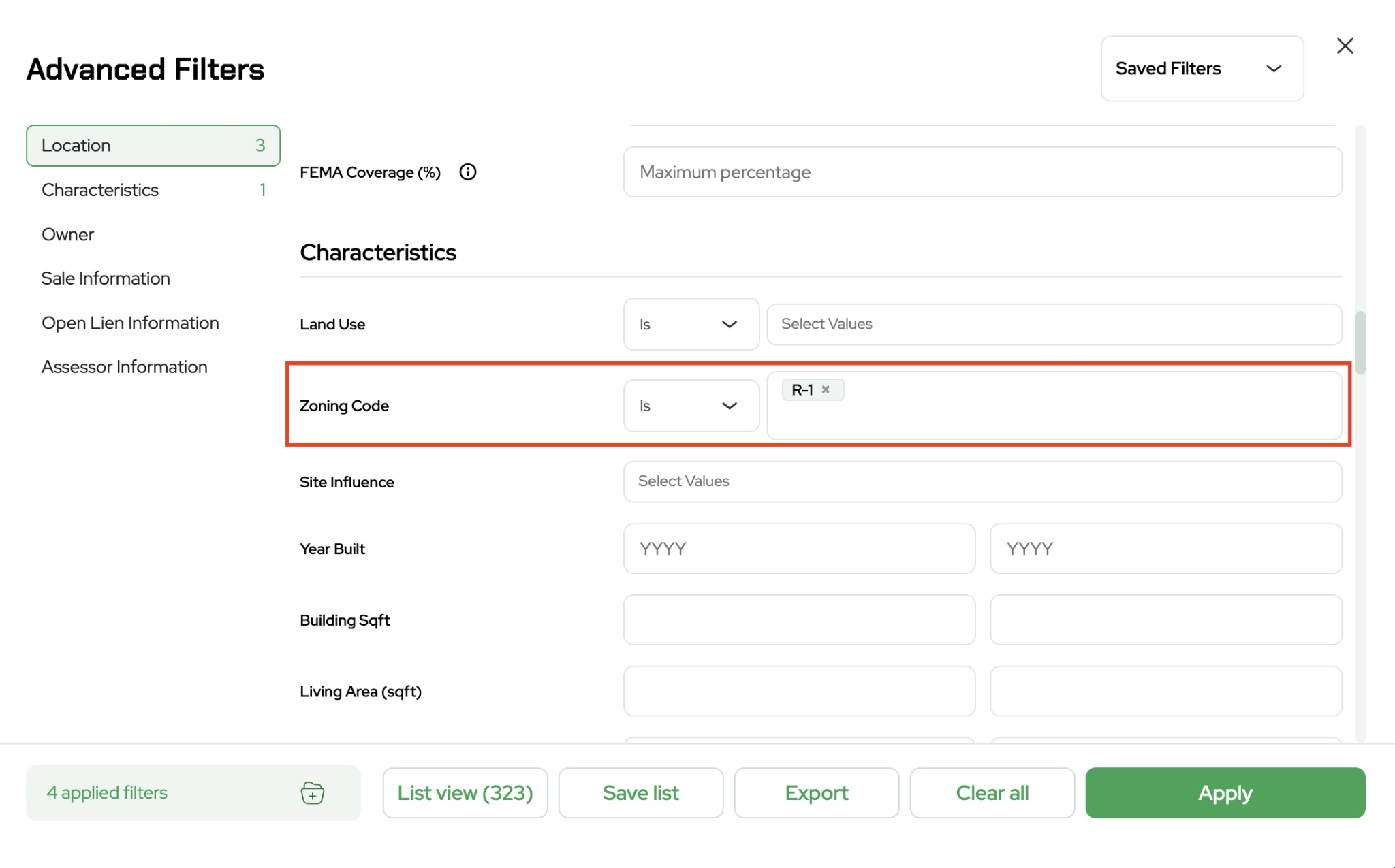
Check Zoning and Allowed Uses
Zoning is only the starting point. You also need to understand what the local rules actually allow you to do with the property.
Depending on your plans, review:
• Minimum lot size
• Setback requirements
• Road frontage requirements
• Manufactured-home or building restrictions
• Subdivision or parcel-split requirements
• Overlay districts or special-use restrictions
• Conservation districts, scenic corridors, airport overlay zones, and in a growing number of counties, dark-sky or ridgeline ordinances that restrict where and how tall
If you’re buying with the intention of subdividing, don’t assume the acreage alone makes the deal work. Local subdivision rules, road requirements, utility standards, and review processes can materially change the cost and feasibility of a project.
Land Portal can help you research zoning and other parcel characteristics, but local rules should still be confirmed directly with the county or municipality before closing.
When possible, contact the local planning or zoning department and explain what you intend to do with the property. Ask whether the use is allowed, whether the parcel can be split, and what approvals would be required.
Use Mapping to Screen the Property Early
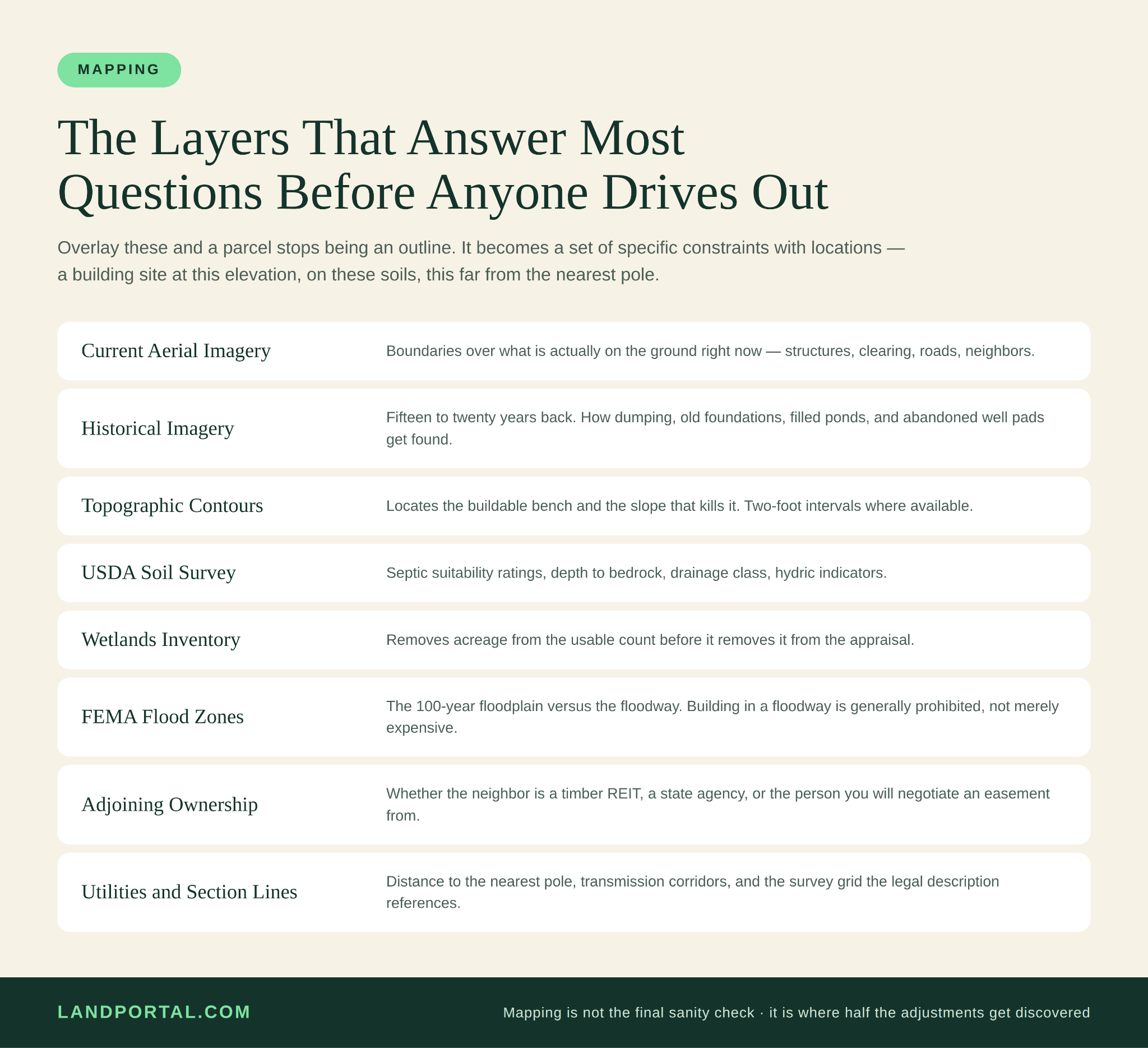
A good desktop review can identify many potential issues before you spend time or money visiting the property.
Useful mapping layers may include:
• Current aerial imagery
• Topography and slope
• Wetlands
• Soil information
• Roads and access
• Adjoining ownership
• Water features
These layers help you understand how much of the parcel may actually be usable and whether there are obvious issues worth investigating further.
For example, a parcel may have plenty of acreage on paper but very little flat, dry ground suitable for building. Another property may appear to have road frontage until the parcel boundary and road data are viewed together.
Land Portal brings many of these mapping and property research tools into the same environment, making it easier to screen parcels before moving into more expensive due diligence.
Check Septic and Water Availability
If the property isn’t connected to public sewer or water, determine how those services would be handled before assuming the land is buildable.
Septic
For properties that require an onsite septic system, check whether a previous perc test or soil evaluation is already on file and whether it is still valid.
Requirements vary by county, so confirm the local testing process, timing, and any seasonal limitations before paying for a new test.
A failed or restricted septic evaluation doesn’t necessarily make a property worthless, but it can significantly change its potential use and buyer pool.
Water
If the property will rely on a well, research nearby well records when available. Those records can provide useful context about typical drilling depth and water availability in the area.
In some regions, groundwater use is regulated more heavily, so also confirm whether a new well can legally be drilled and whether any permits or water rights are required.
Well and septic costs vary substantially by location. Use estimates from local contractors rather than assuming a standard cost.
Look for Environmental Issues
Most vacant land won’t have a major environmental problem, but previous uses of the property or surrounding area can create issues worth investigating.
Look for signs of:
• Illegal dumping
• Underground storage tanks
• Underground storage tanks
• Agricultural chemical storage
• Mining activity
• Nearby landfills
• Other documented contamination
Historical aerial imagery can help identify previous structures, dumping areas, disturbed ground, or uses that may no longer be obvious today.
State environmental databases and federal resources can also help identify documented sites nearby.
If the property’s history raises concerns, consider whether additional environmental review by a qualified professional is appropriate before closing.
Review Property Taxes and Assessments
Don’t look only at the current annual property tax amount. Review the full tax record for anything that could affect your ownership costs or closing.
Check for:
• Delinquent taxes
• Special assessments
• Agricultural, timber, or open-space tax programs
• Potential rollback or recapture taxes if the land use changes
• Improvement districts or other assessments attached to the property
Tax programs and rollback rules vary by state and county, so confirm the details with the appropriate local office when they could materially affect the deal.
Using LP Intelligence During Property Research
Due diligence isn’t only about whether a parcel has physical or title problems. You also need to understand how that property fits into the surrounding market.
LP Intelligence can help investors work with the property and market data already available inside Land Portal by asking questions in plain language.
For example, you might use it to:
• Review comparable land sales
• Compare nearby markets
• Research recent activity in a county
• Analyze a specific property
• Find other opportunities that match your criteria
It doesn’t replace title work, county verification, surveys, soil testing, or other due diligence.
Instead, it helps with the research side of the process so you can better understand the property and the market before making a decision.
Verify the Property Boundaries and Acreage
Parcel acreage shown in county records or property databases may not always match a current survey.
Start by checking whether an existing survey is available through the seller, title company, or local records. Compare the legal description, mapped parcel boundaries, and any available survey information for obvious inconsistencies.
Also remember that fences and other physical markers don’t necessarily establish the legal property line.
If acreage or boundaries are important to the deal, especially for subdivision, development, access, or a purchase priced by the acre, a new survey may be worth completing before closing.
Start With the Easy Checks Before Paying for More
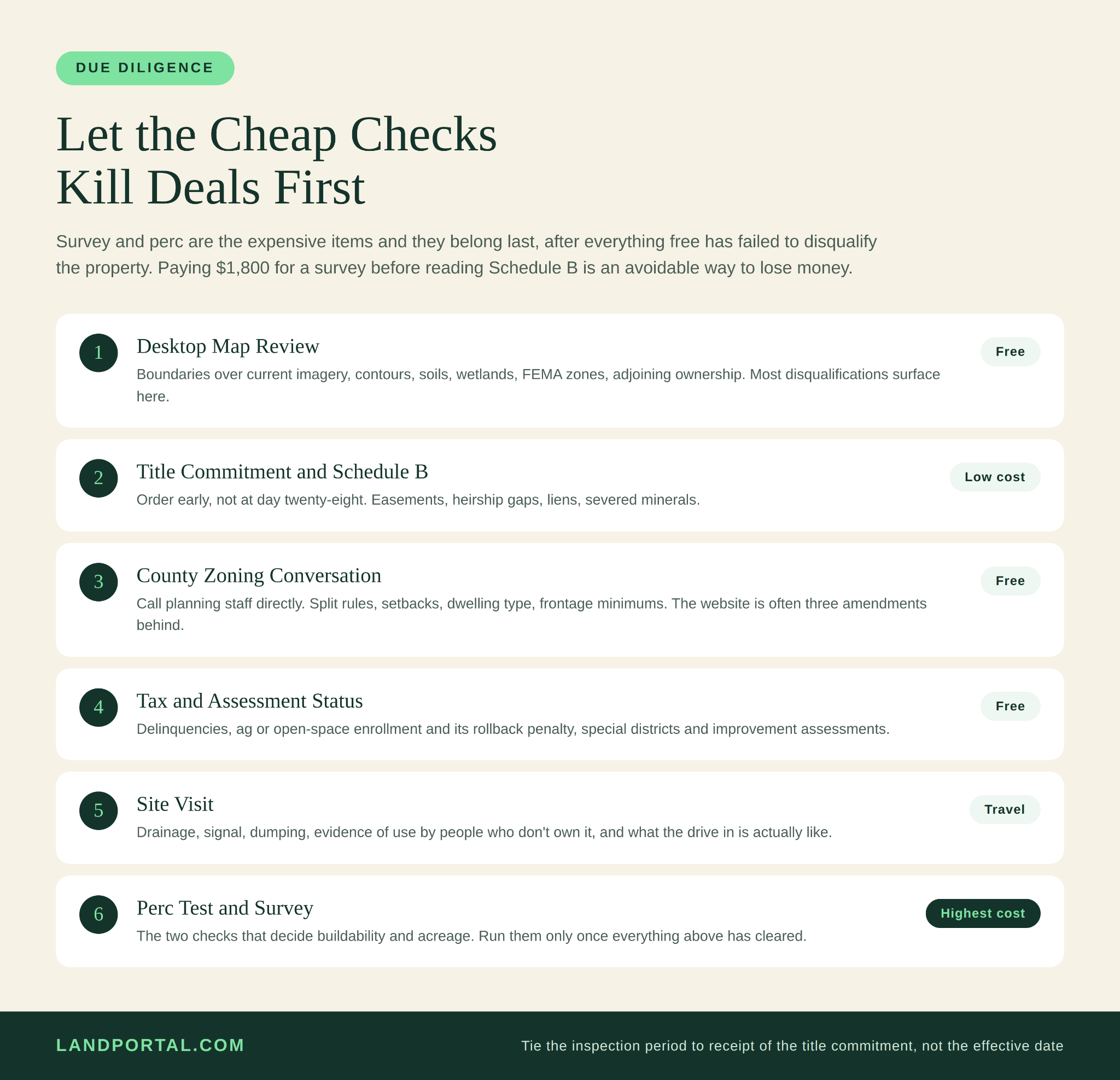
The exact order will vary by property, but it generally makes sense to complete the easiest and least expensive checks before paying for surveys, soil testing, or other professional work.
A practical sequence might look like:
1. Review the parcel on the map and check basic property data
2. Review title and recorded exceptions
3. Confirm zoning, access, and intended use
4. Review taxes and assessments
5. Visit the property when appropriate
6. Complete any necessary survey, soil, septic, environmental, or other professional evaluations
There’s no reason to pay for expensive testing if an earlier review has already uncovered an issue that makes the property unsuitable for your investment strategy.
Your purchase agreement and due diligence period should also give you enough time to complete the checks that matter for the specific property. Contract terms vary, so work with the appropriate real estate or legal professional when structuring those protections.
When a Site Visit Makes Sense
Mapping and property data can answer a lot of questions, but there are situations where seeing the property in person, or having someone local inspect it, provides information you won’t find in the records.
Road condition, drainage, dumping, neighboring uses, noise, odors, encroachments, and other site conditions can all affect value and resale potential.
Finding an issue during due diligence doesn’t always mean you have to walk away. Sometimes it changes the price you’re willing to pay or gives you a problem that can be resolved before closing.
The important thing is to understand the issue before you own it.
Land Portal brings property data, land-specific mapping, market research, comps, and AI-powered research tools together to help investors complete more of that initial due diligence from one place.
Every account also includes Land Portal University, with step-by-step training on researching markets, evaluating properties, and working through the land acquisition process.
Your Premium Source For Real Estate Data
© Copyright 2026 Land Portal – All Rights Reserved